 #001 — Trust breaks before systems do.
 #002 — If it cannot be evidenced, it cannot be defended.
 #003 — Map the fault. Hold the line. Prove it held.
 #004 — The breach is no longer the loss. The business is.
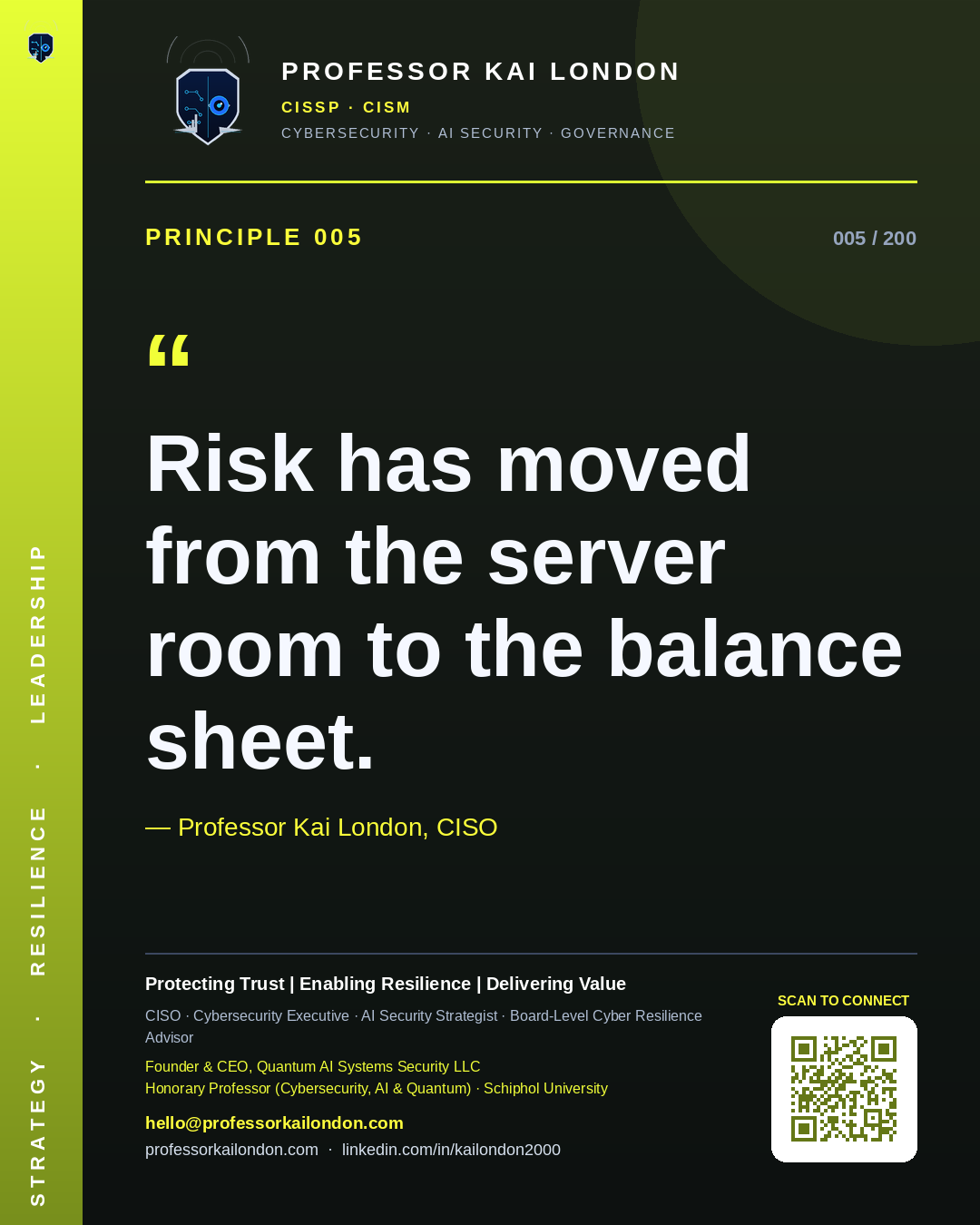 #005 — Risk has moved from the server room to the balance sheet.
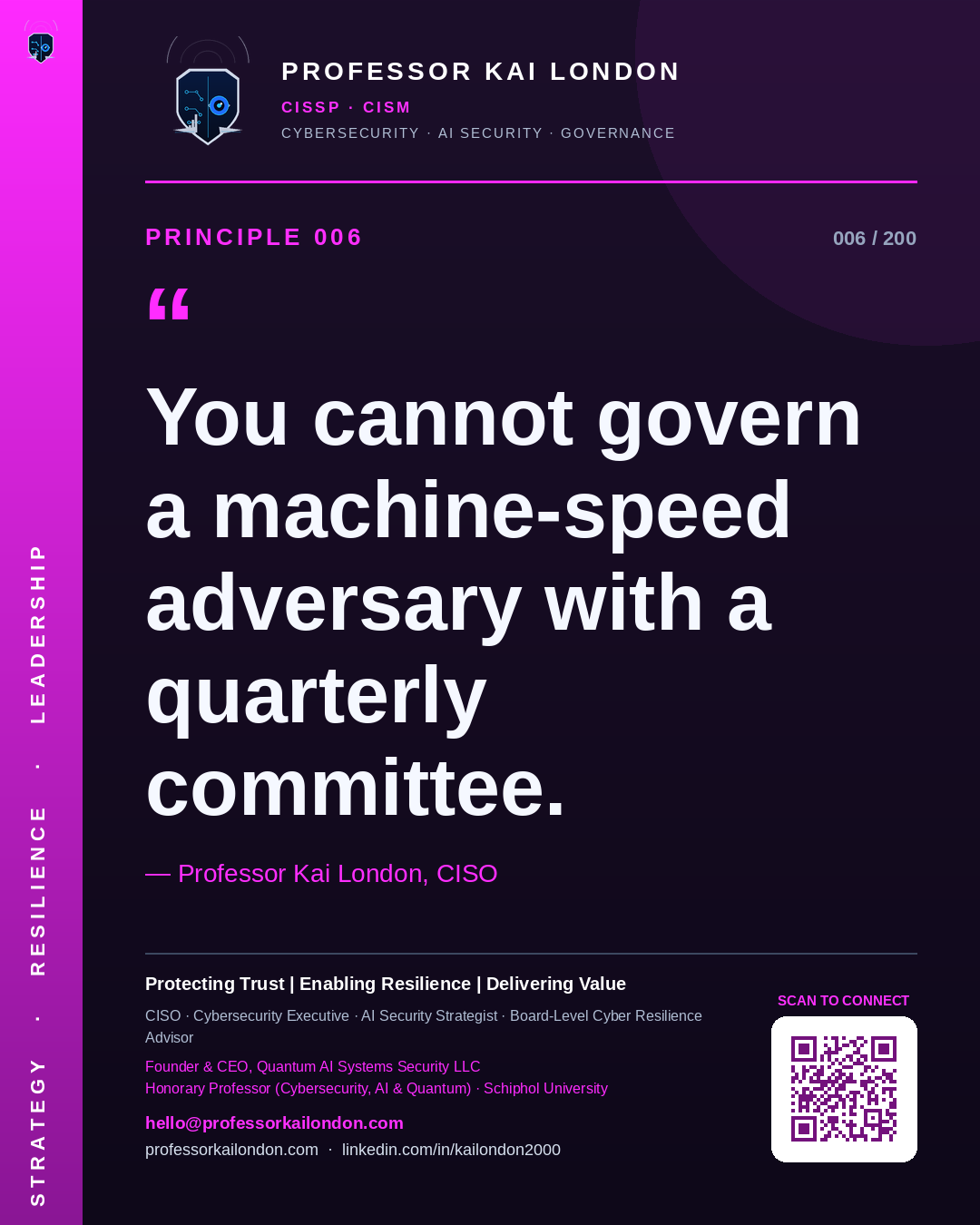 #006 — You cannot govern a machine-speed adversary with a quarterly committee.
 #007 — A certification is a vocabulary, not a victory.
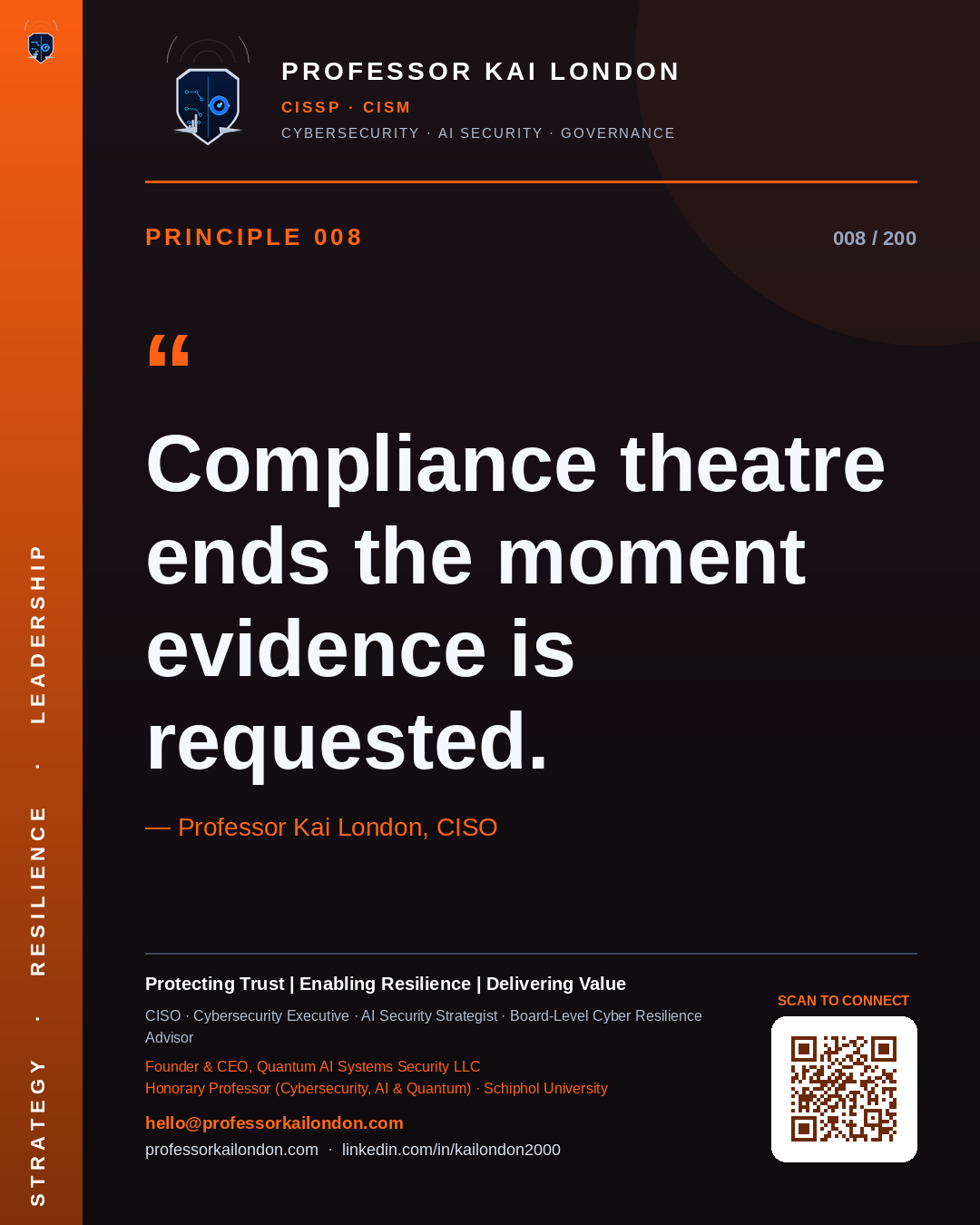 #008 — Compliance theatre ends the moment evidence is requested.
 #009 — The most dangerous trust is the trust nobody remembers granting.
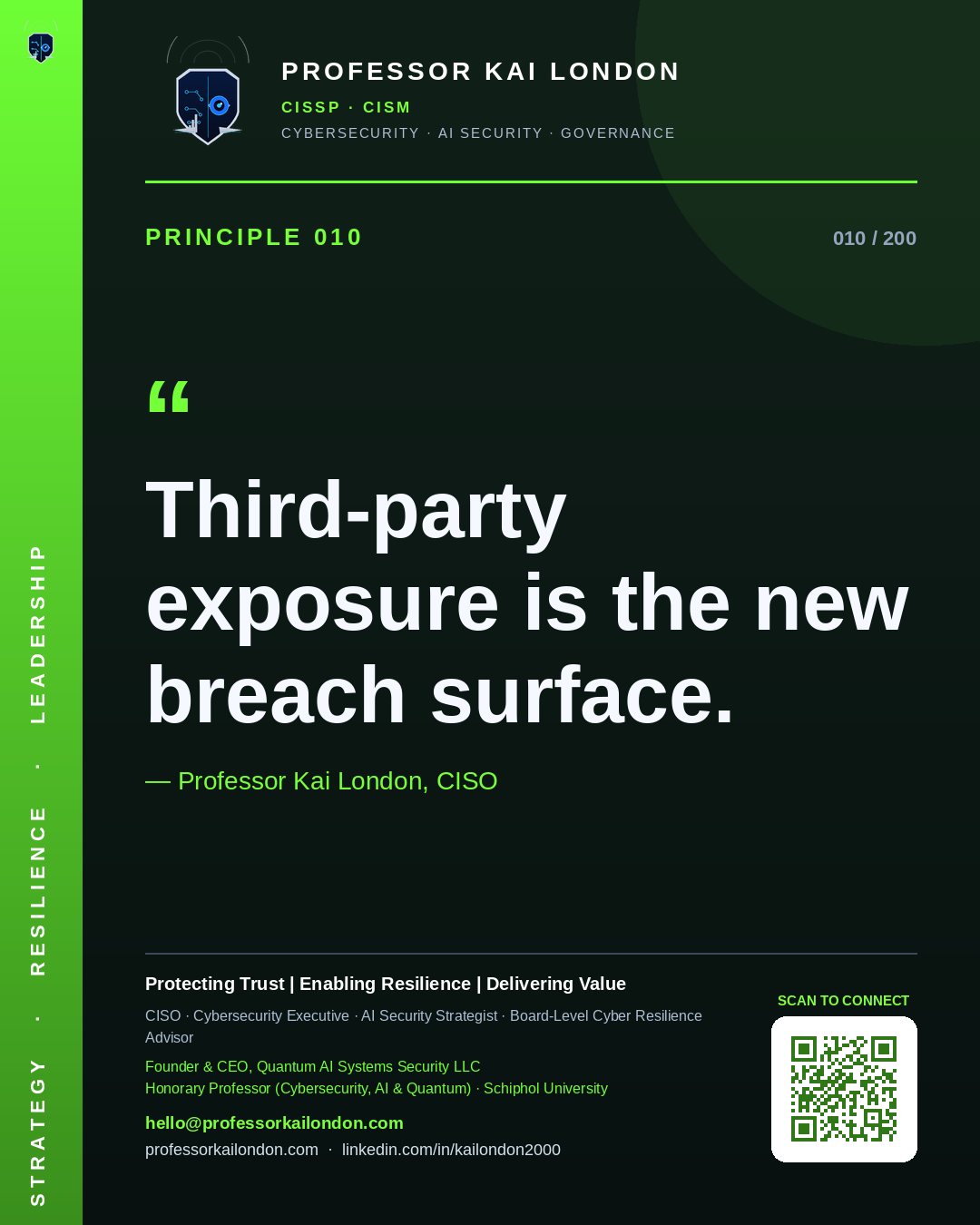 #010 — Third-party exposure is the new breach surface.
 #011 — They did not break in — they moved through what you trusted.
 #012 — The fault line is rarely the firewall — often it is the password reset.
 #013 — Business impact is the language of power.
 #014 — Boards decide in money — quantify, or be ignored.
 #015 — A risk rating you cannot define is a risk rating you cannot defend.
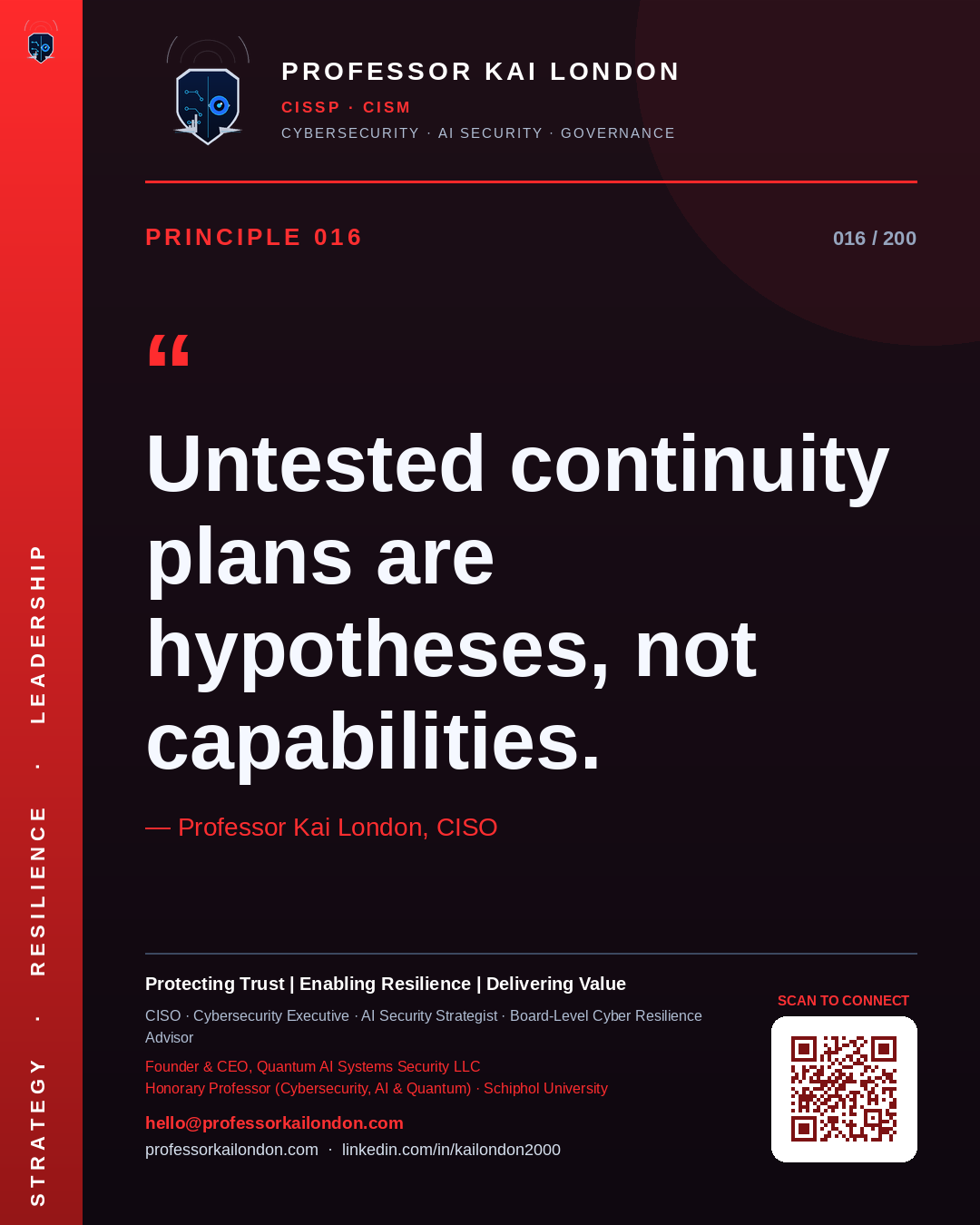 #016 — Untested continuity plans are hypotheses, not capabilities.
 #017 — A backup is not recovery until the business is restored.
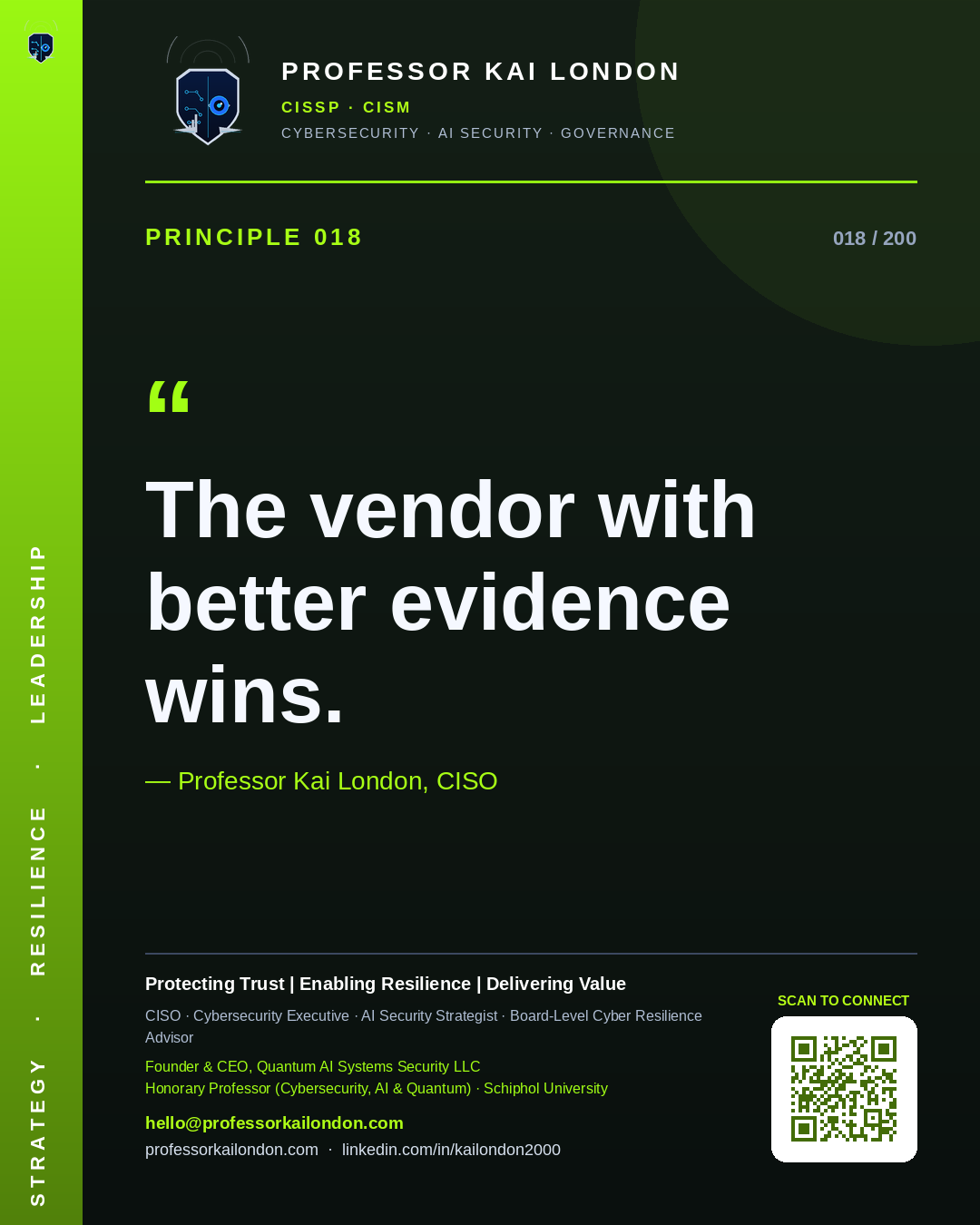 #018 — The vendor with better evidence wins.
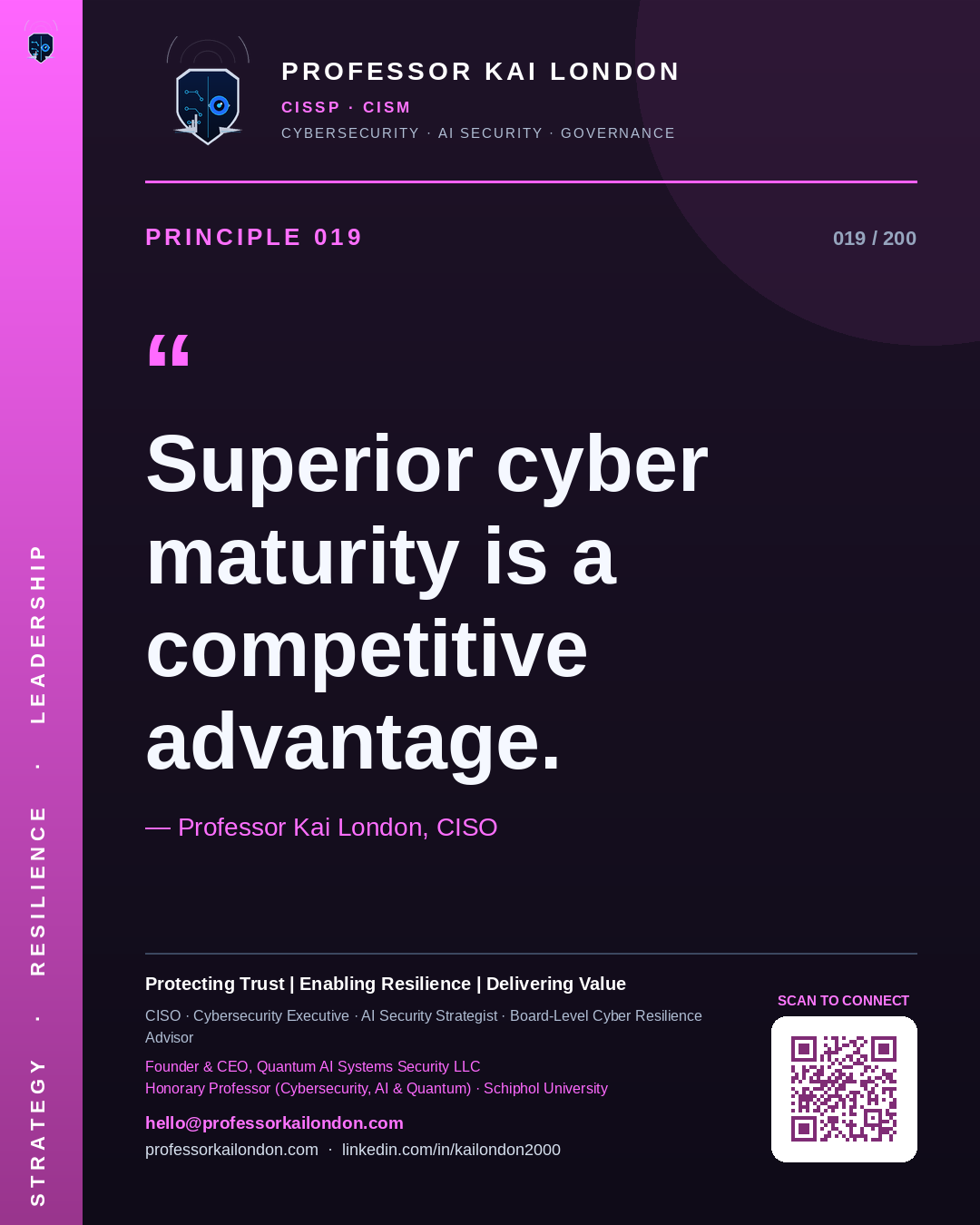 #019 — Superior cyber maturity is a competitive advantage.
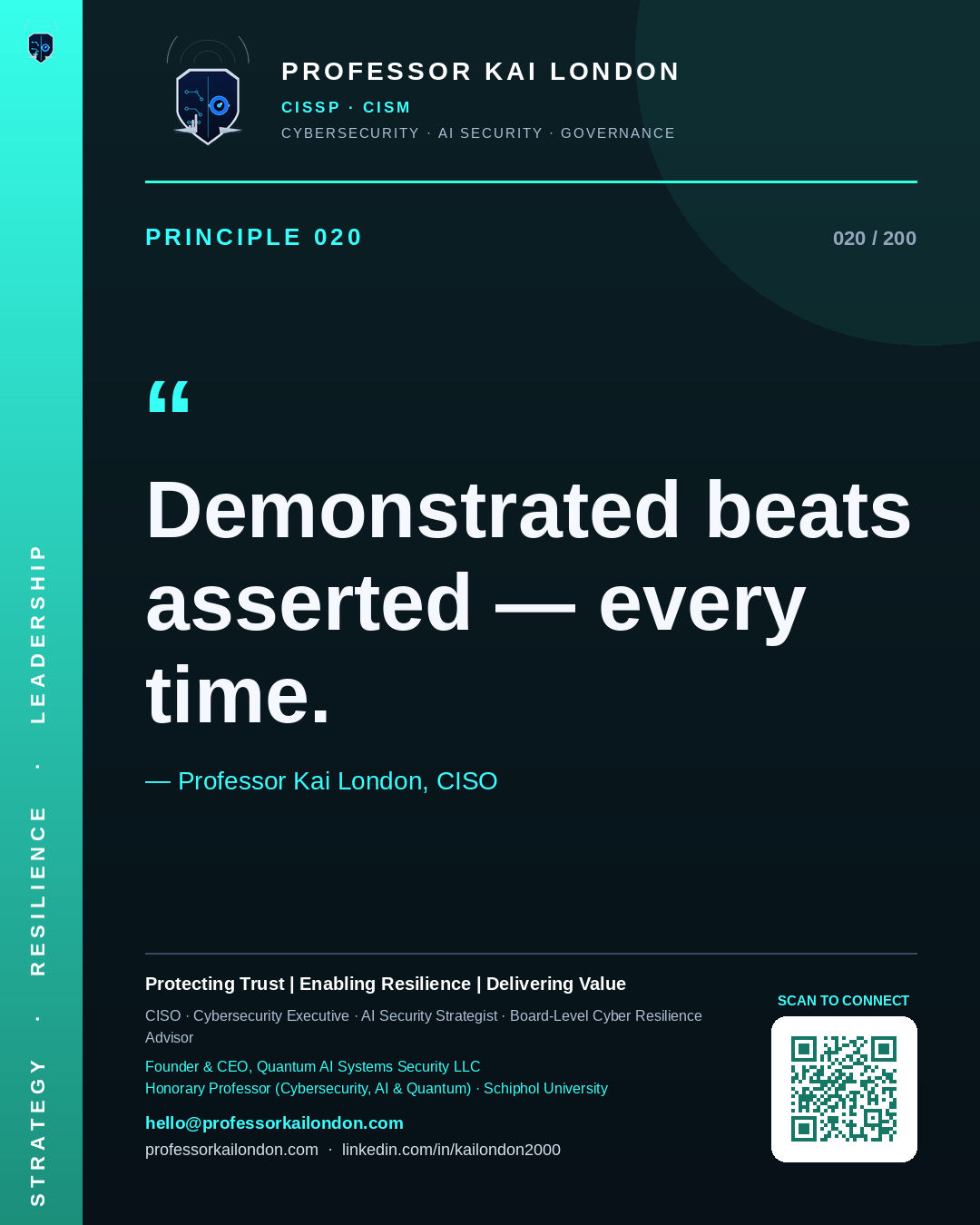 #020 — Demonstrated beats asserted — every time.
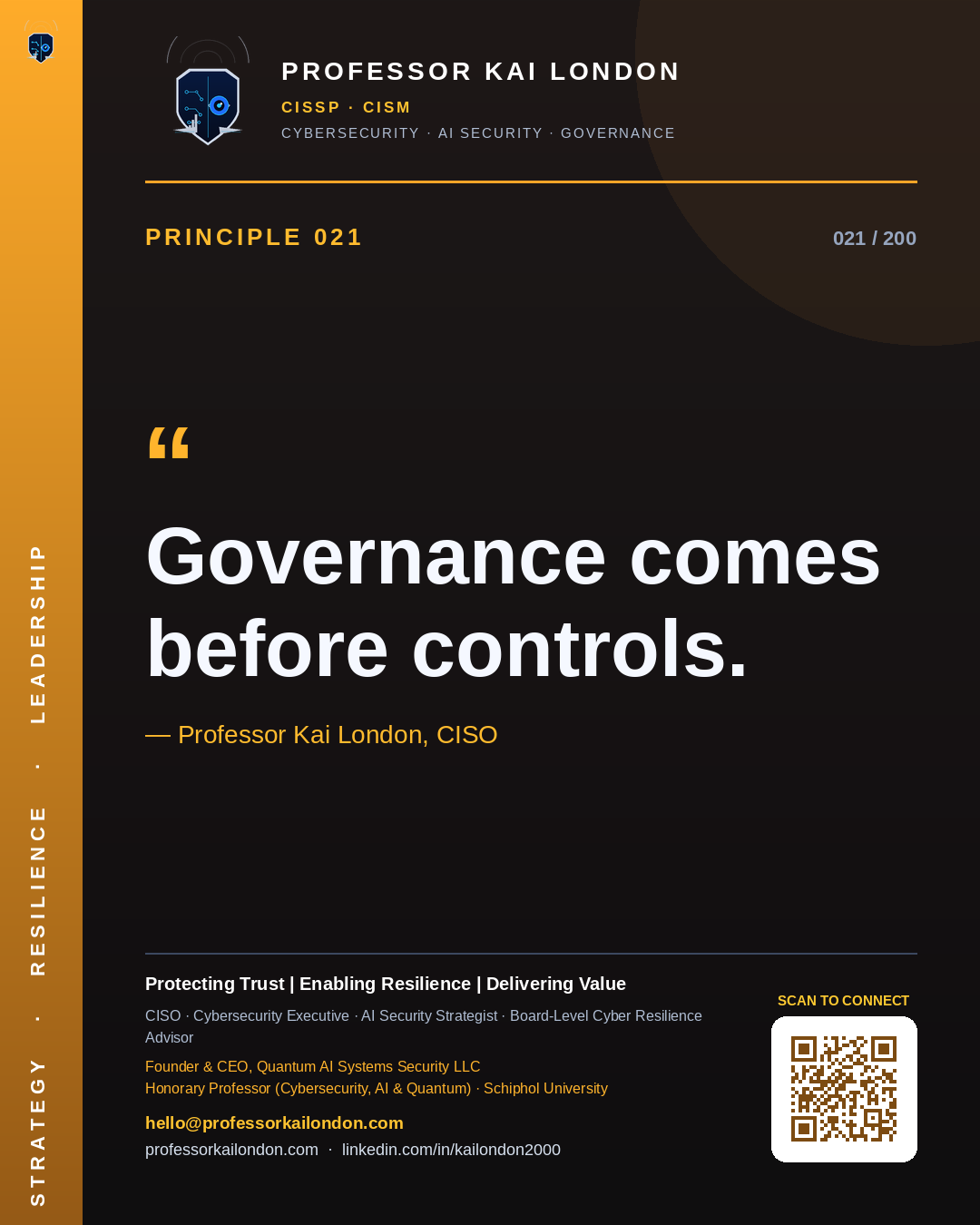 #021 — Governance comes before controls.
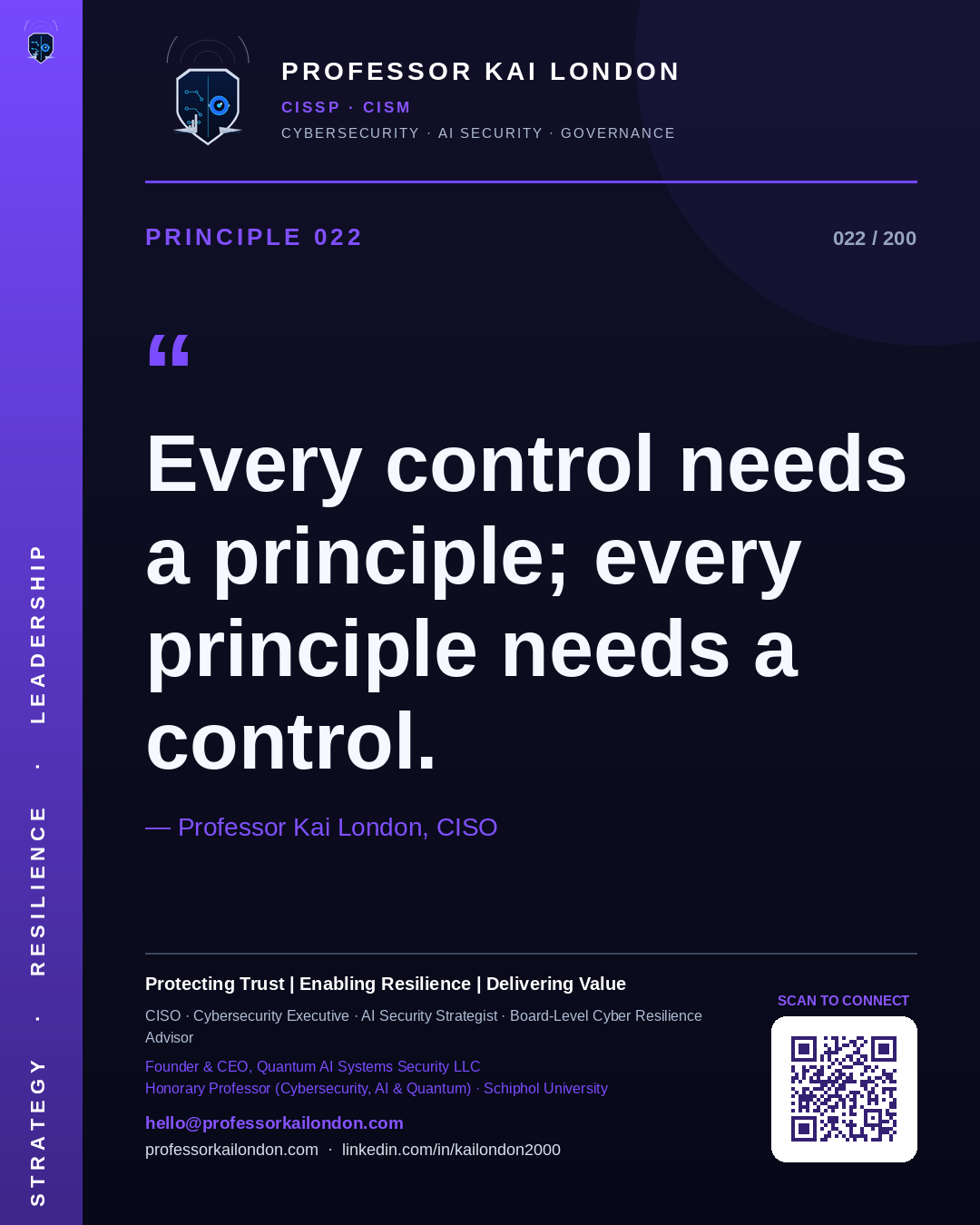 #022 — Every control needs a principle; every principle needs a control.
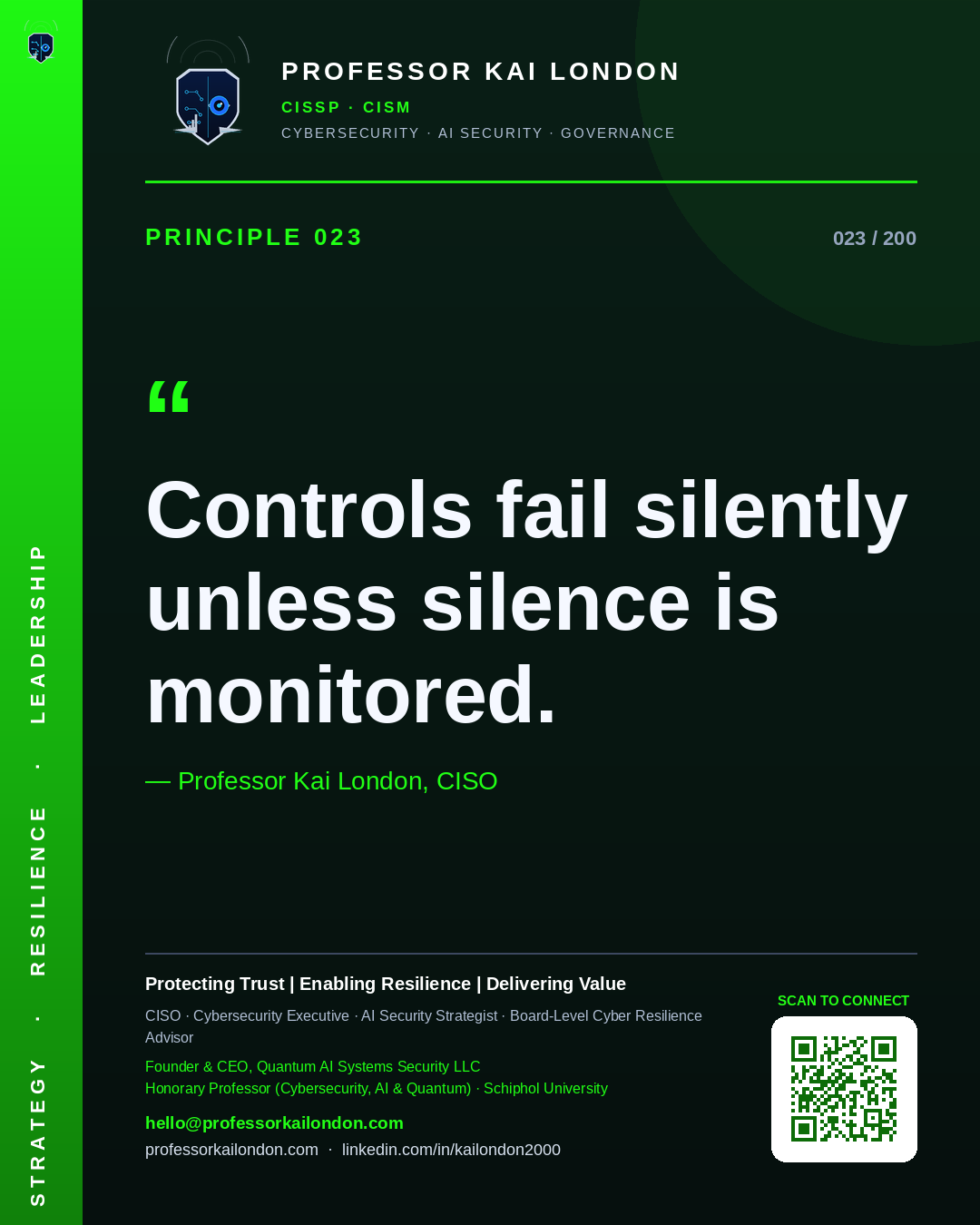 #023 — Controls fail silently unless silence is monitored.
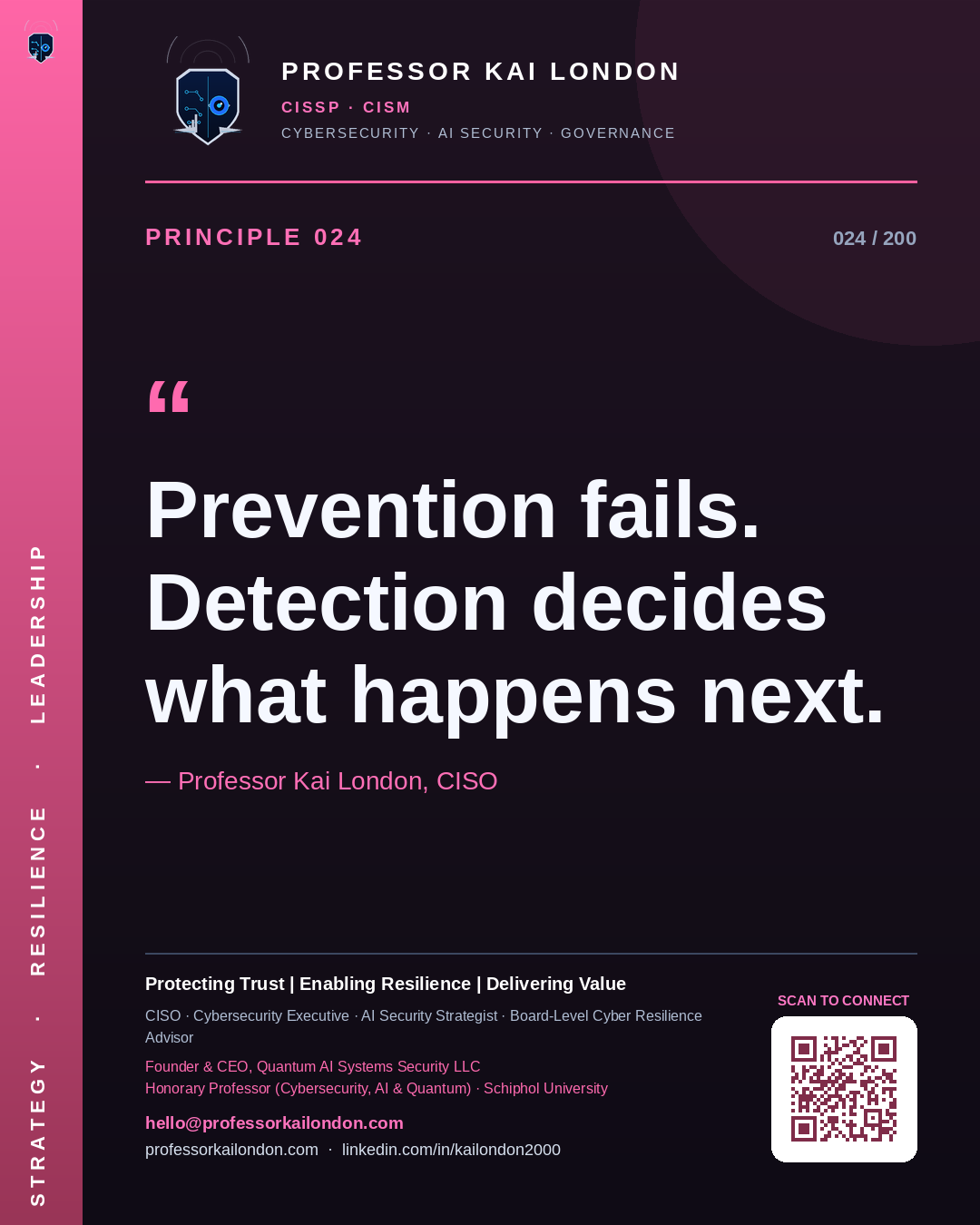 #024 — Prevention fails. Detection decides what happens next.
 #025 — A control that has not been pressure-tested is still only a hope.
 #026 — Blast radius is a business decision.
 #027 — Concentration risk hides inside convenience.
 #028 — Risk acceptance is a decision, not a disappearing act.
 #029 — AI risk is now enterprise risk.
 #030 — A confident wrong answer is still a control failure.
 #031 — Privacy bolted on late is risk priced at a premium.
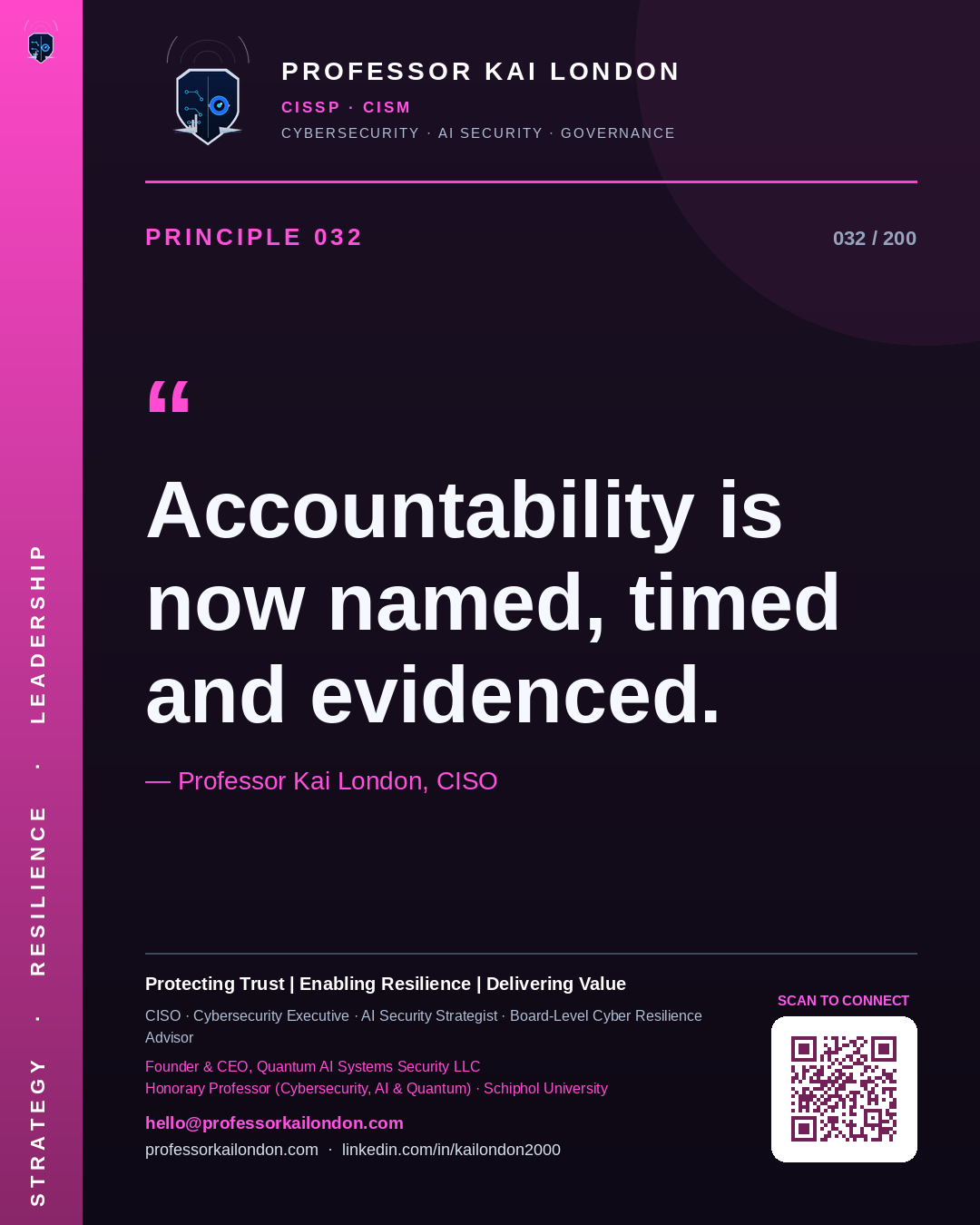 #032 — Accountability is now named, timed and evidenced.
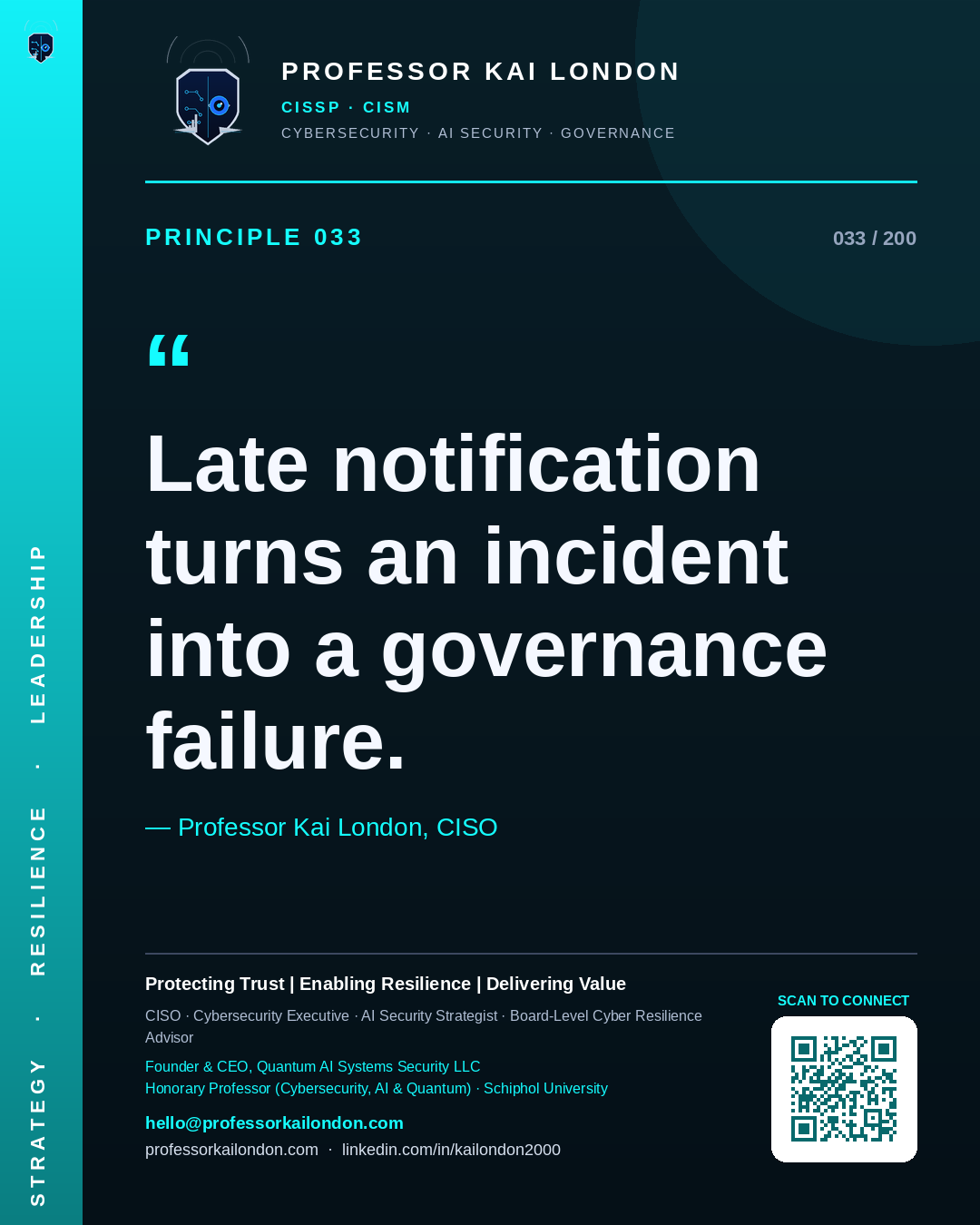 #033 — Late notification turns an incident into a governance failure.
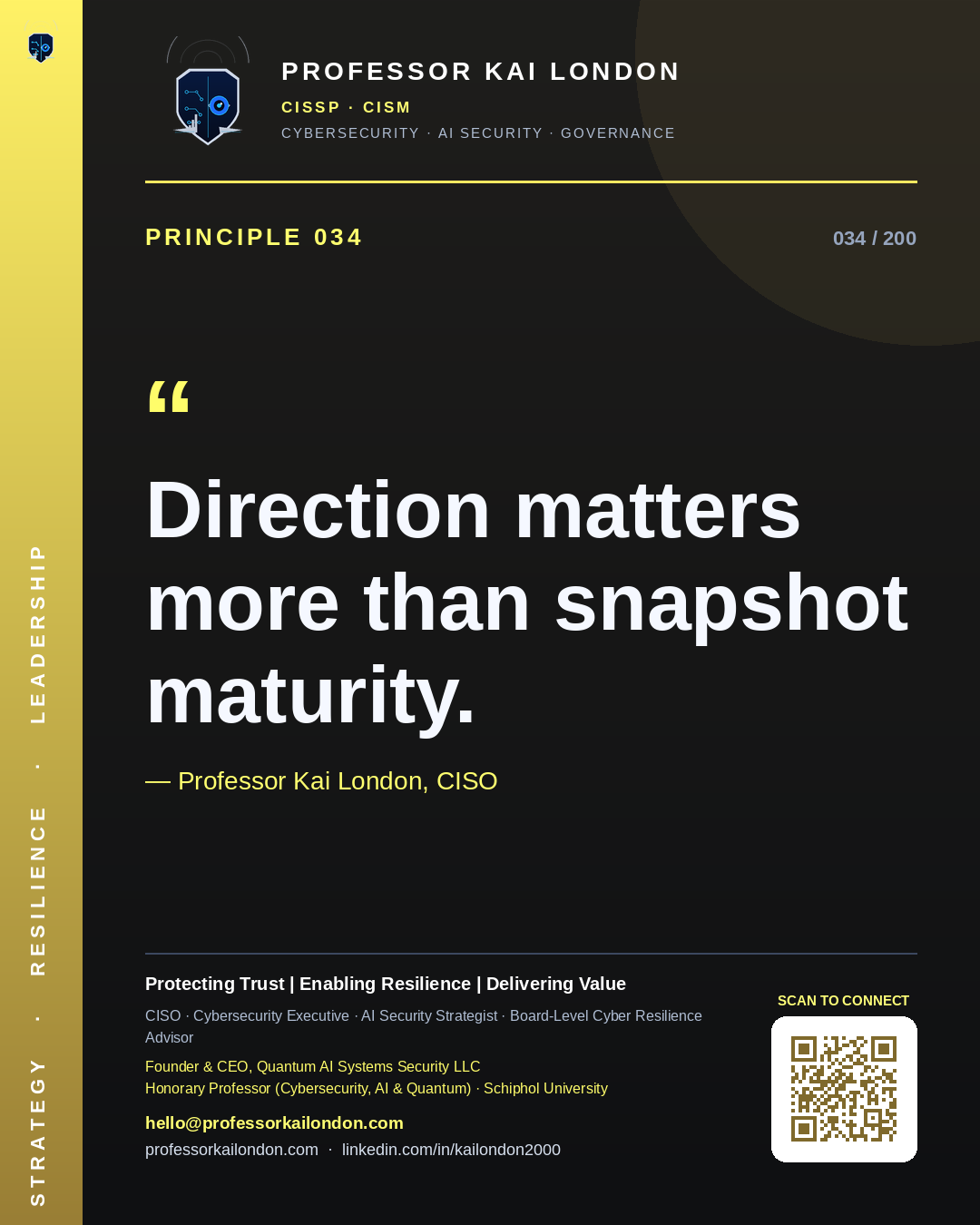 #034 — Direction matters more than snapshot maturity.
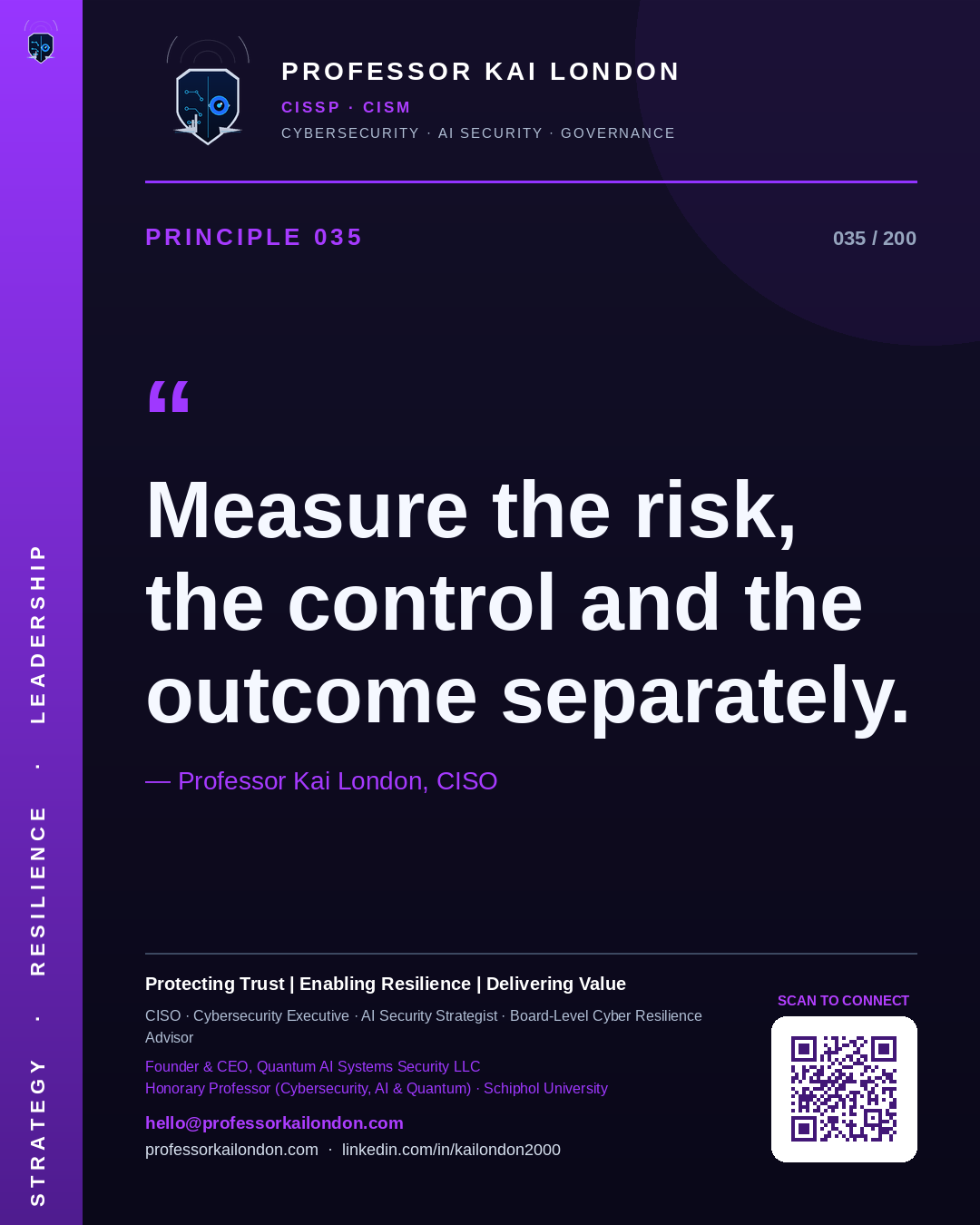 #035 — Measure the risk, the control and the outcome separately.
 #036 — A dashboard that triggers no decision is theatre.
 #037 — Three lines of defence means three different jobs.
 #038 — Test controls — do not admire them.
 #039 — Start with the business process, not the technology stack.
 #040 — Proportionality is the discipline of serious security.
 #041 — Inherent risk shows whether controls are earning their place.
 #042 — Trust damage rarely follows technical severity.
 #043 — Trust earned in calm is the capital spent in crisis.
 #044 — The containment path must be rehearsed before the breach.
 #045 — Structured escalation beats silence and panic.
 #046 — Win, avoid, prove — most organisations fail the third.
 #047 — The morning after the breach is the only honest test.
 #048 — A binder on a shelf is not a security programme.
 #049 — The right action, at the right time, by the right owner — with evidence.
 #050 — Governance was never about controls — it was about the trust they protect.
 #051 — Zero Trust is not a product — it is a refusal to believe without proof.
 #052 — SASE is not remote access — it is business access under continuous judgement.
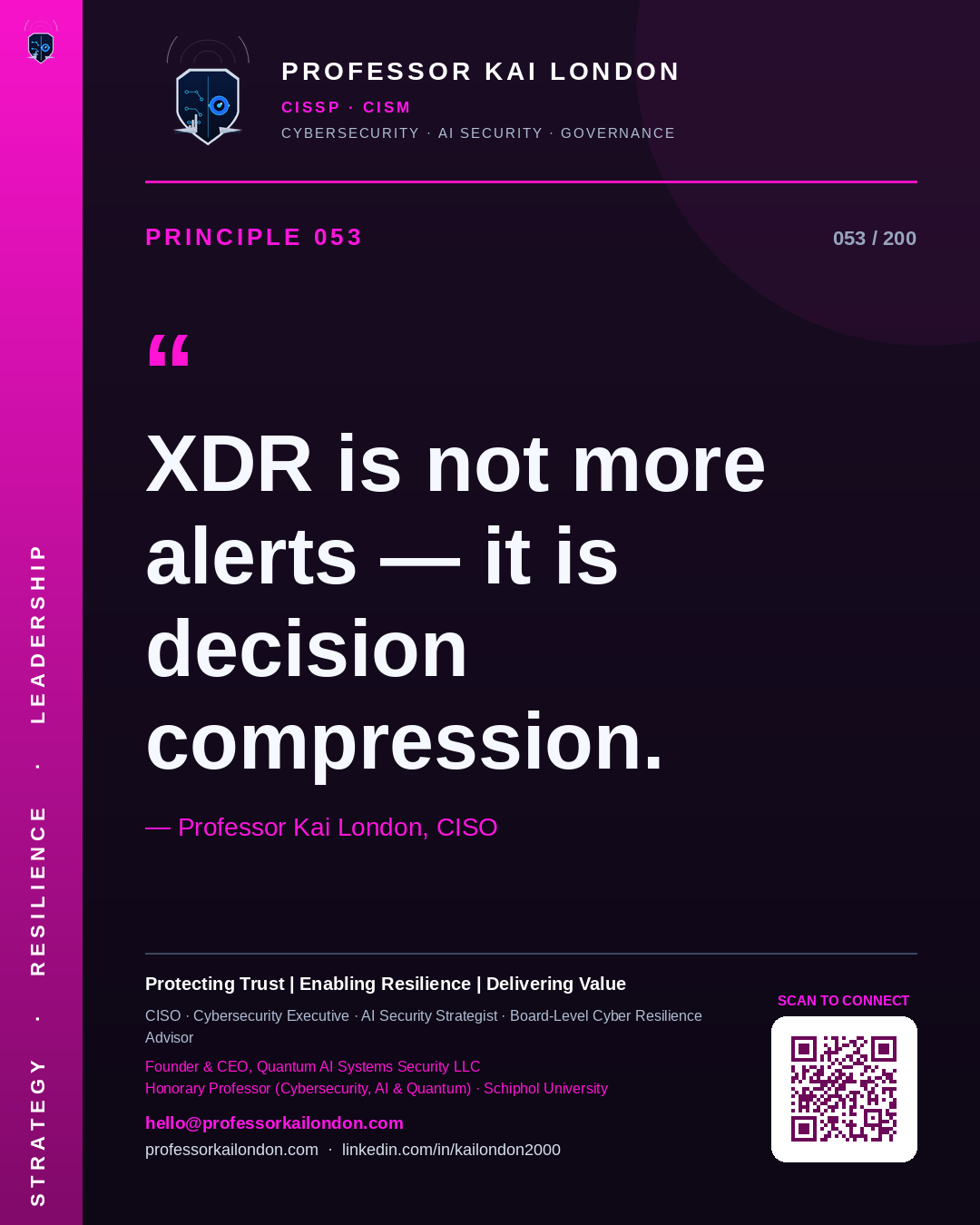 #053 — XDR is not more alerts — it is decision compression.
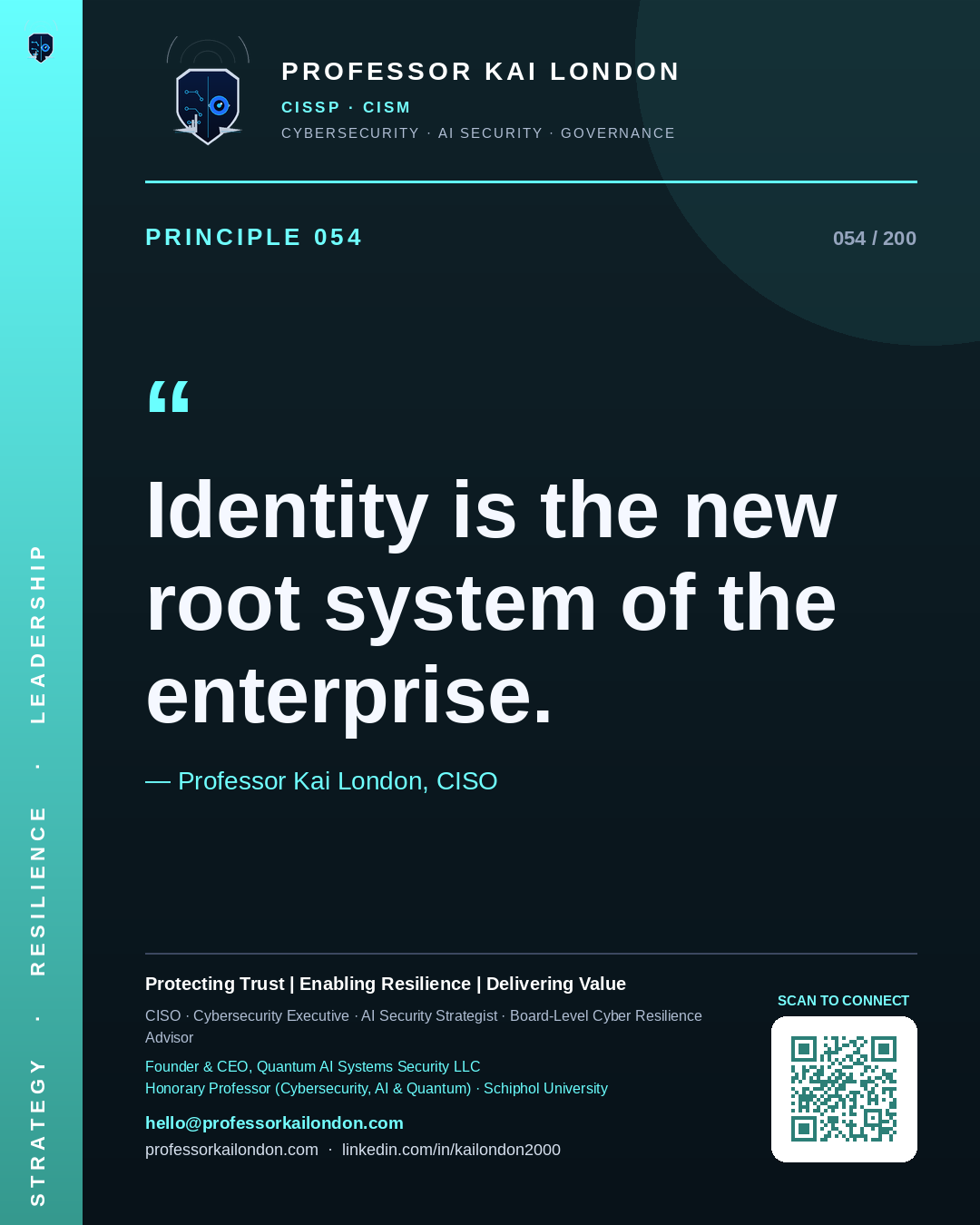 #054 — Identity is the new root system of the enterprise.
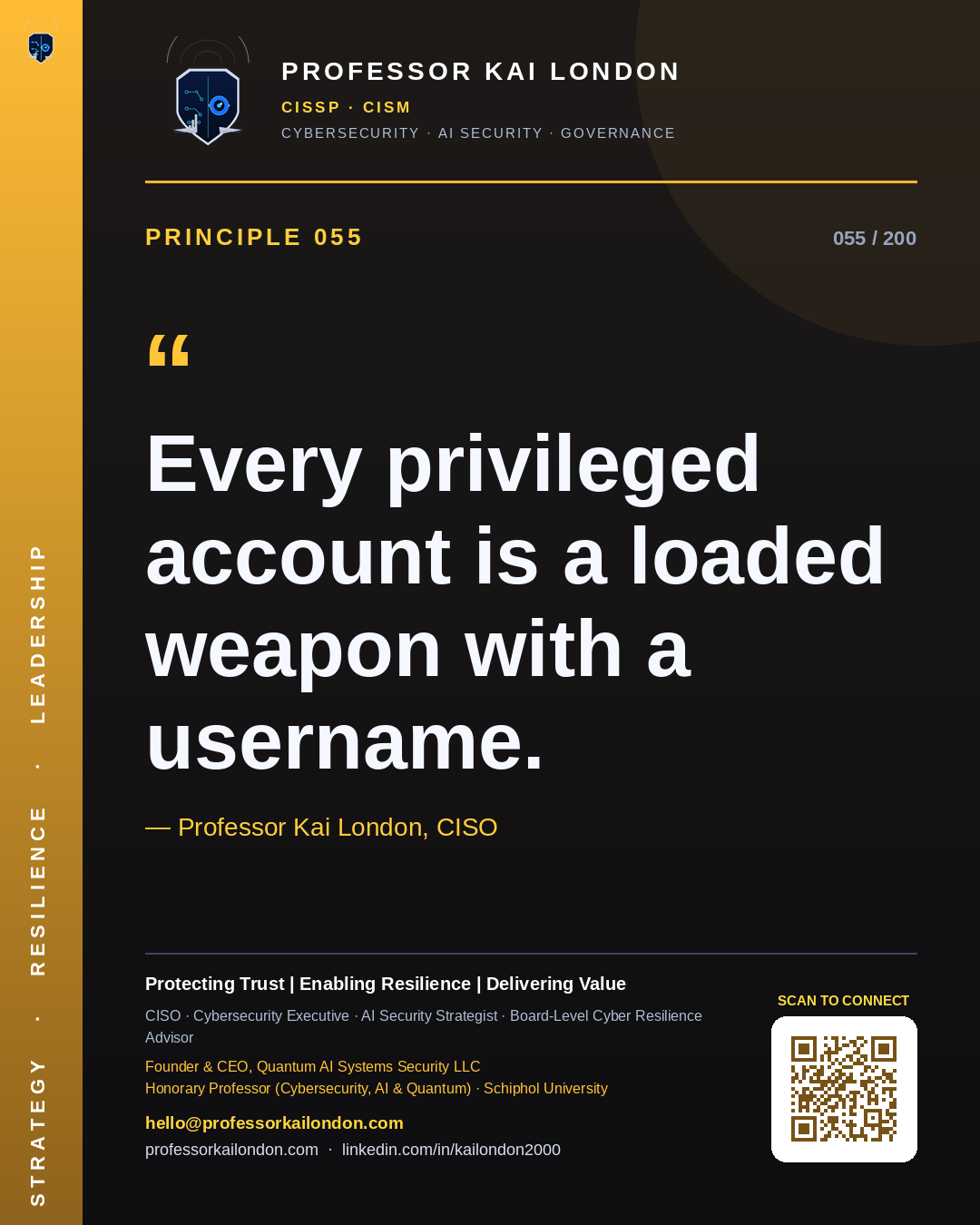 #055 — Every privileged account is a loaded weapon with a username.
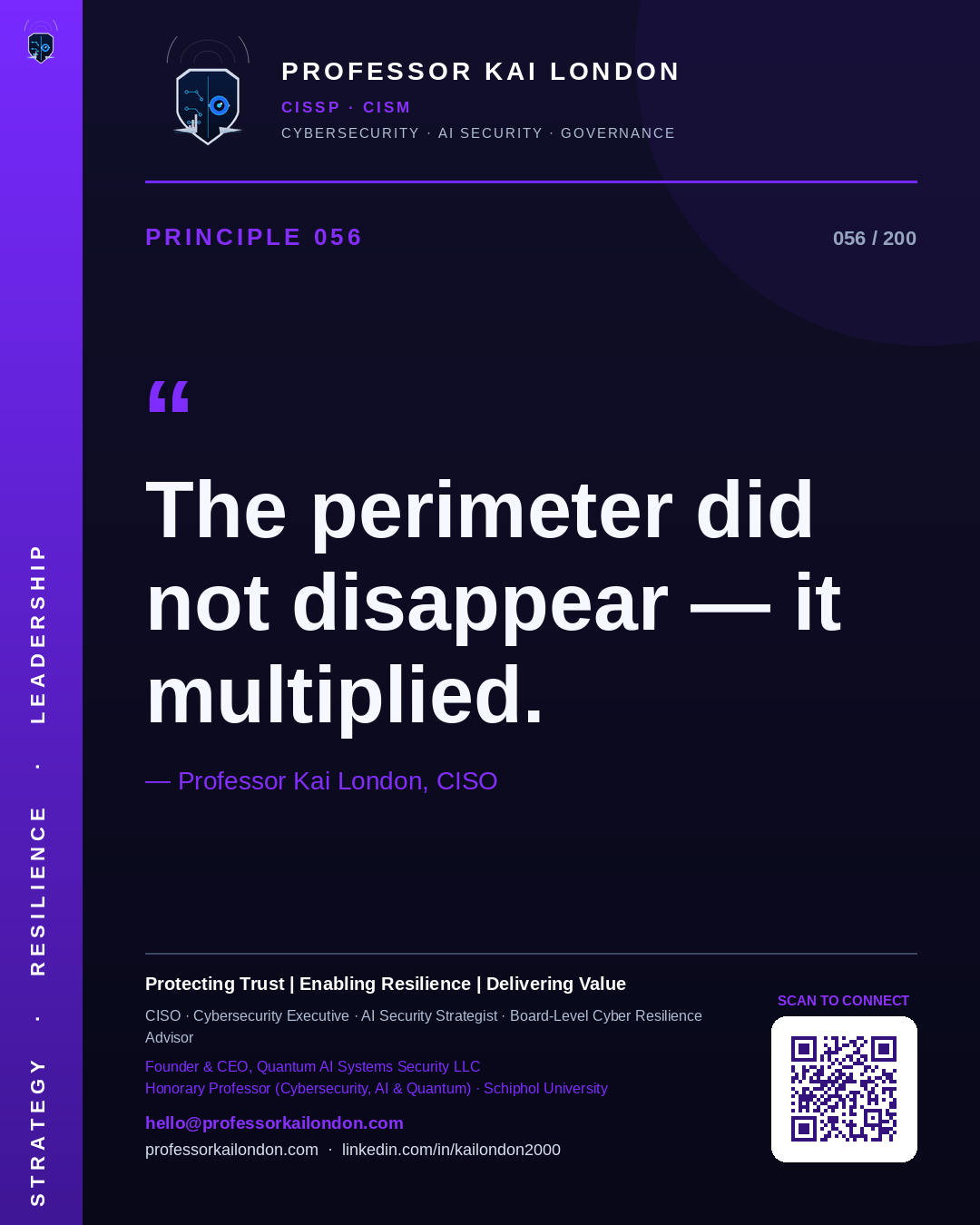 #056 — The perimeter did not disappear — it multiplied.
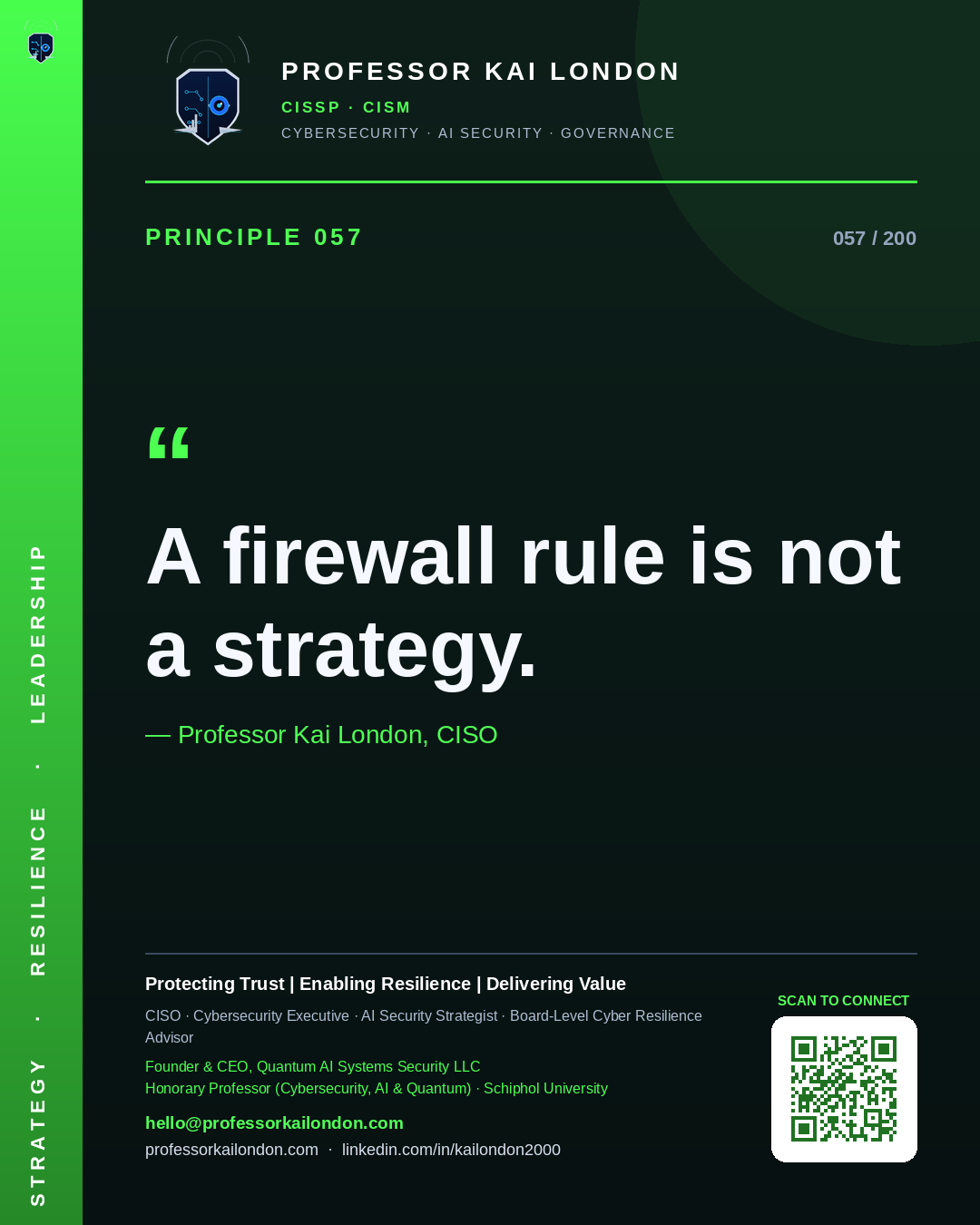 #057 — A firewall rule is not a strategy.
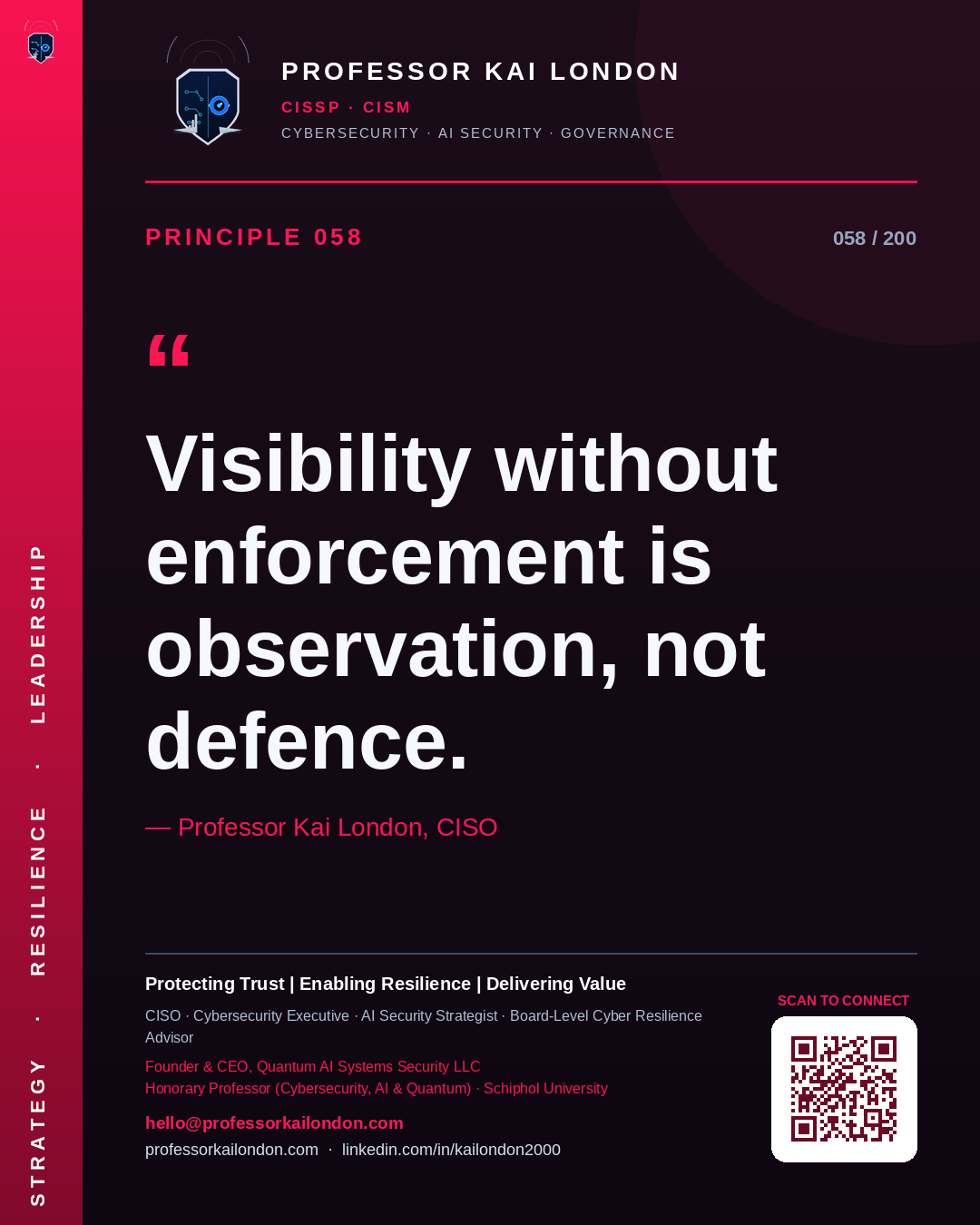 #058 — Visibility without enforcement is observation, not defence.
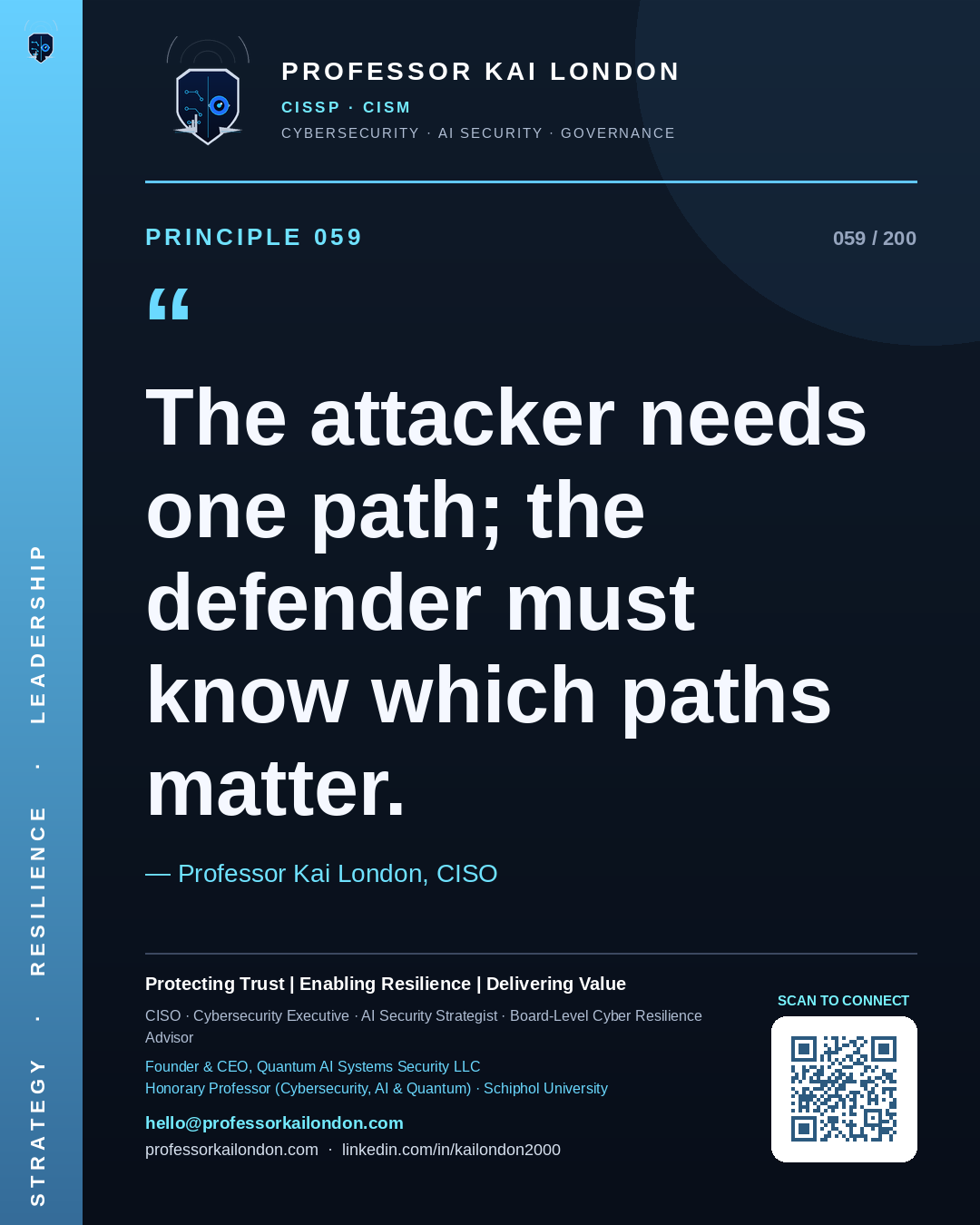 #059 — The attacker needs one path; the defender must know which paths matter.
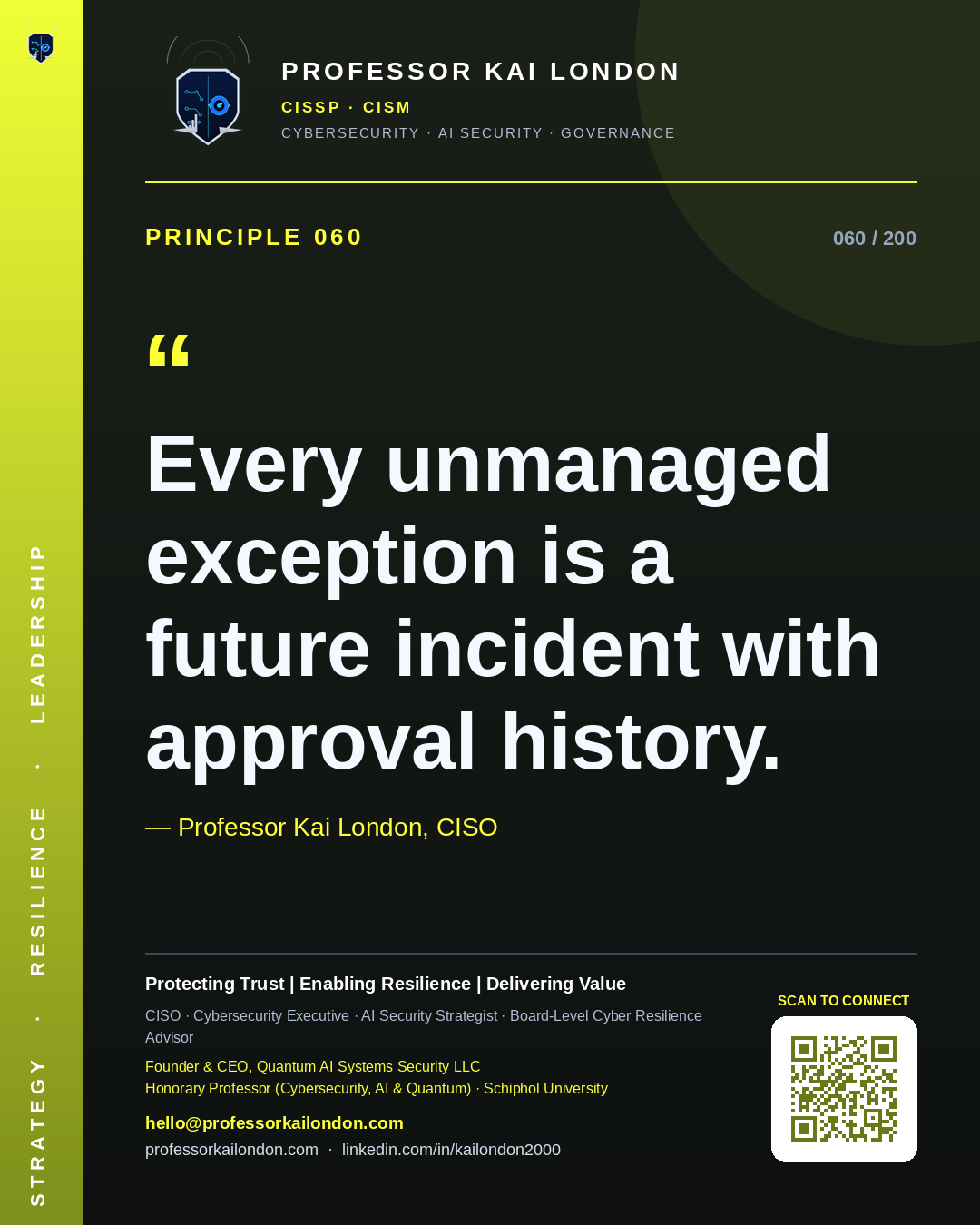 #060 — Every unmanaged exception is a future incident with approval history.
 #061 — Security debt compounds faster than technical debt.
 #062 — The most dangerous access is access that became normal.
 #063 — A policy without enforcement is corporate poetry.
 #064 — A control without an owner is already failing.
 #065 — Threat intelligence is only valuable when it changes a decision.
 #066 — The board does not need more alerts — it needs fewer surprises.
 #067 — Cybersecurity is no longer a cost centre — it is a trust engine.
 #068 — Security architecture is where strategy becomes enforceable.
 #069 — The cloud did not remove risk — it made weak governance scalable.
 #070 — Hybrid work did not weaken security — poor access design did.
 #071 — The helpdesk is now part of the attack surface.
 #072 — An API is a door — treat it like one.
 #073 — Data does not leak only through breaches — it leaks through bad design.
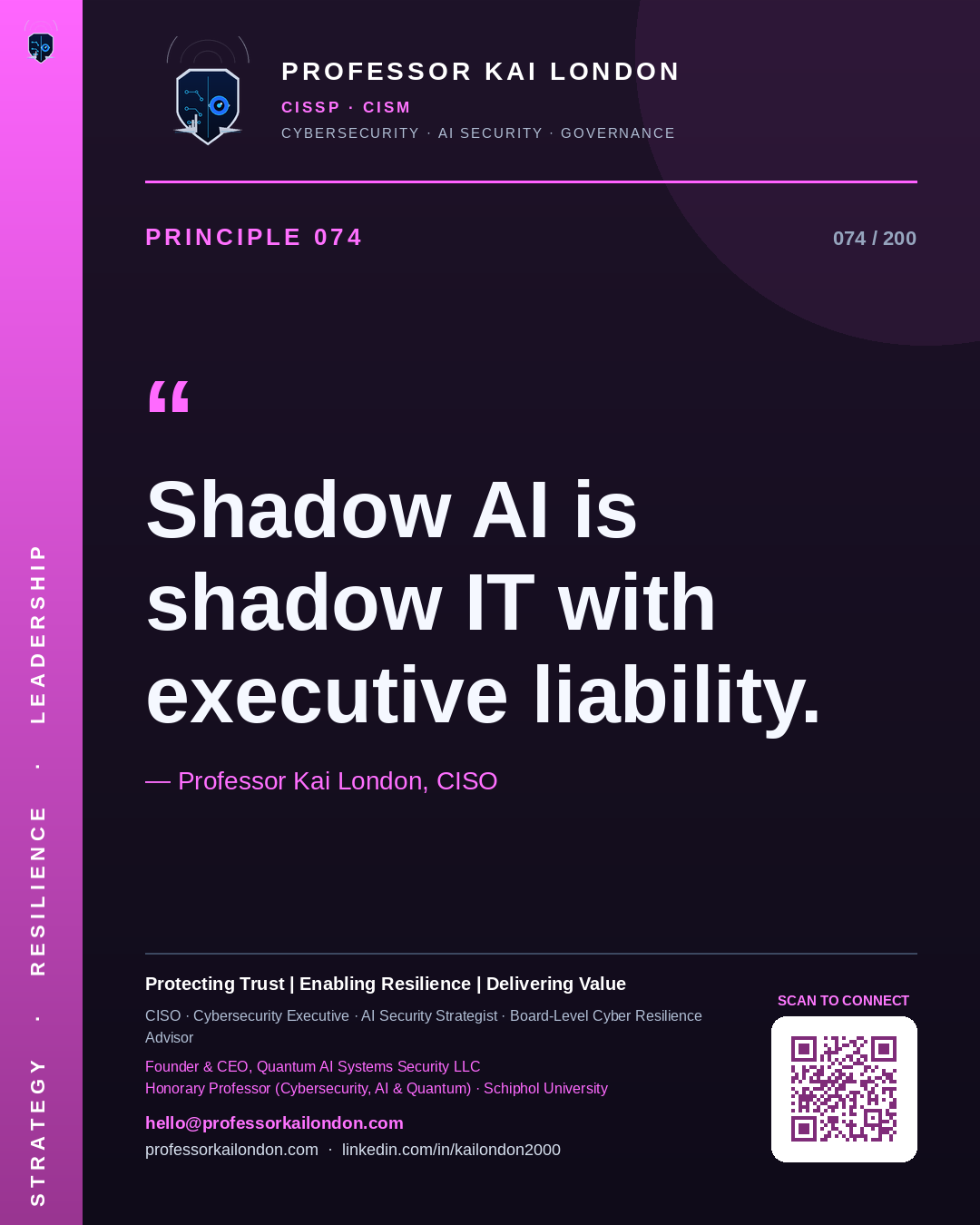 #074 — Shadow AI is shadow IT with executive liability.
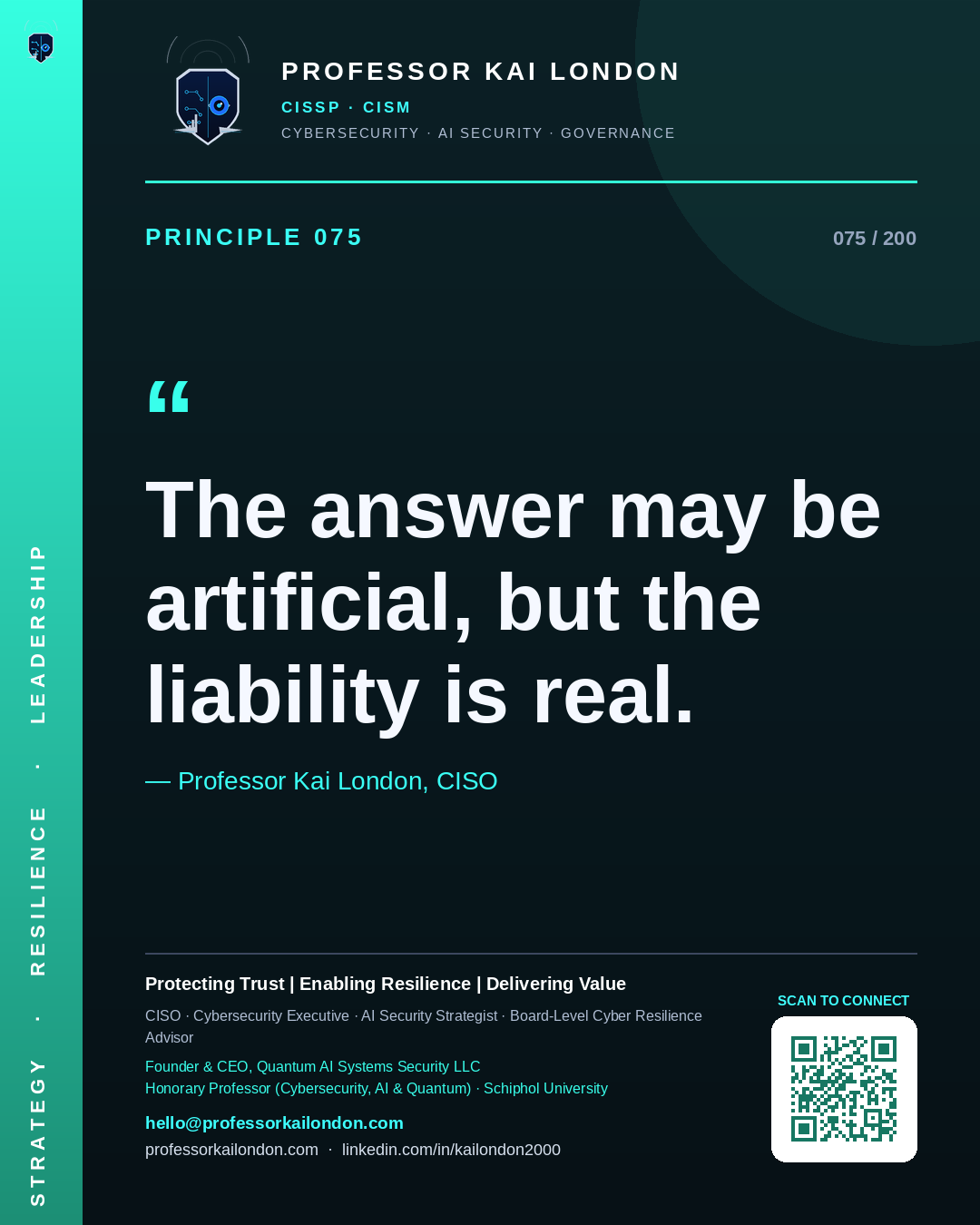 #075 — The answer may be artificial, but the liability is real.
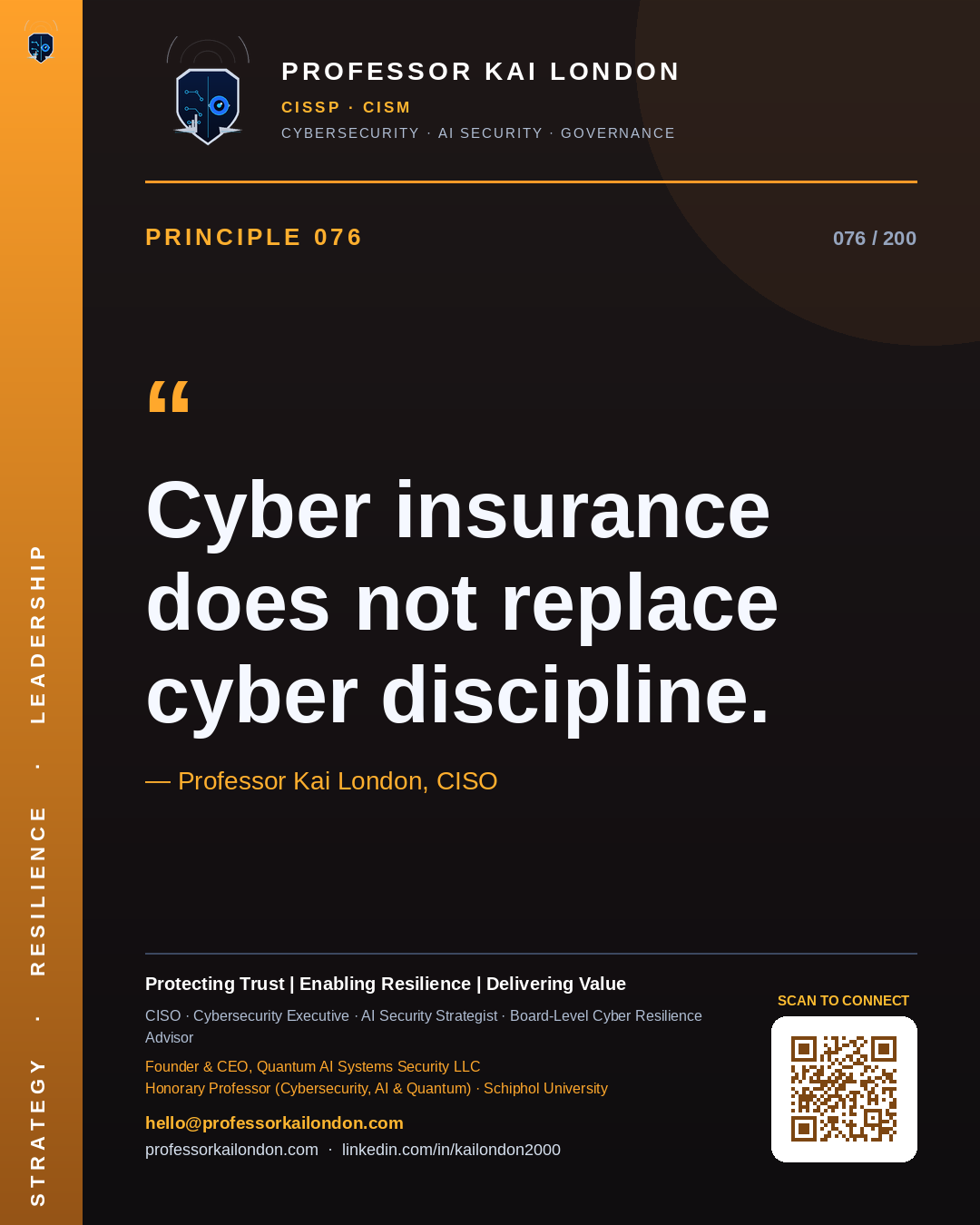 #076 — Cyber insurance does not replace cyber discipline.
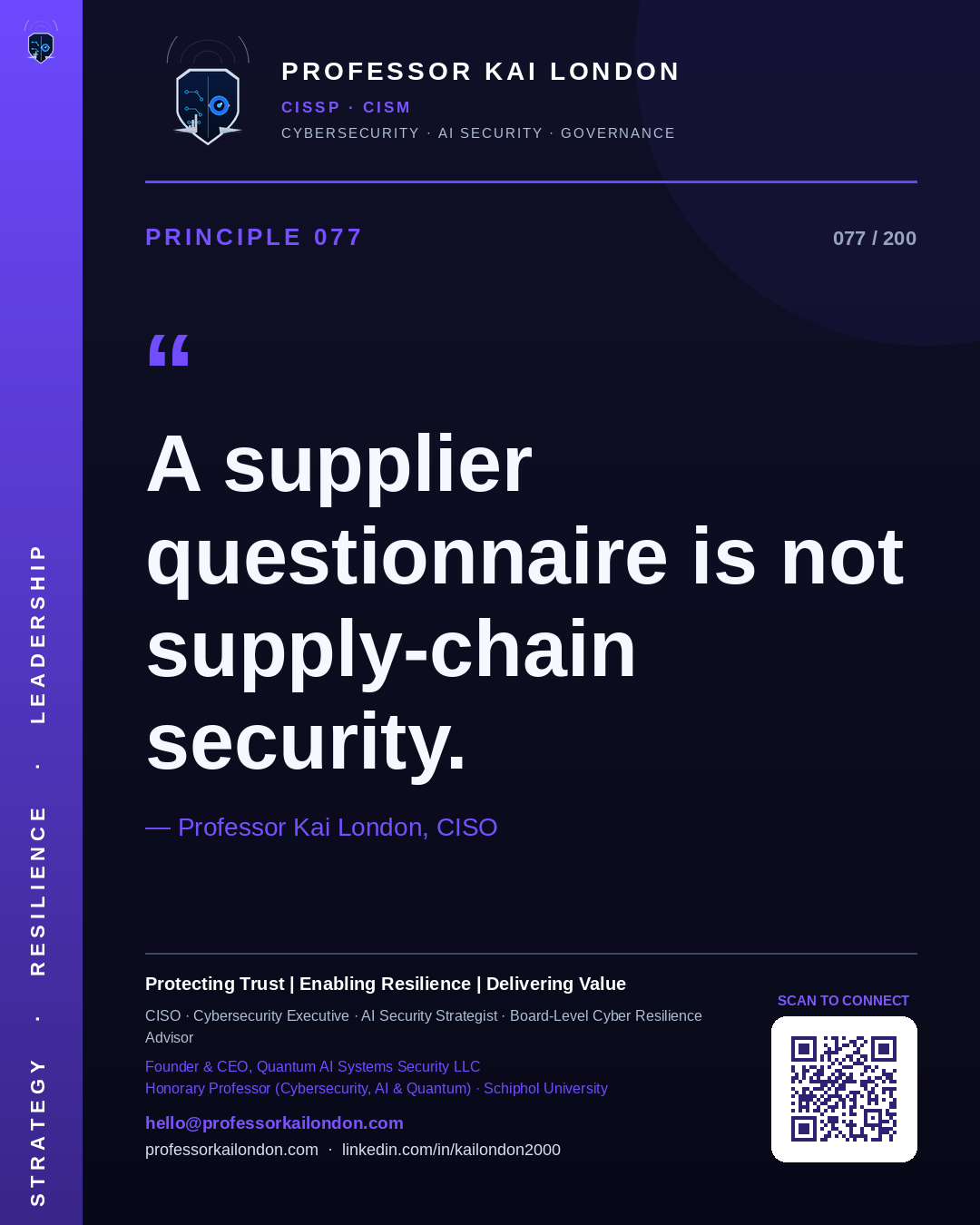 #077 — A supplier questionnaire is not supply-chain security.
 #078 — A green dashboard can still hide a red business risk.
 #079 — Control maturity without business context is expensive decoration.
 #080 — The best CISOs reduce ambiguity before they reduce risk.
 #081 — Cyber leadership is making risk visible before it becomes obvious.
 #082 — Security culture shows itself when policy is inconvenient.
 #083 — The breach report is written long before the breach.
 #084 — Forensics begin before the incident.
 #085 — The attacker does not care who owns the system.
 #086 — Cyber resilience is a team sport with named players.
 #087 — The faster you contain, the less you explain.
 #088 — A crisis does not create weakness — it reveals it.
 #089 — Every merger imports trust; every integration imports risk.
 #090 — The fastest route to breach is often the route approved for convenience.
 #091 — A secure design that cannot be operated is not secure.
 #092 — Security transformation fails when evidence is designed last.
 #093 — The audit should not be the first time a control is tested.
 #094 — Continuous access requires continuous assurance.
 #095 — A control that cannot fail safely can fail catastrophically.
 #096 — Cyber risk is not reduced by noise — it is reduced by decisions.
 #097 — Trust is not a statement — it is an operating condition.
 #098 — The elite cyber professional protects the packet, the policy and the profit.
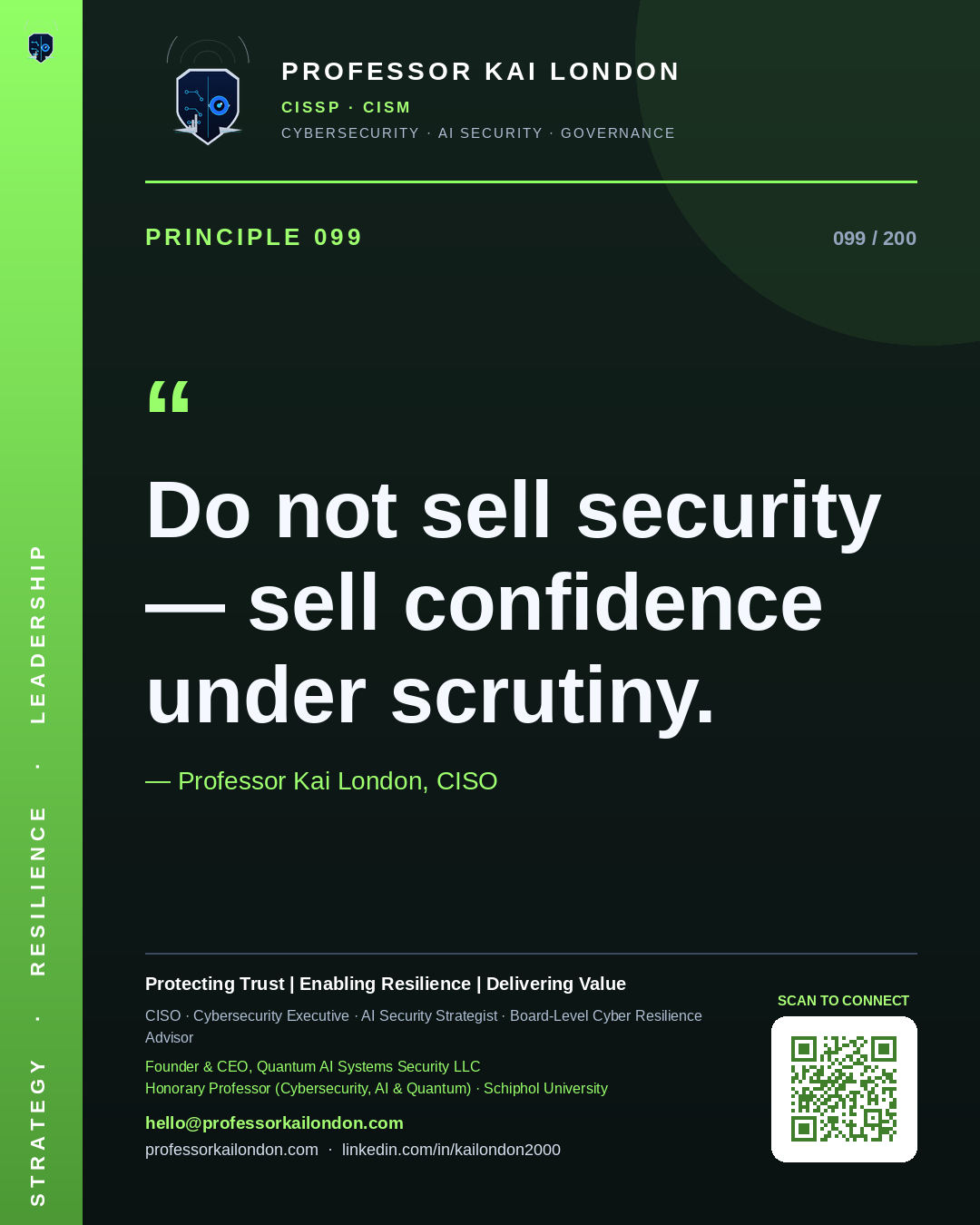 #099 — Do not sell security — sell confidence under scrutiny.
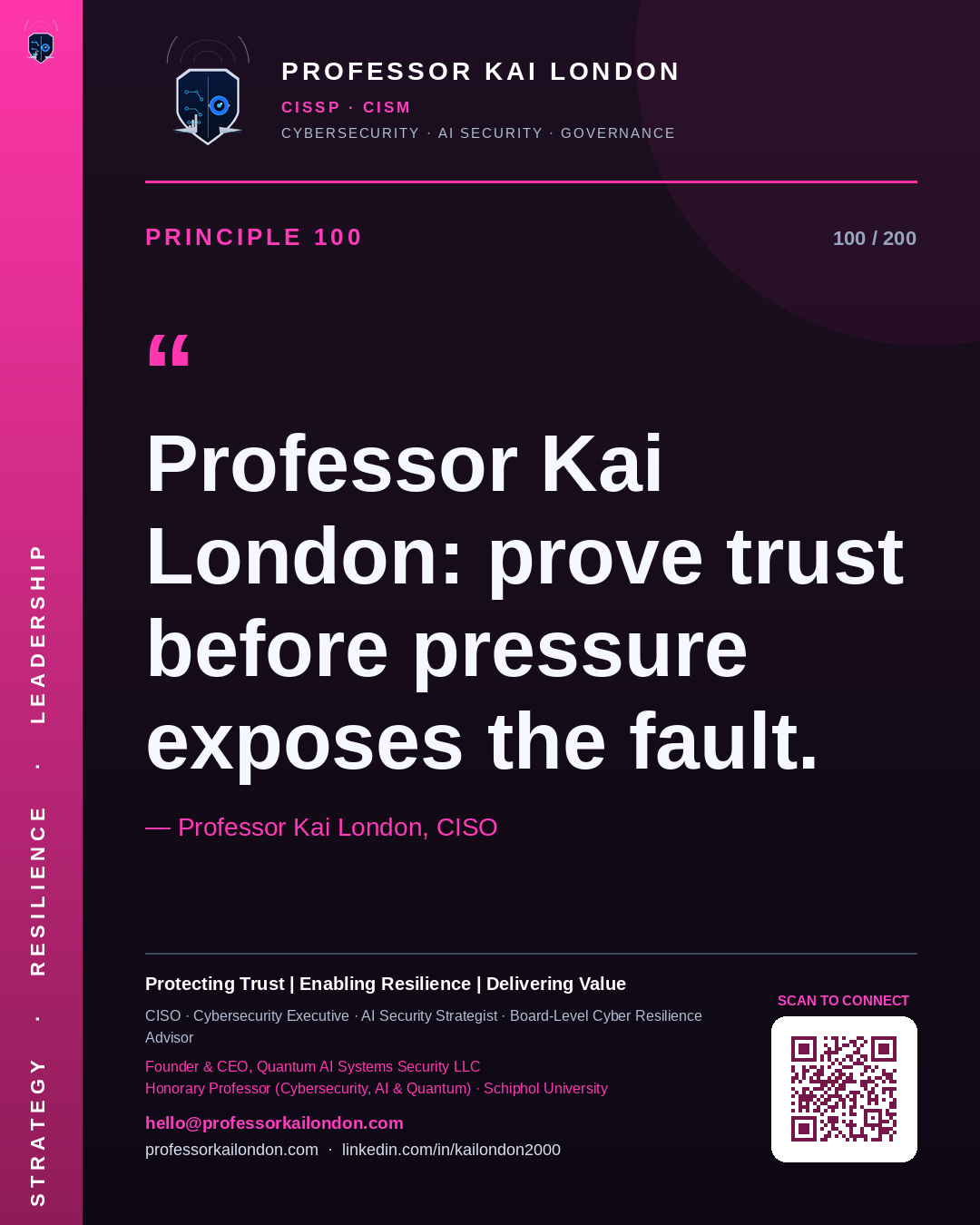 #100 — Professor Kai London: prove trust before pressure exposes the fault.
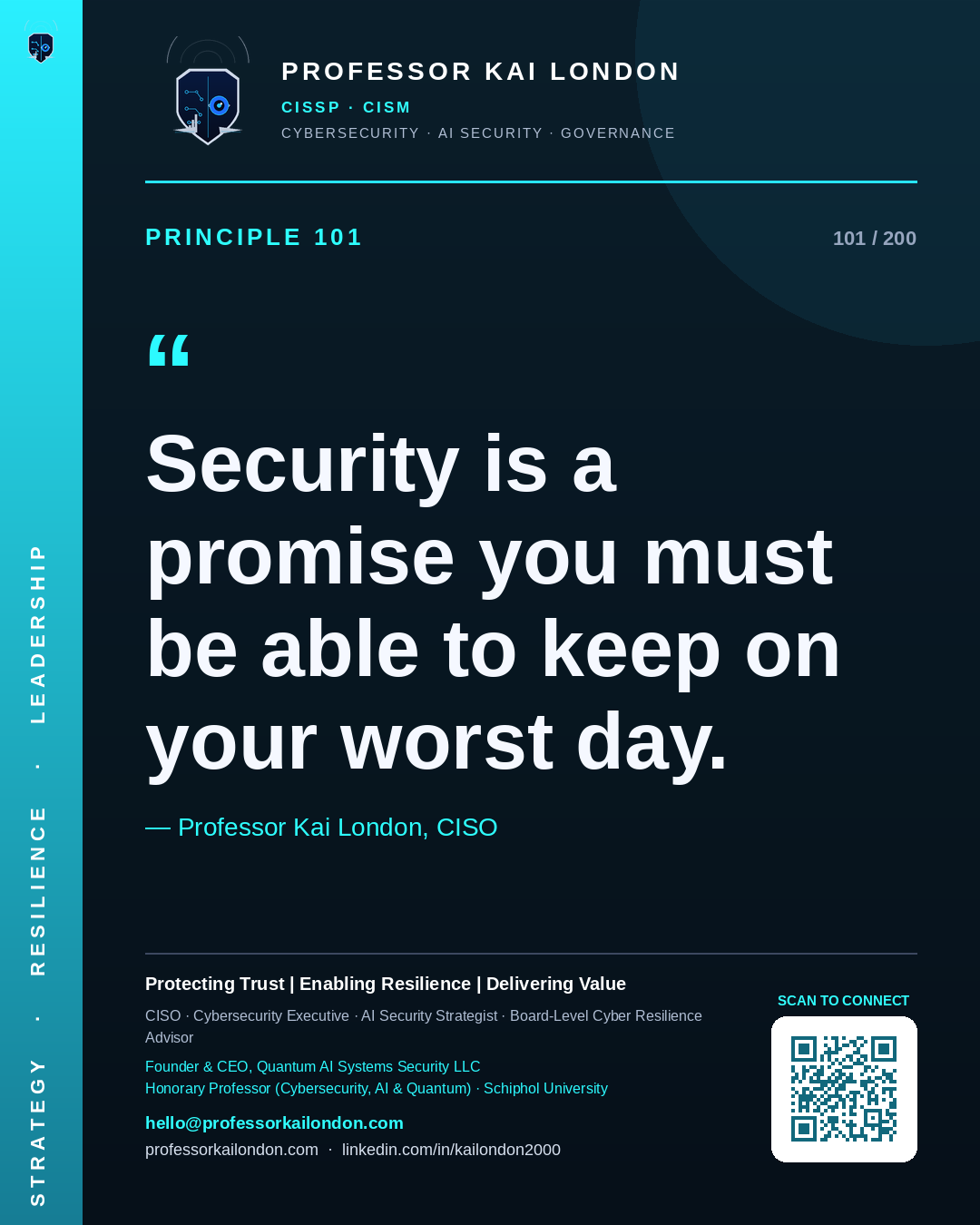 #101 — Security is a promise you must be able to keep on your worst day.
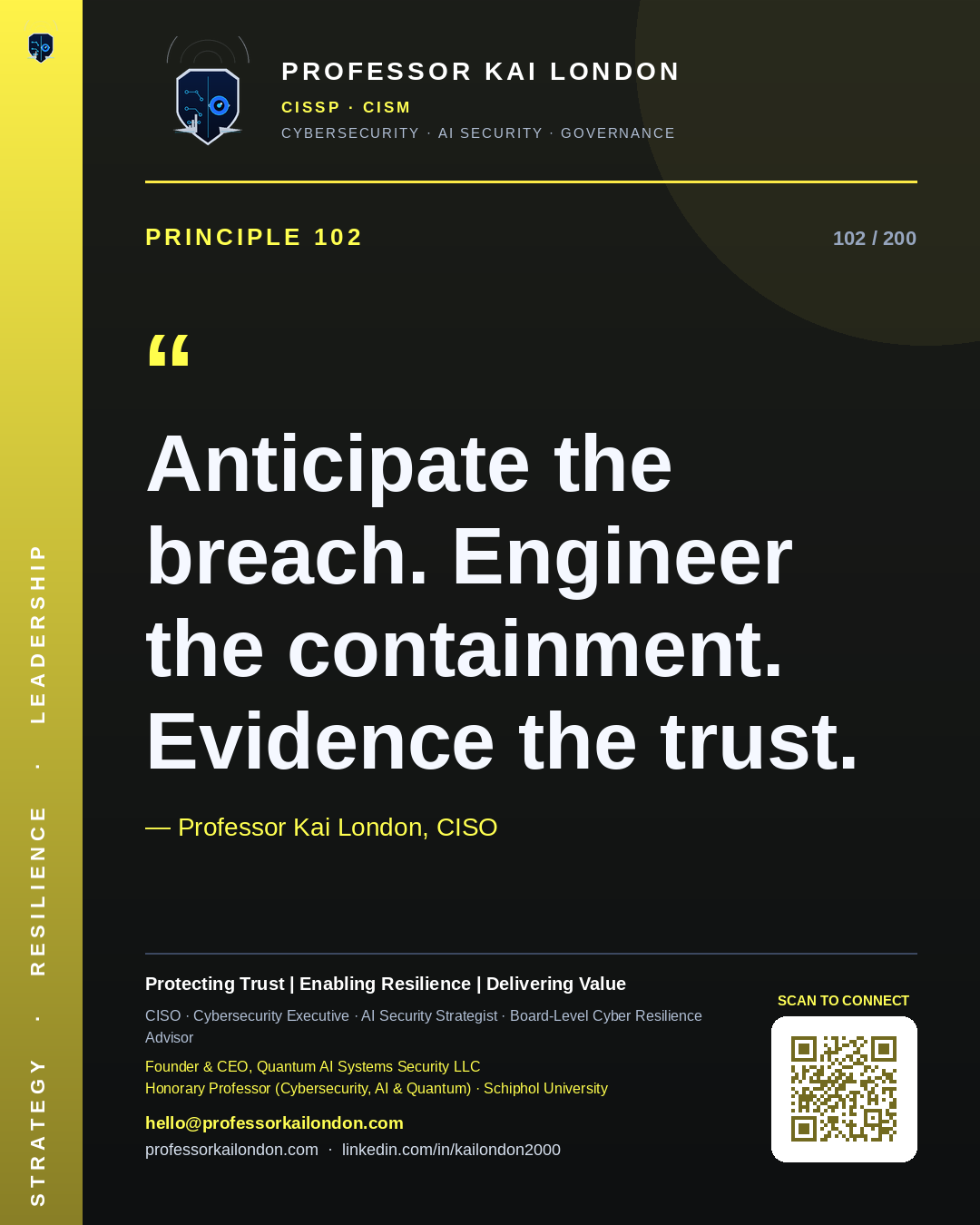 #102 — Anticipate the breach. Engineer the containment. Evidence the trust.
 #103 — Verification is cheaper than regret.
 #104 — Assume compromise, then design like it already happened.
 #105 — The best incident is the one your design made boring.
 #106 — Trust is a budget — spend it deliberately, never by default.
 #107 — You don't rise to the threat; you fall to your weakest rehearsal.
 #108 — An unverified login is a stranger you handed the keys to.
 #109 — Security that slows the business will be switched off in the dark.
 #110 — The cloud rents you speed and lends you blind spots.
 #111 — A privilege nobody reviews becomes a liability nobody owns.
 #112 — Detection you never tested is a smoke alarm with no battery.
 #113 — Resilience is bought before the storm, not borrowed during it.
 #114 — Speak risk in the currency of the room: revenue, not red.
 #115 — Every integration is a relationship, and every relationship carries risk.
 #116 — A control without a witness cannot defend you later.
 #117 — The attacker rehearses your environment more than your team does.
 #118 — Secure the path, not just the perimeter — the journey is the target.
 #119 — Visibility without action is just expensive watching.
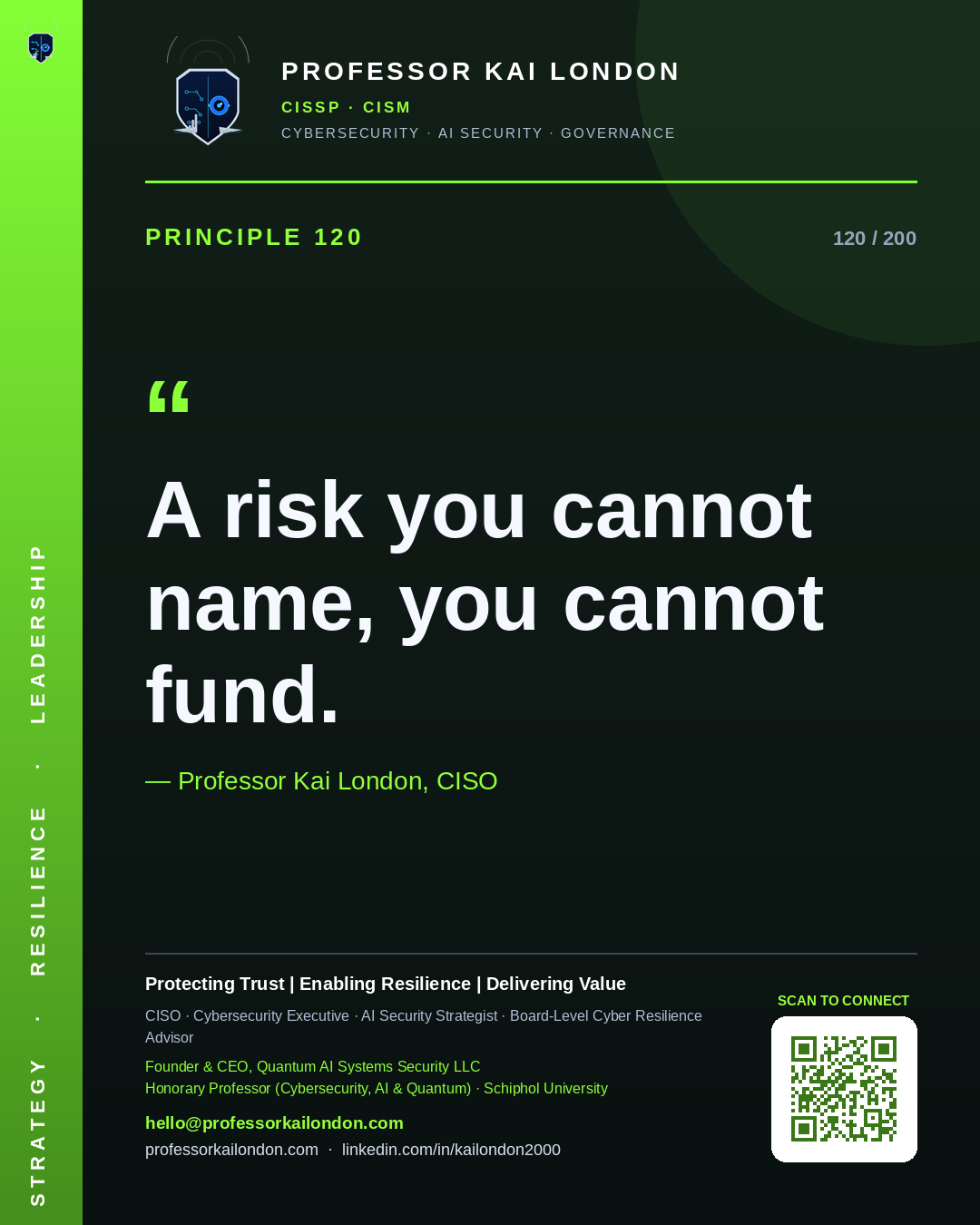 #120 — A risk you cannot name, you cannot fund.
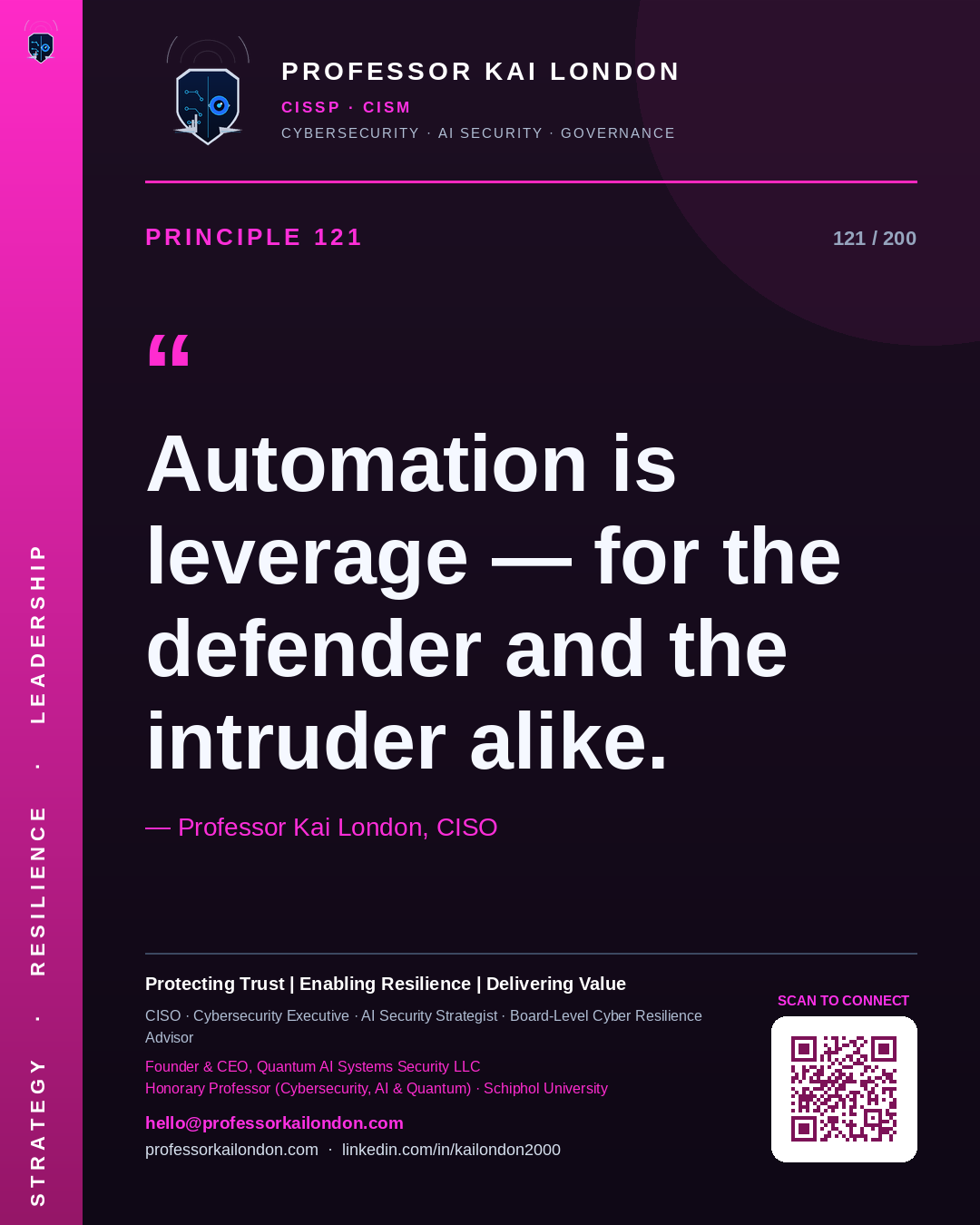 #121 — Automation is leverage — for the defender and the intruder alike.
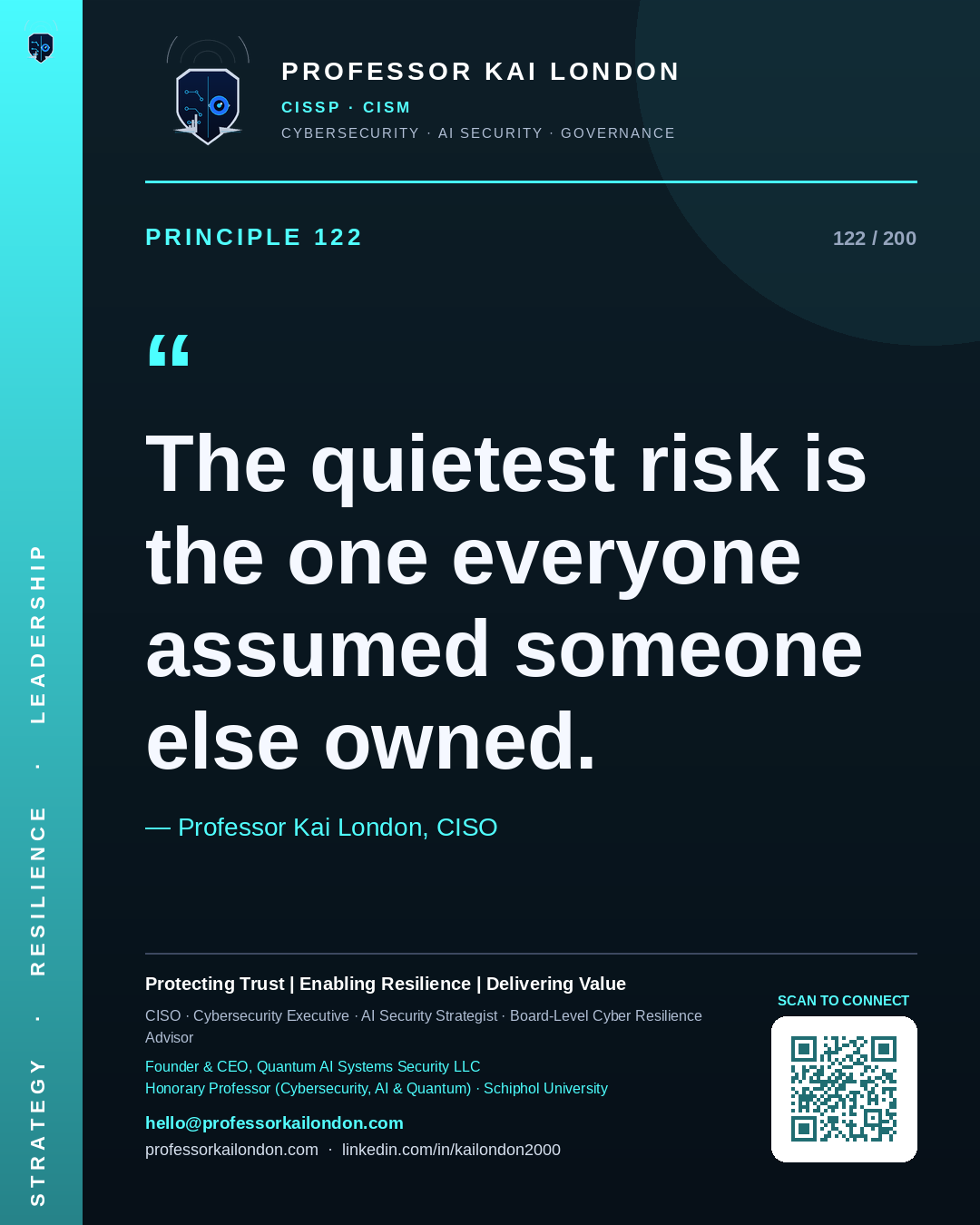 #122 — The quietest risk is the one everyone assumed someone else owned.
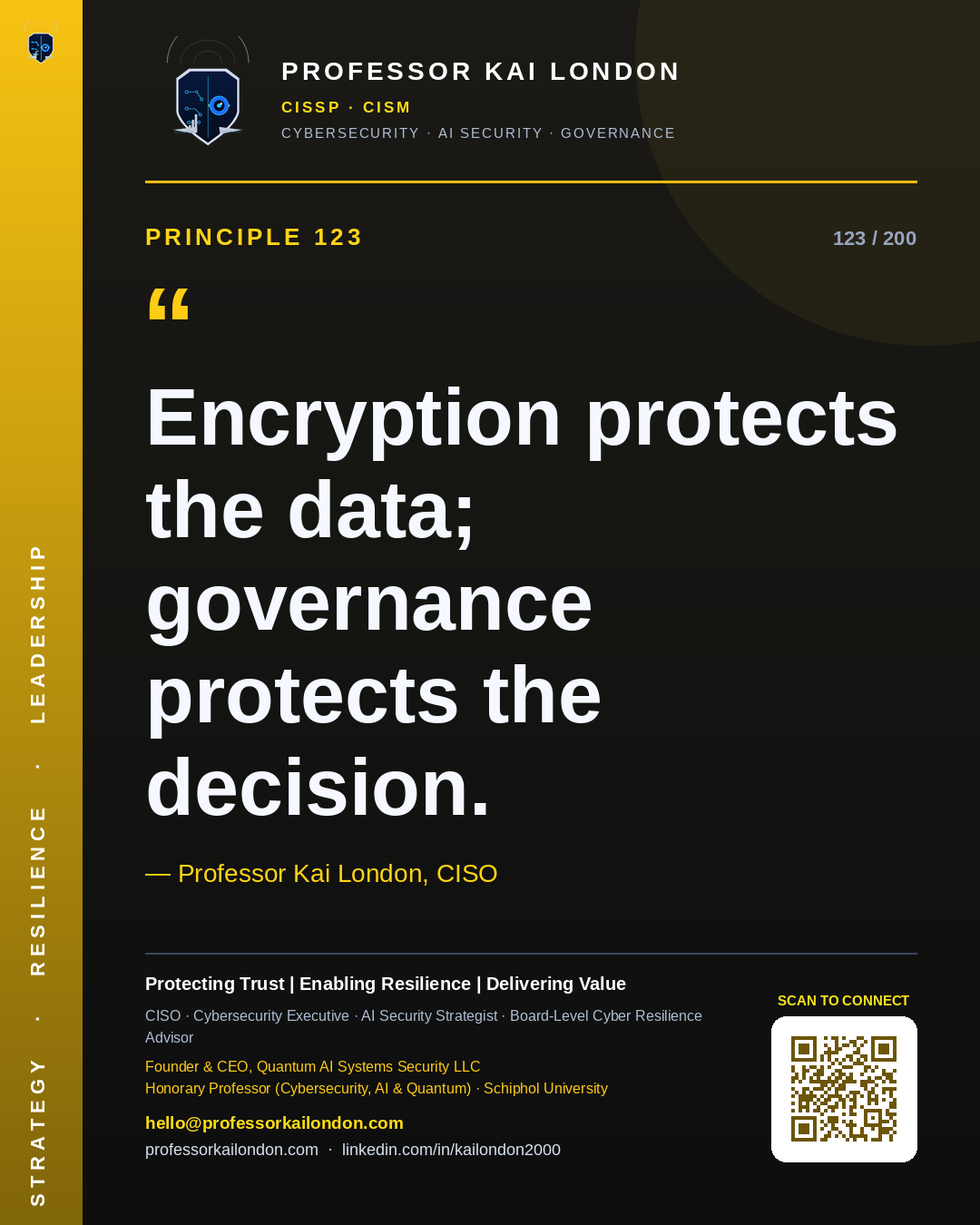 #123 — Encryption protects the data; governance protects the decision.
 #124 — Your suppliers' weakest day is on your balance sheet.
 #125 — Identity is the new firewall — and it is always logged in.
 #126 — Patience is the adversary's favourite exploit.
 #127 — A policy nobody can follow is a risk you wrote down.
 #128 — Recovery time is a promise; test it before you make it.
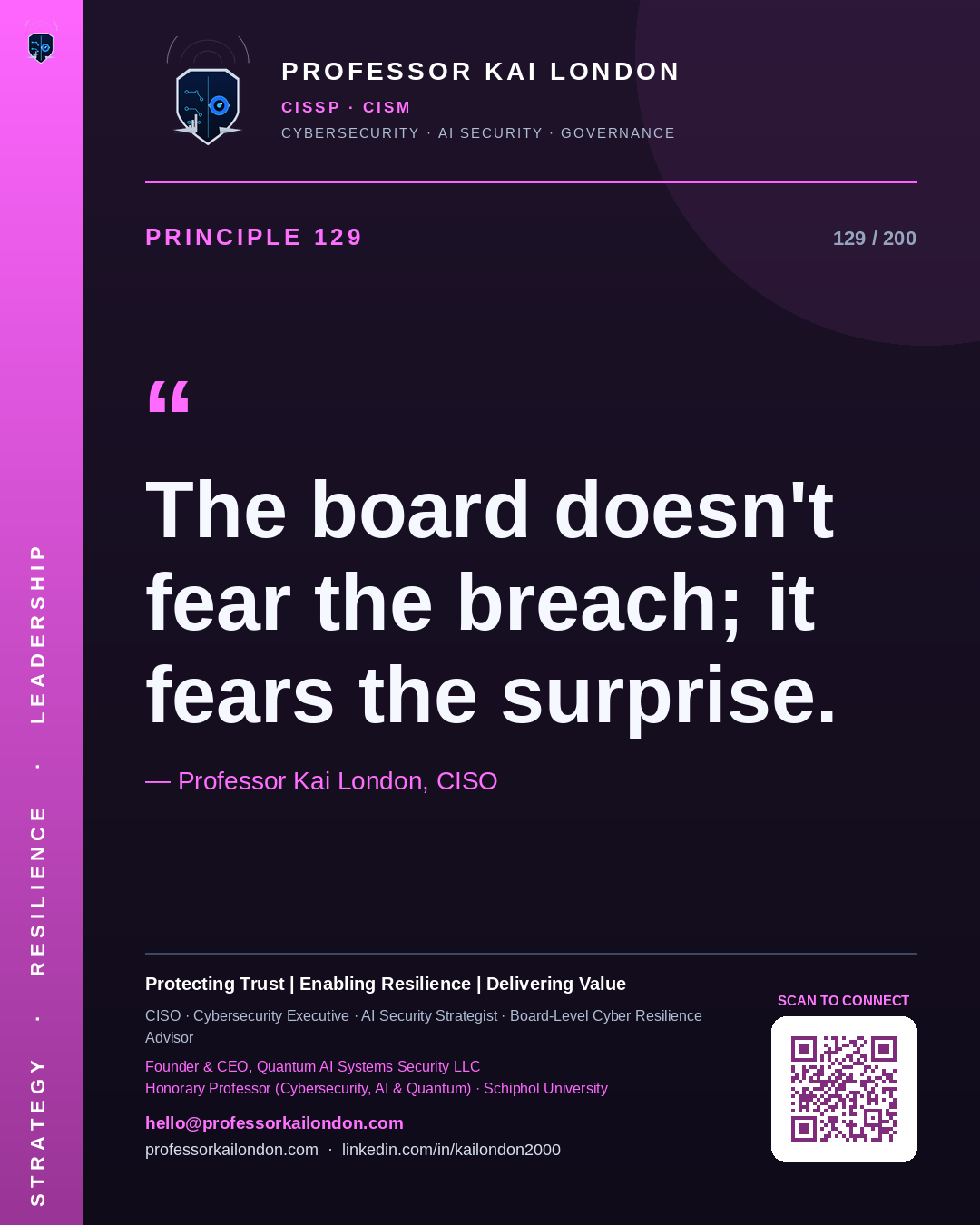 #129 — The board doesn't fear the breach; it fears the surprise.
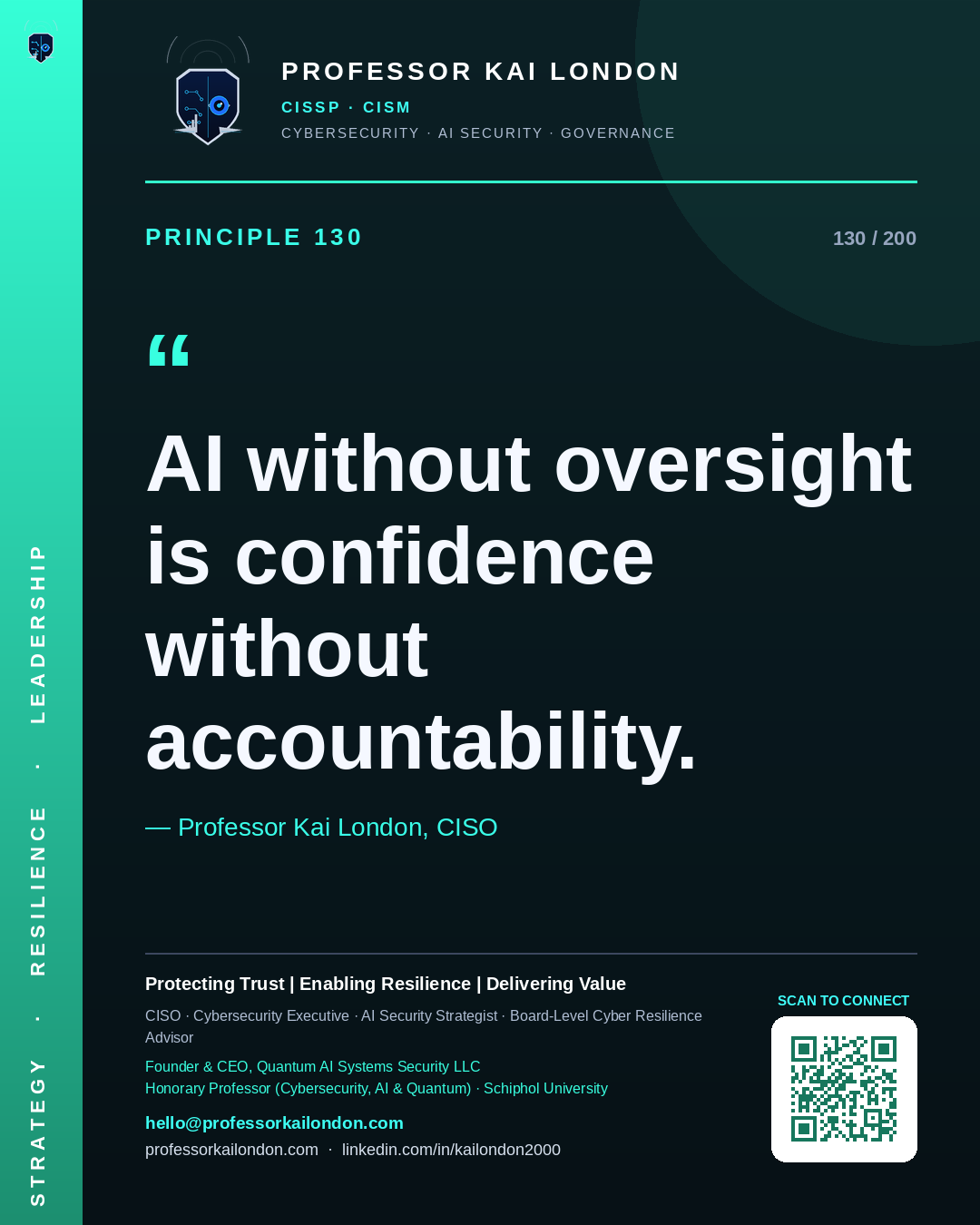 #130 — AI without oversight is confidence without accountability.
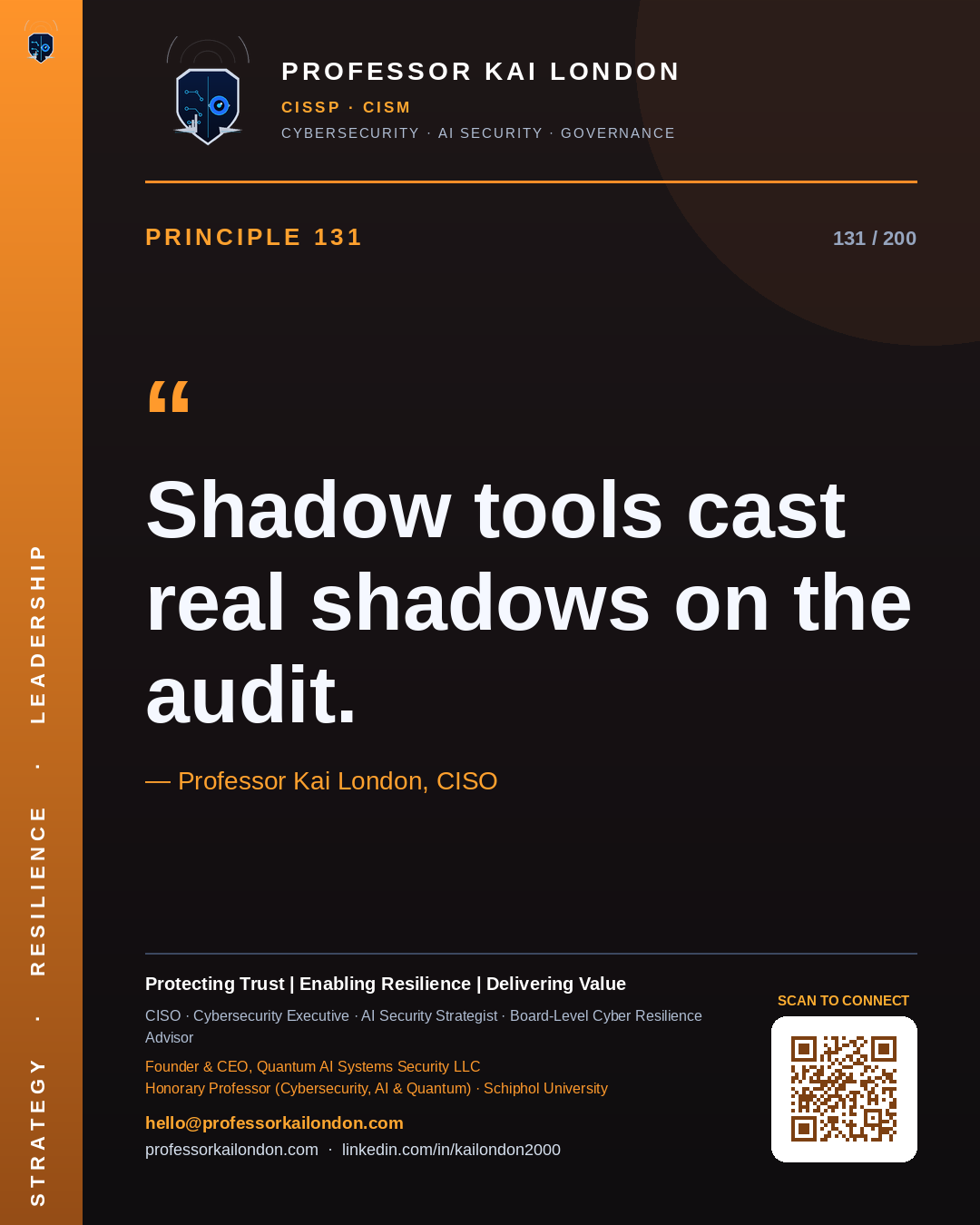 #131 — Shadow tools cast real shadows on the audit.
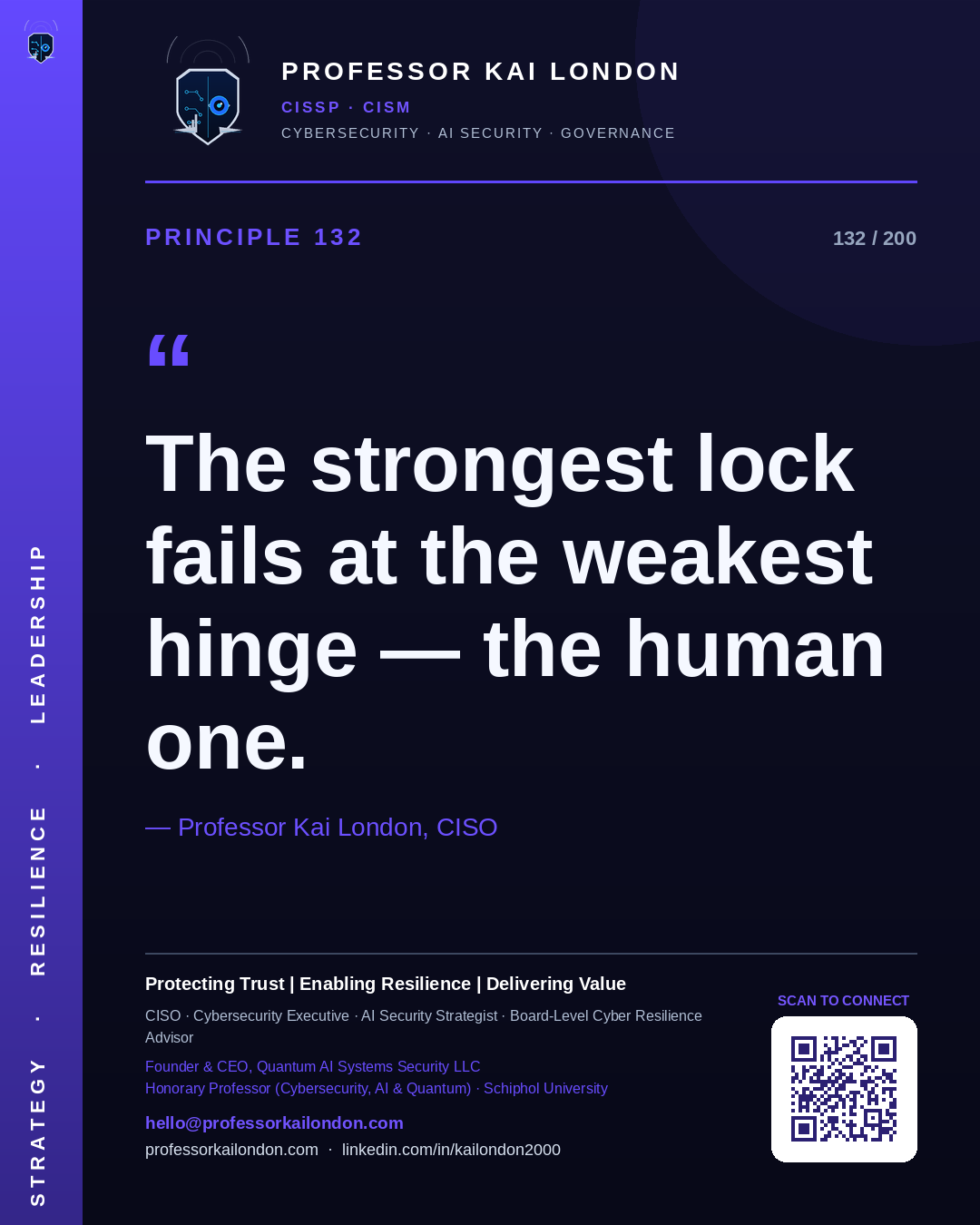 #132 — The strongest lock fails at the weakest hinge — the human one.
 #133 — Maturity is doing the unglamorous control consistently.
 #134 — A metric that changes no decision is just a number wearing a badge.
 #135 — Containment is a design choice you make long before the alarm.
 #136 — Trust must be renewed, never assumed to be permanent.
 #137 — The first casualty of a breach is the story nobody prepared.
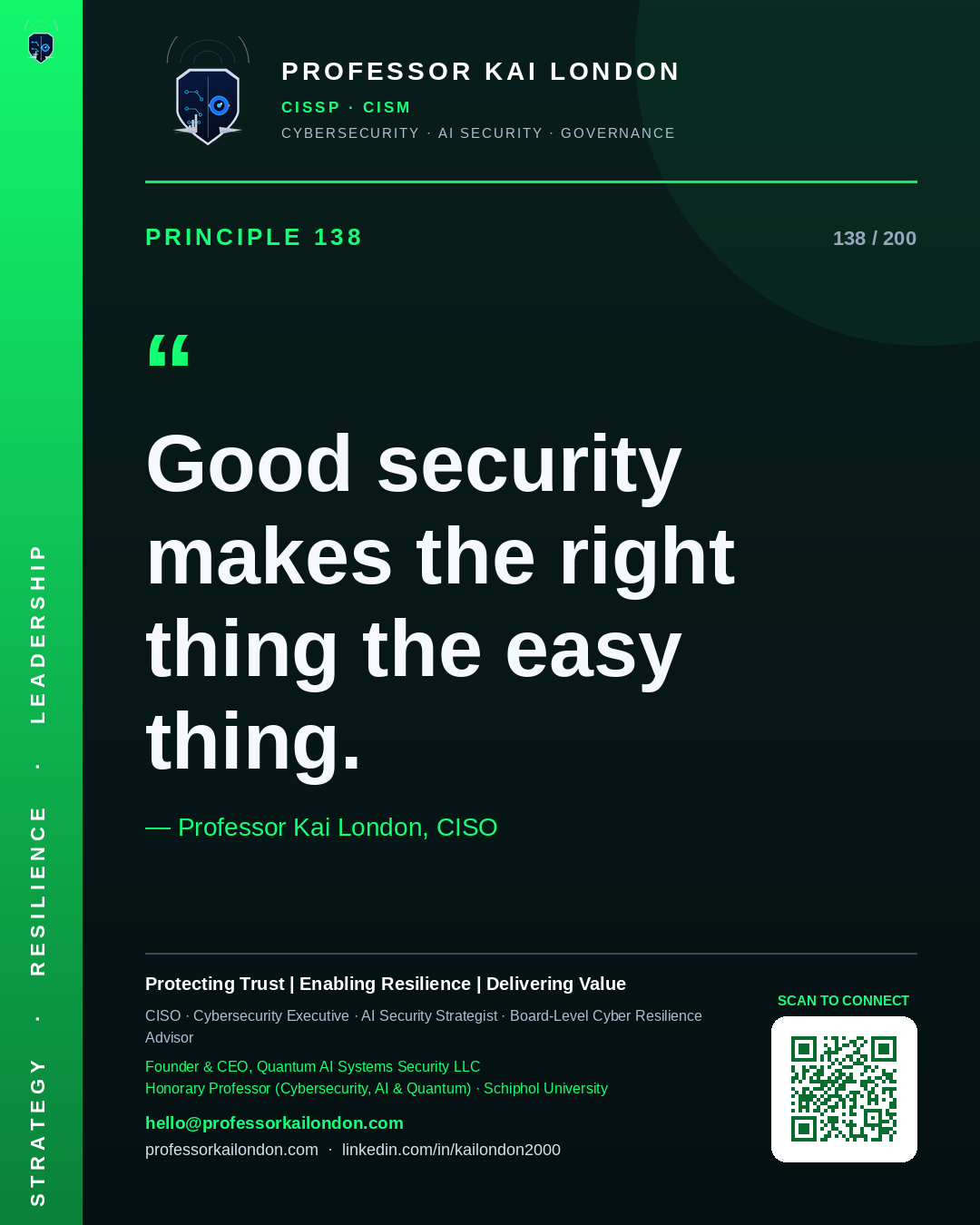 #138 — Good security makes the right thing the easy thing.
 #139 — An exception with no expiry is a permanent vulnerability with paperwork.
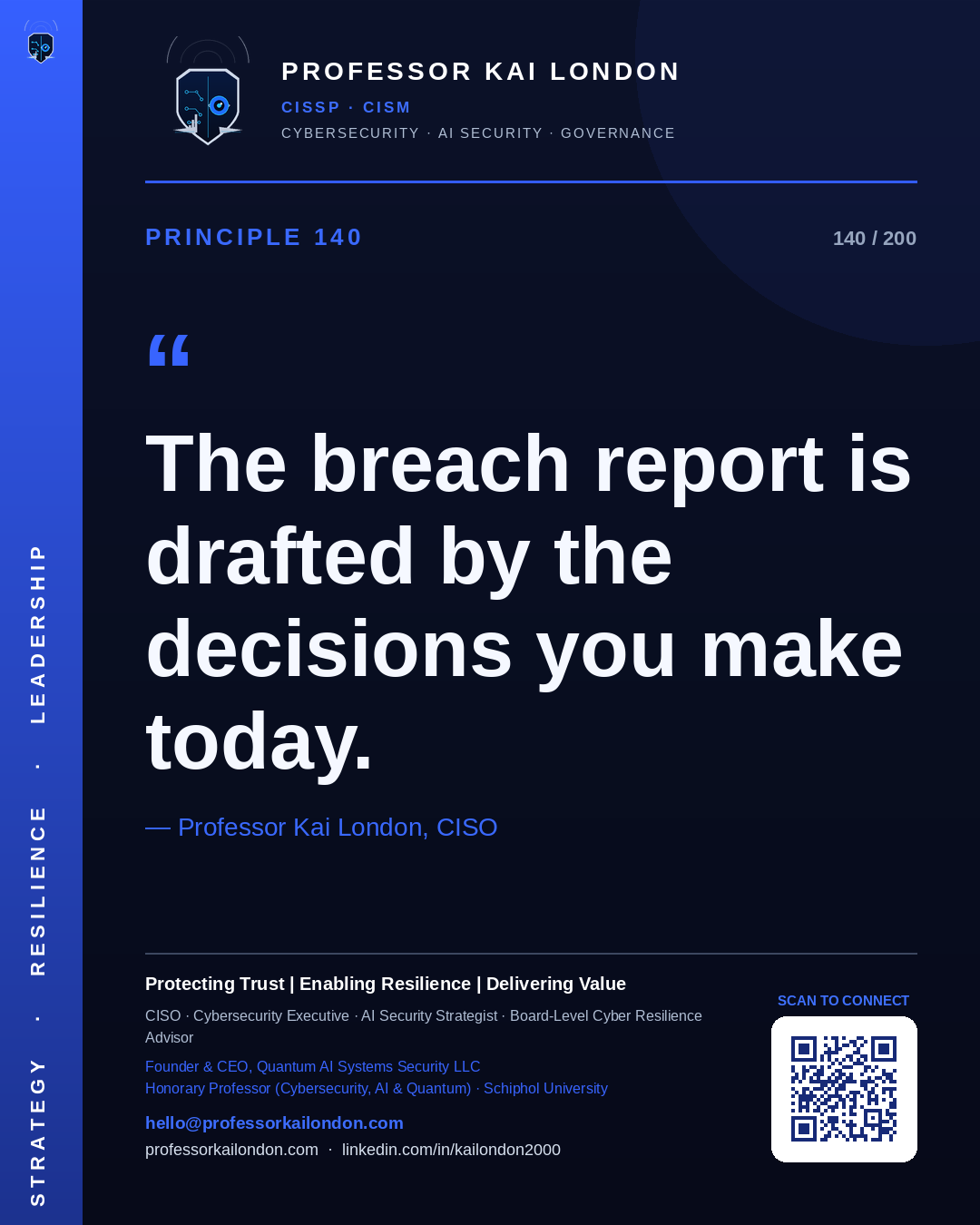 #140 — The breach report is drafted by the decisions you make today.
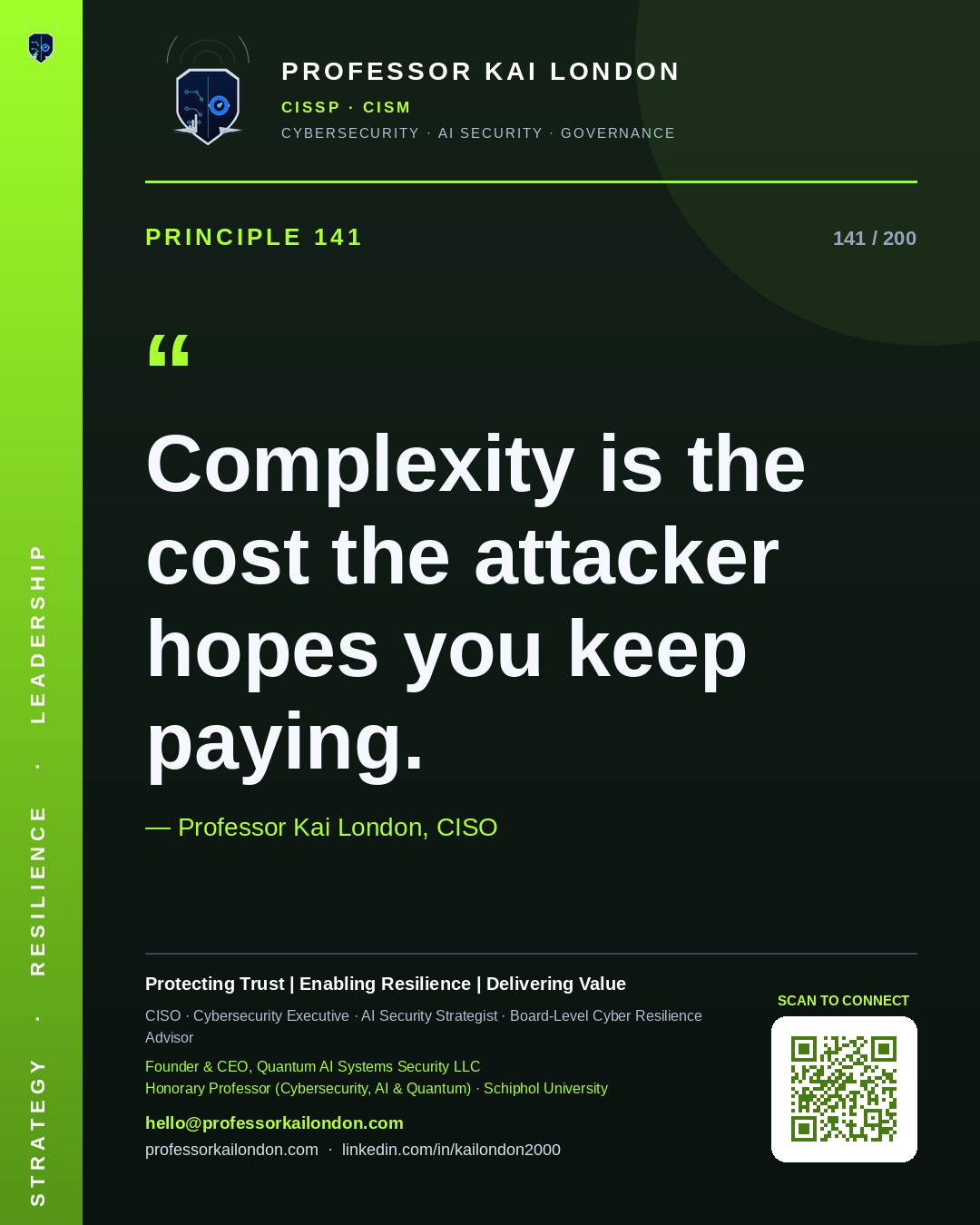 #141 — Complexity is the cost the attacker hopes you keep paying.
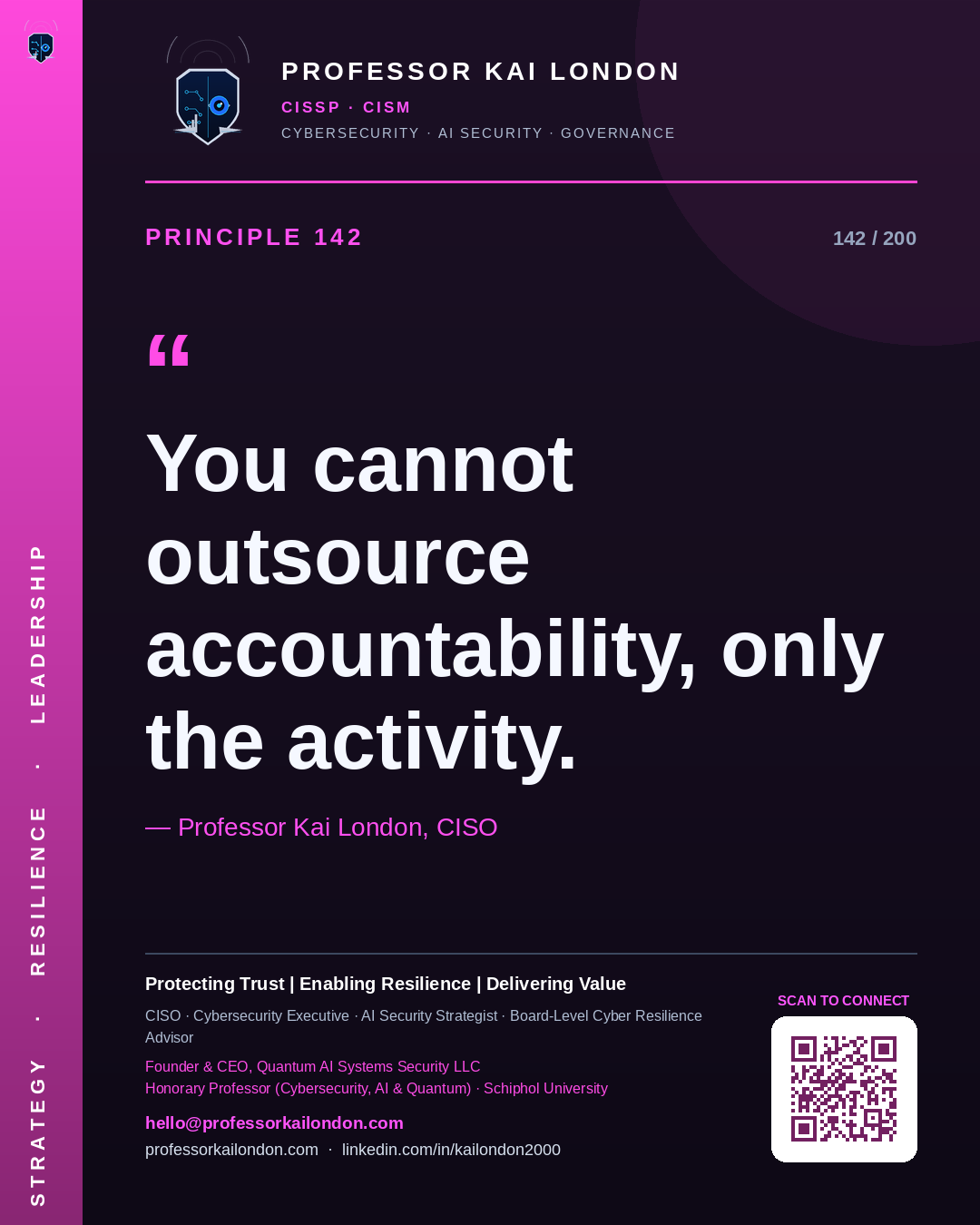 #142 — You cannot outsource accountability, only the activity.
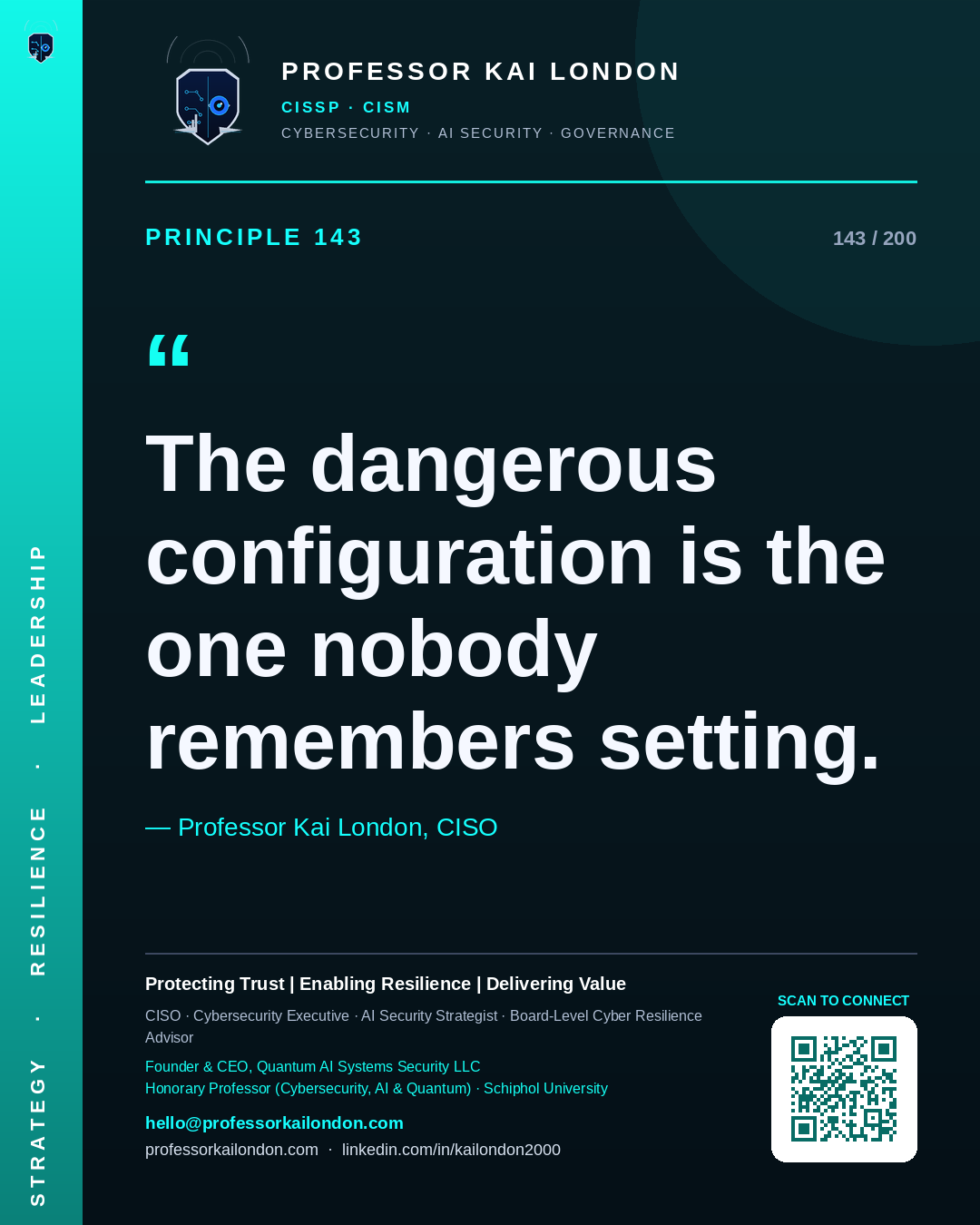 #143 — The dangerous configuration is the one nobody remembers setting.
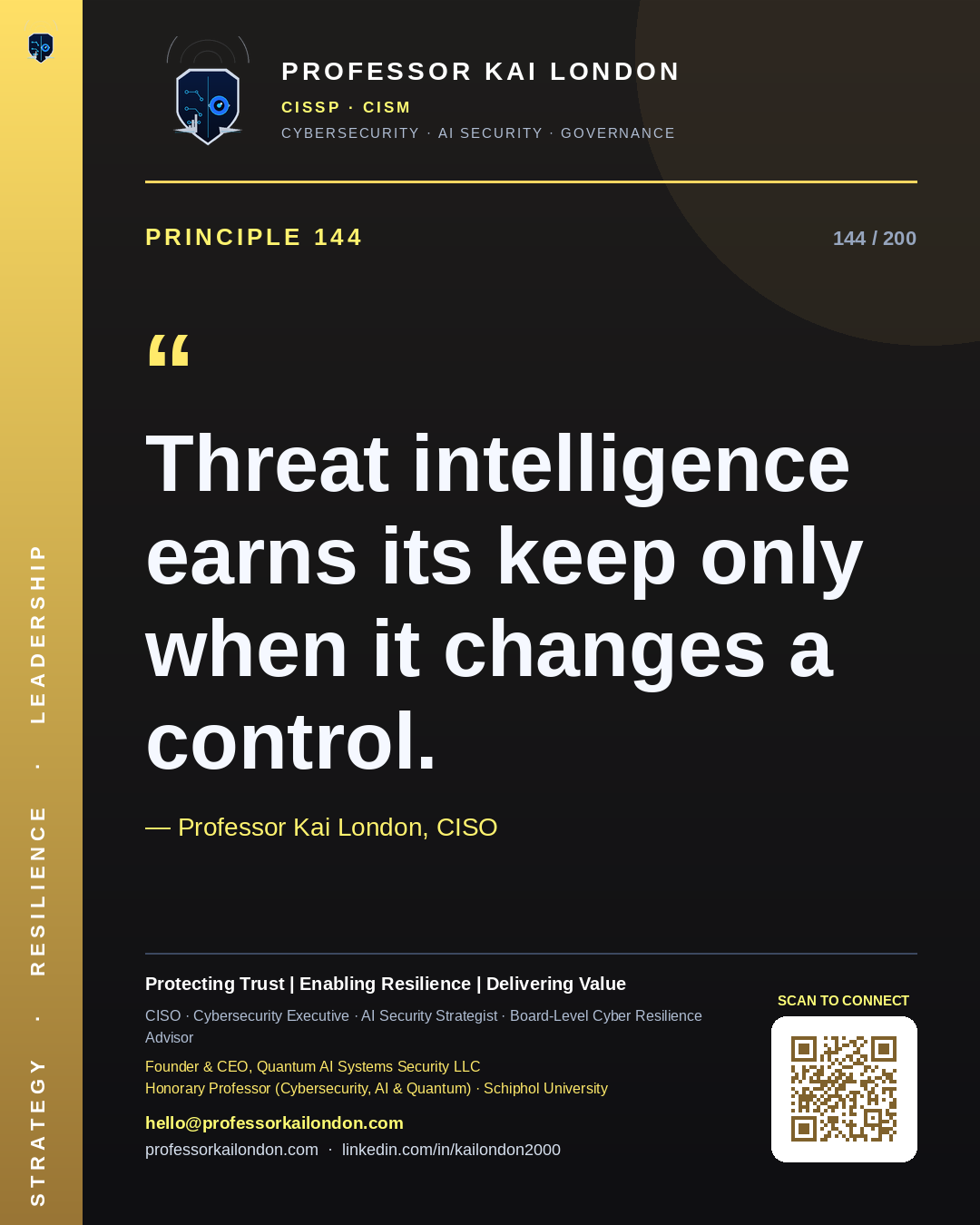 #144 — Threat intelligence earns its keep only when it changes a control.
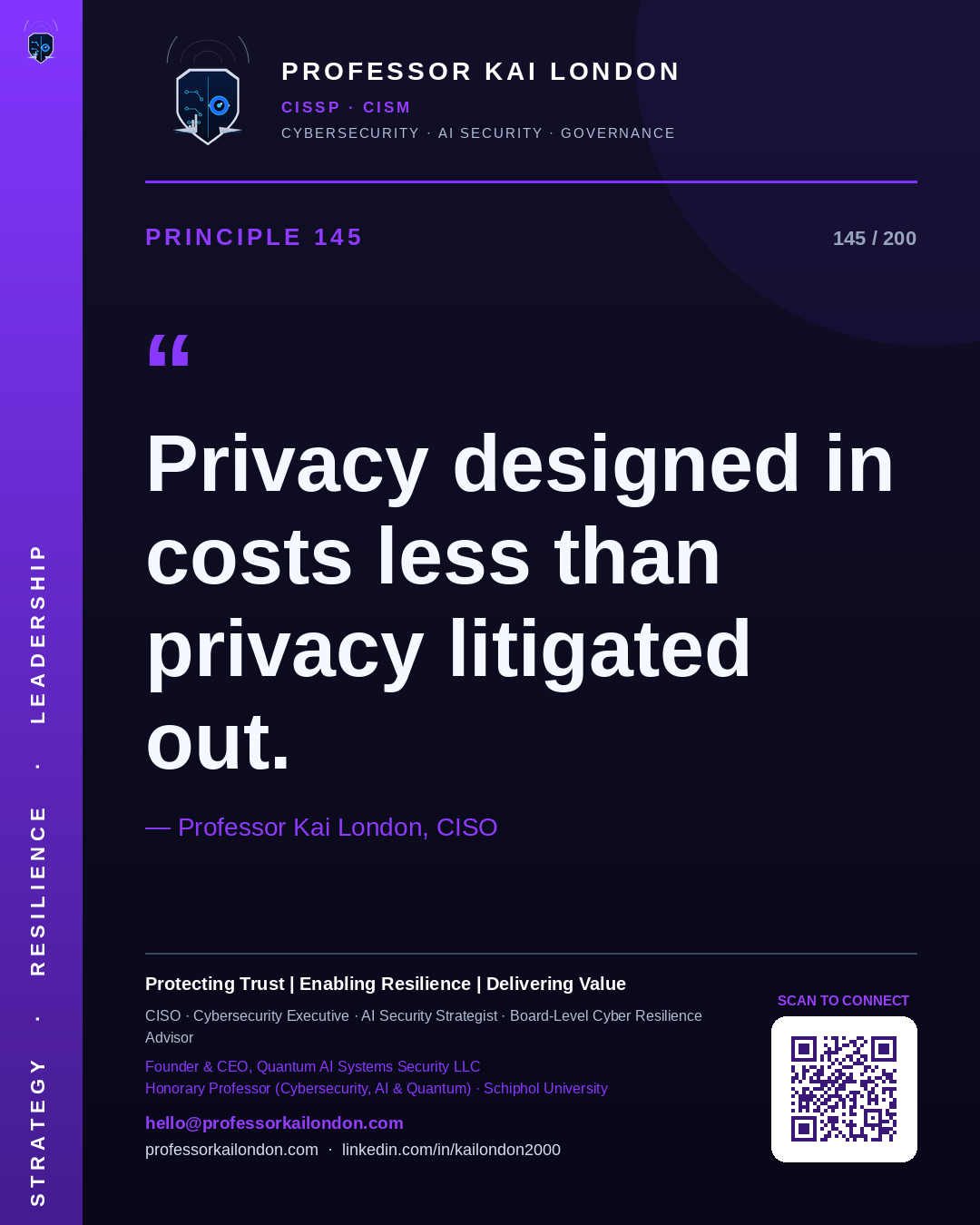 #145 — Privacy designed in costs less than privacy litigated out.
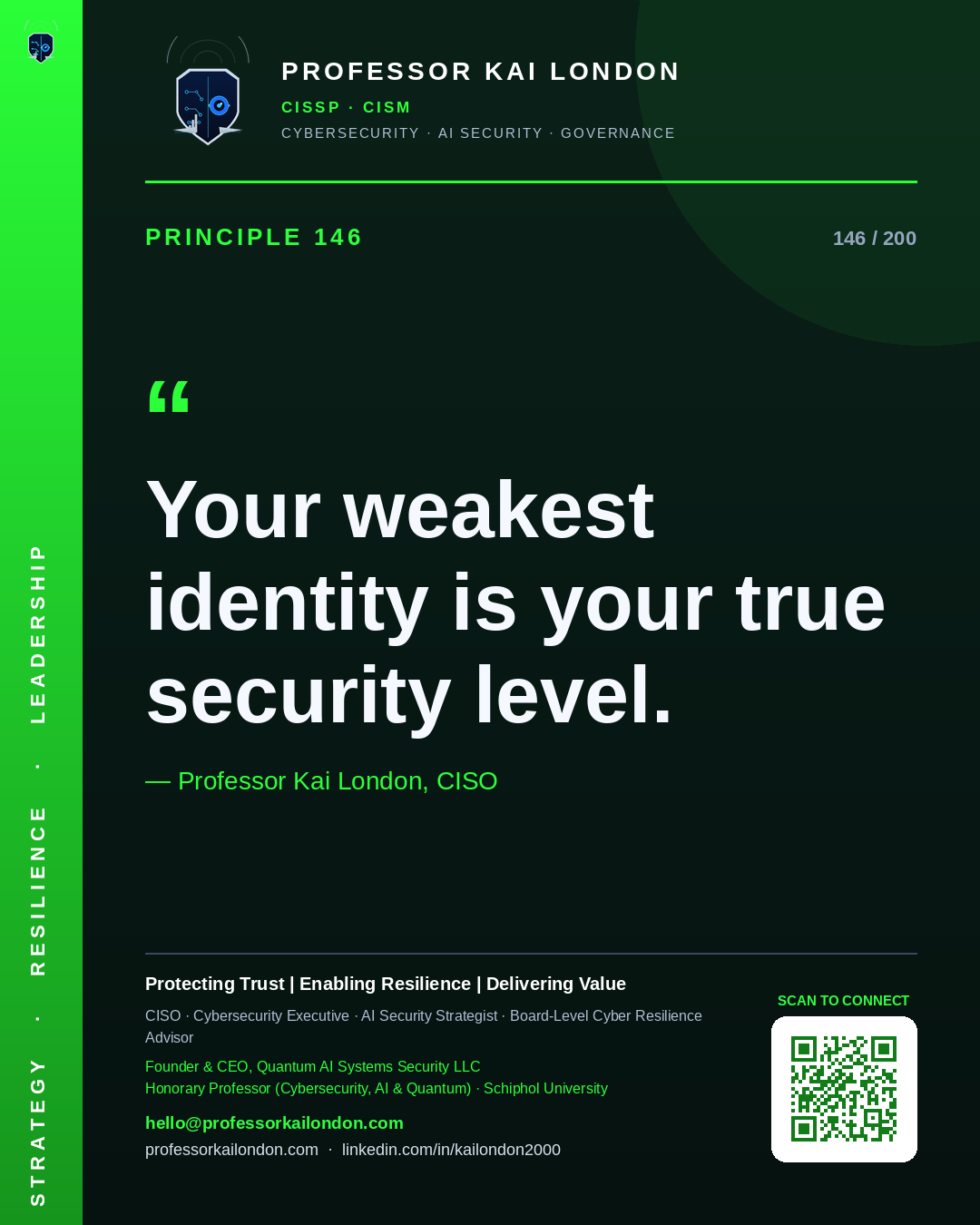 #146 — Your weakest identity is your true security level.
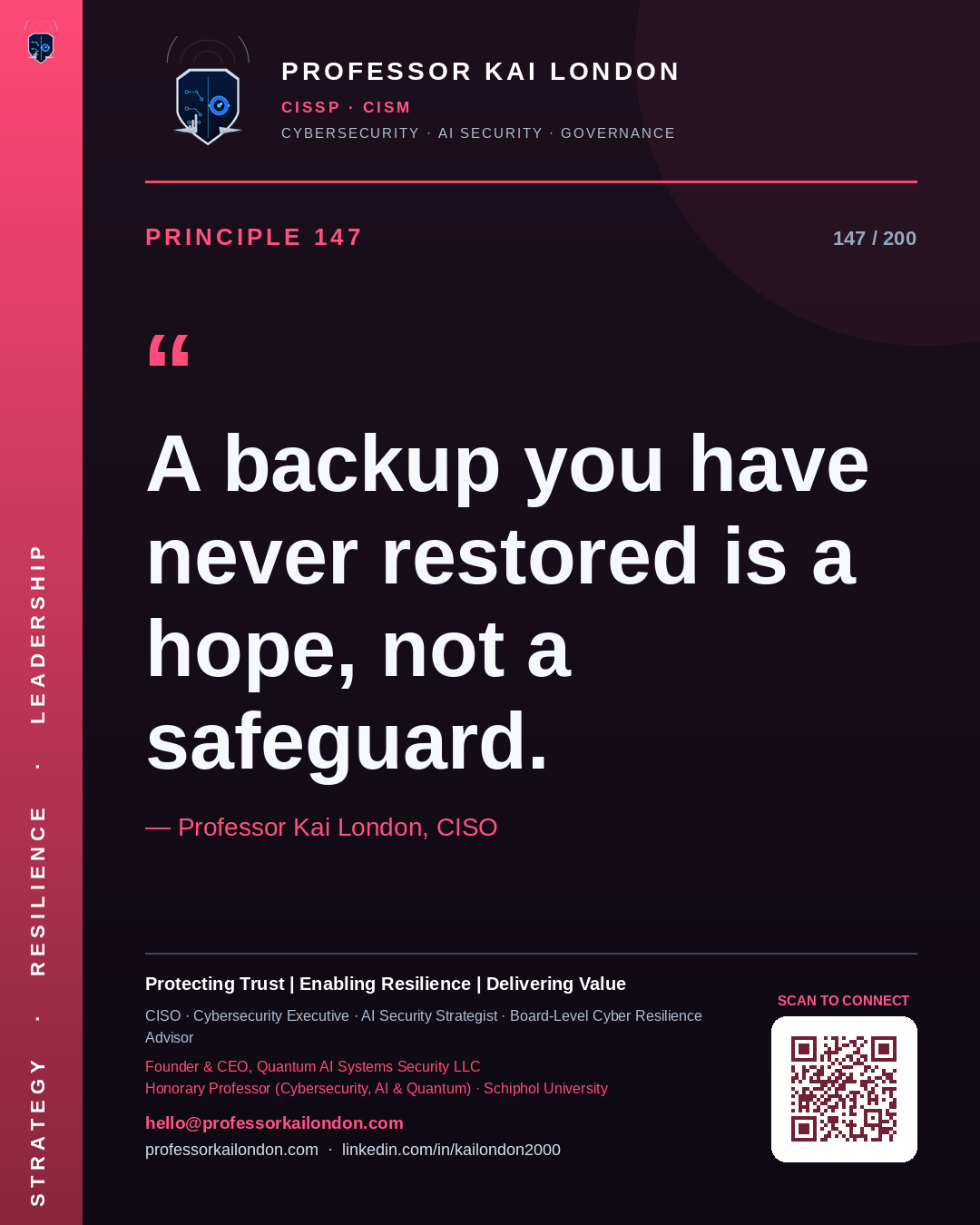 #147 — A backup you have never restored is a hope, not a safeguard.
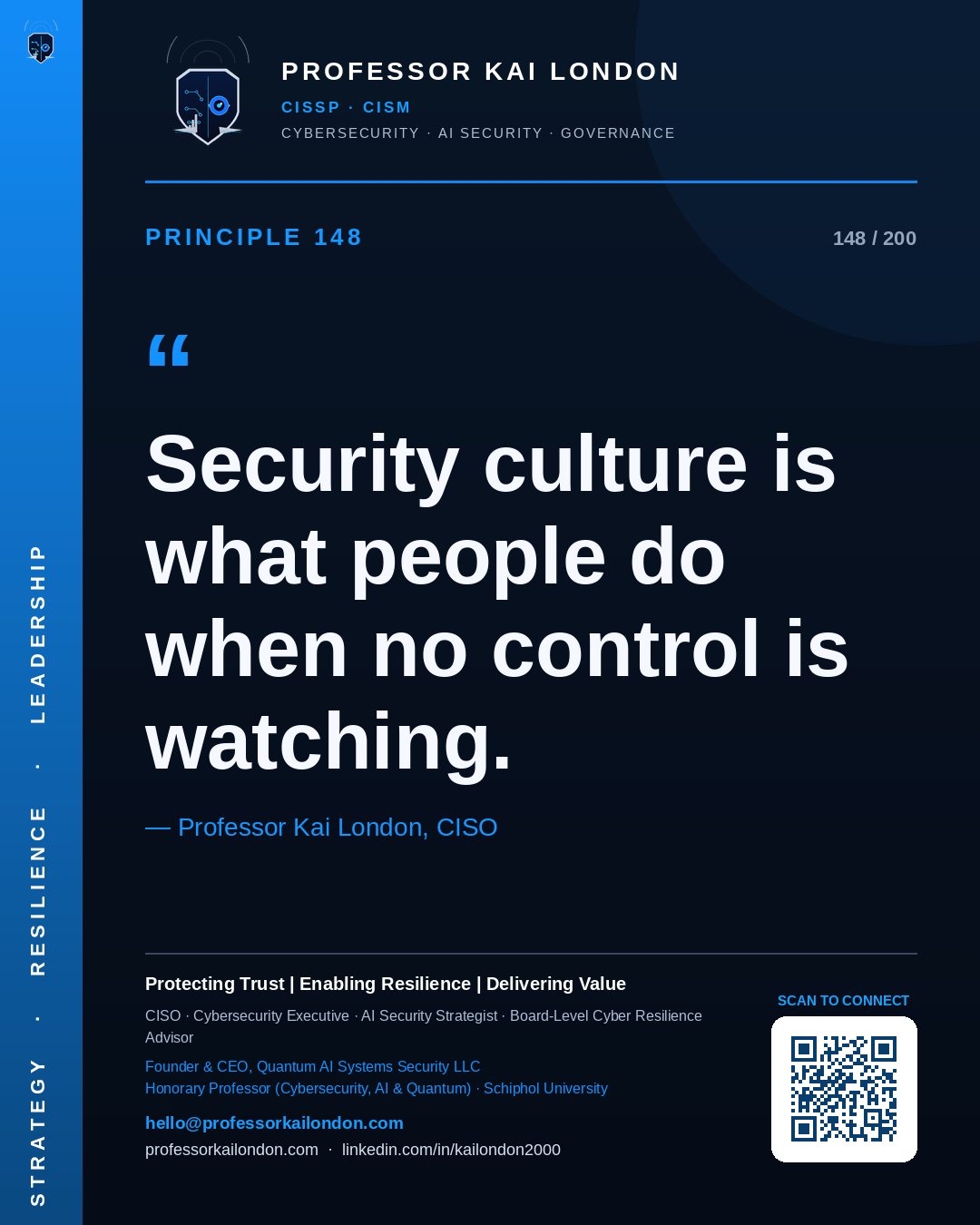 #148 — Security culture is what people do when no control is watching.
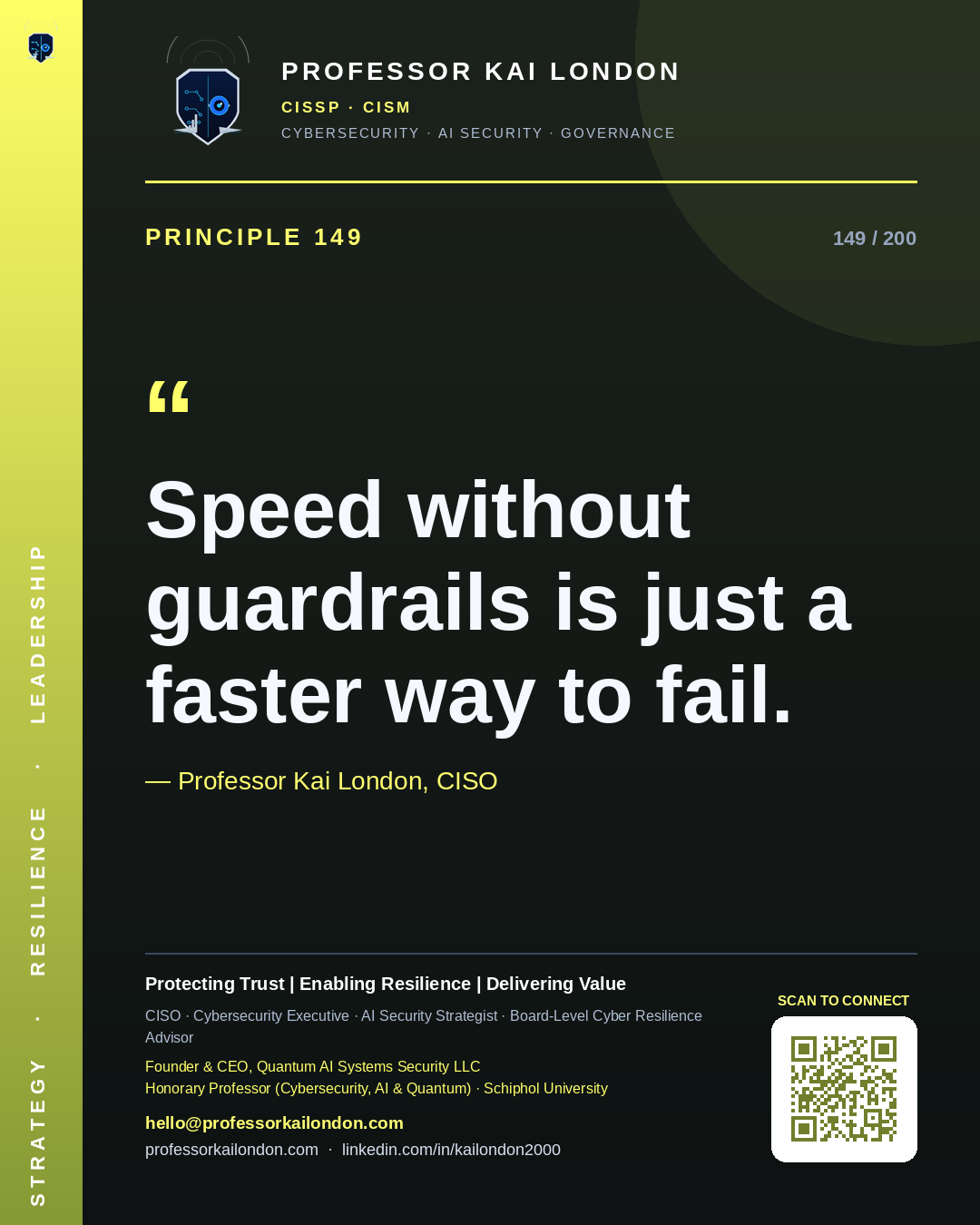 #149 — Speed without guardrails is just a faster way to fail.
 #150 — Govern the new technology before it governs your risk.
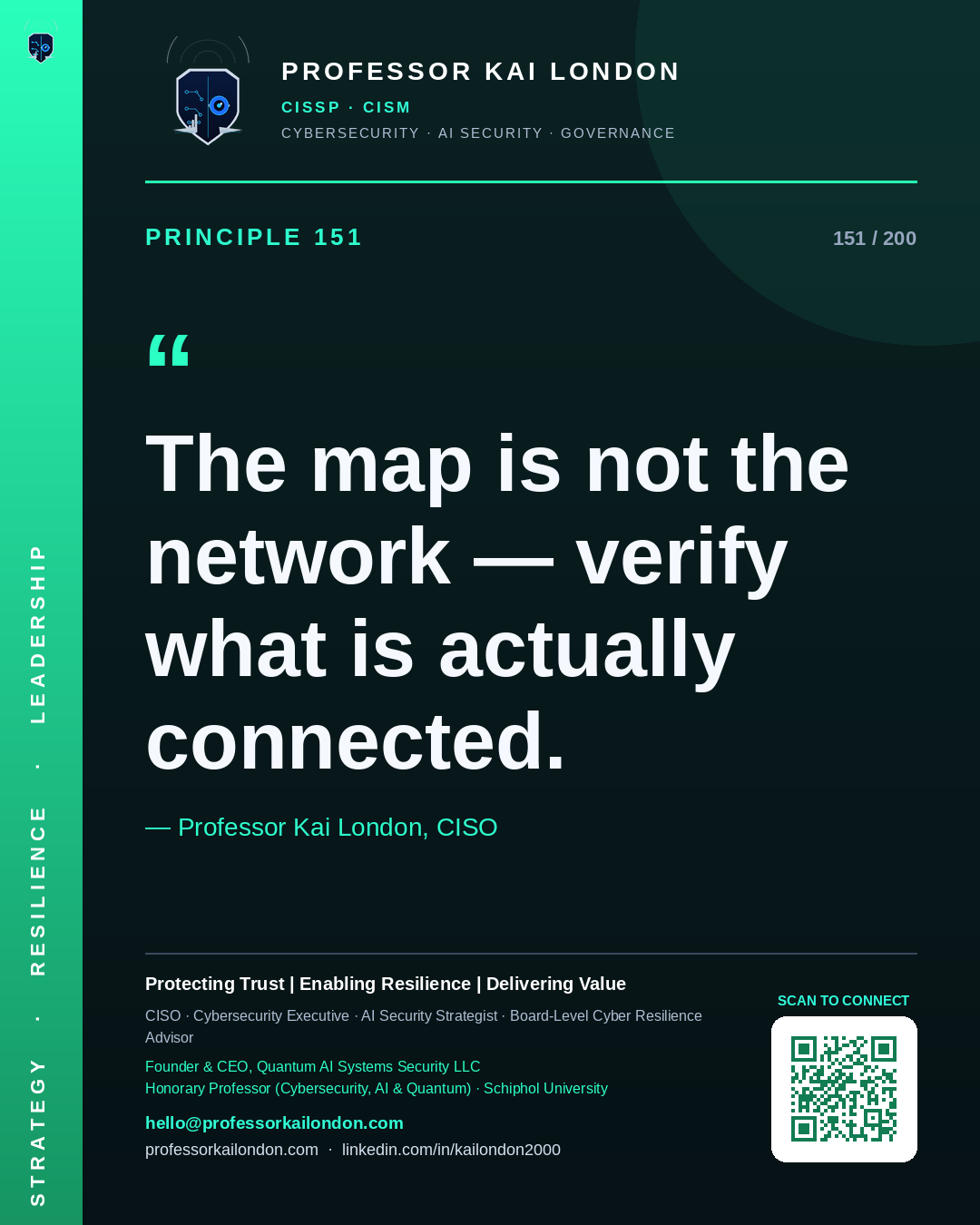 #151 — The map is not the network — verify what is actually connected.
 #152 — Least privilege is kindness to your future self.
 #153 — A SOC drowning in alerts is blind in plain sight.
 #154 — Resilience is measured in how fast you return, not whether you fall.
 #155 — The contract is a control — read it like a firewall rule.
 #156 — Data you don't need is risk you chose to keep.
 #157 — Machine-speed attacks demand machine-speed answers.
 #158 — Every alert you ignore trains you to ignore the next one.
 #159 — The perimeter went home, to the café, and into the phone.
 #160 — Assurance is a sales asset, not just a safeguard.
 #161 — A risk accepted in silence is a risk owned by no one.
 #162 — Segmentation decides whether one fire stays one room.
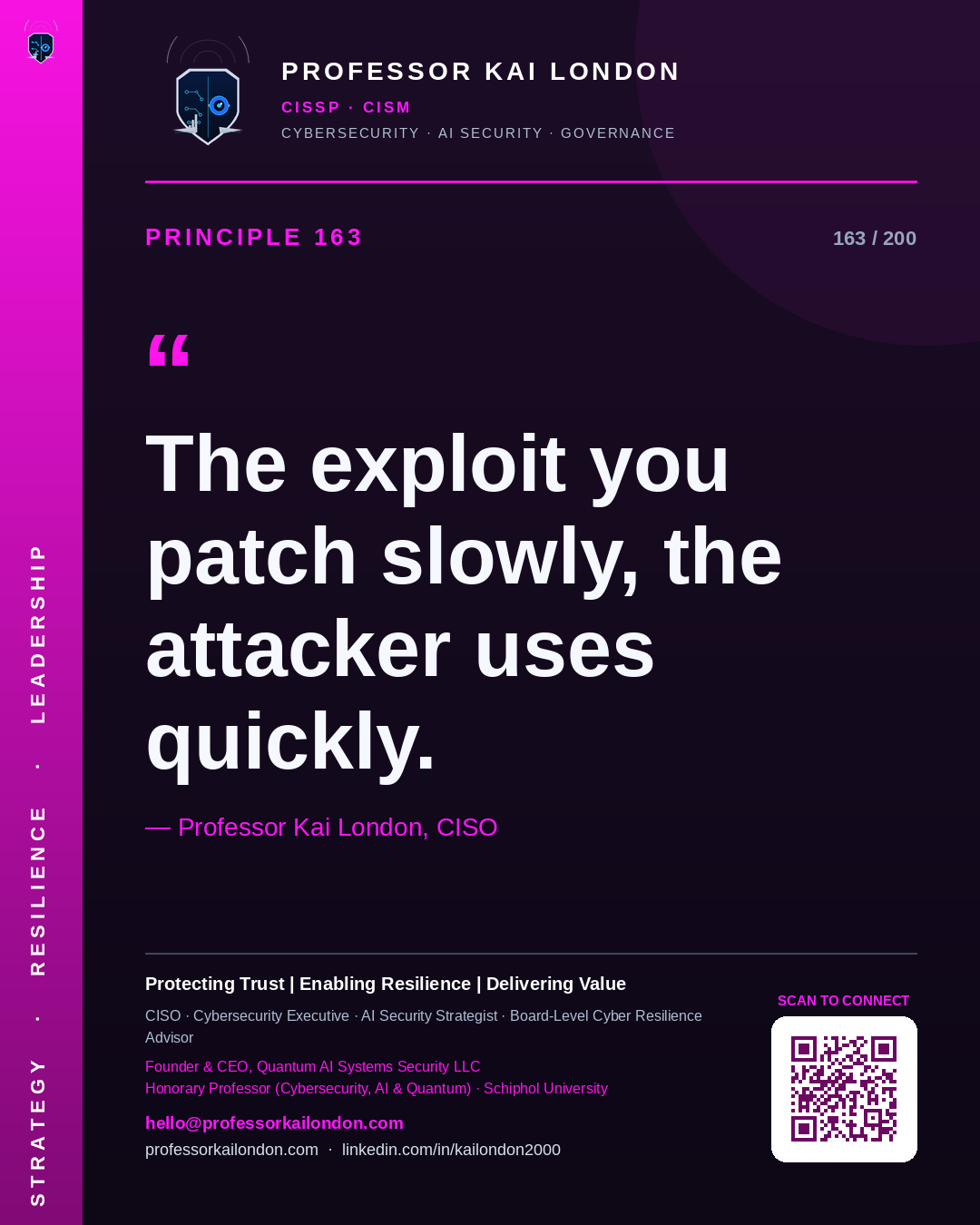 #163 — The exploit you patch slowly, the attacker uses quickly.
 #164 — Confidence is not a control; evidence is.
 #165 — An API key in the wrong place is a master key in the open.
 #166 — Govern the model, not just the data it learned from.
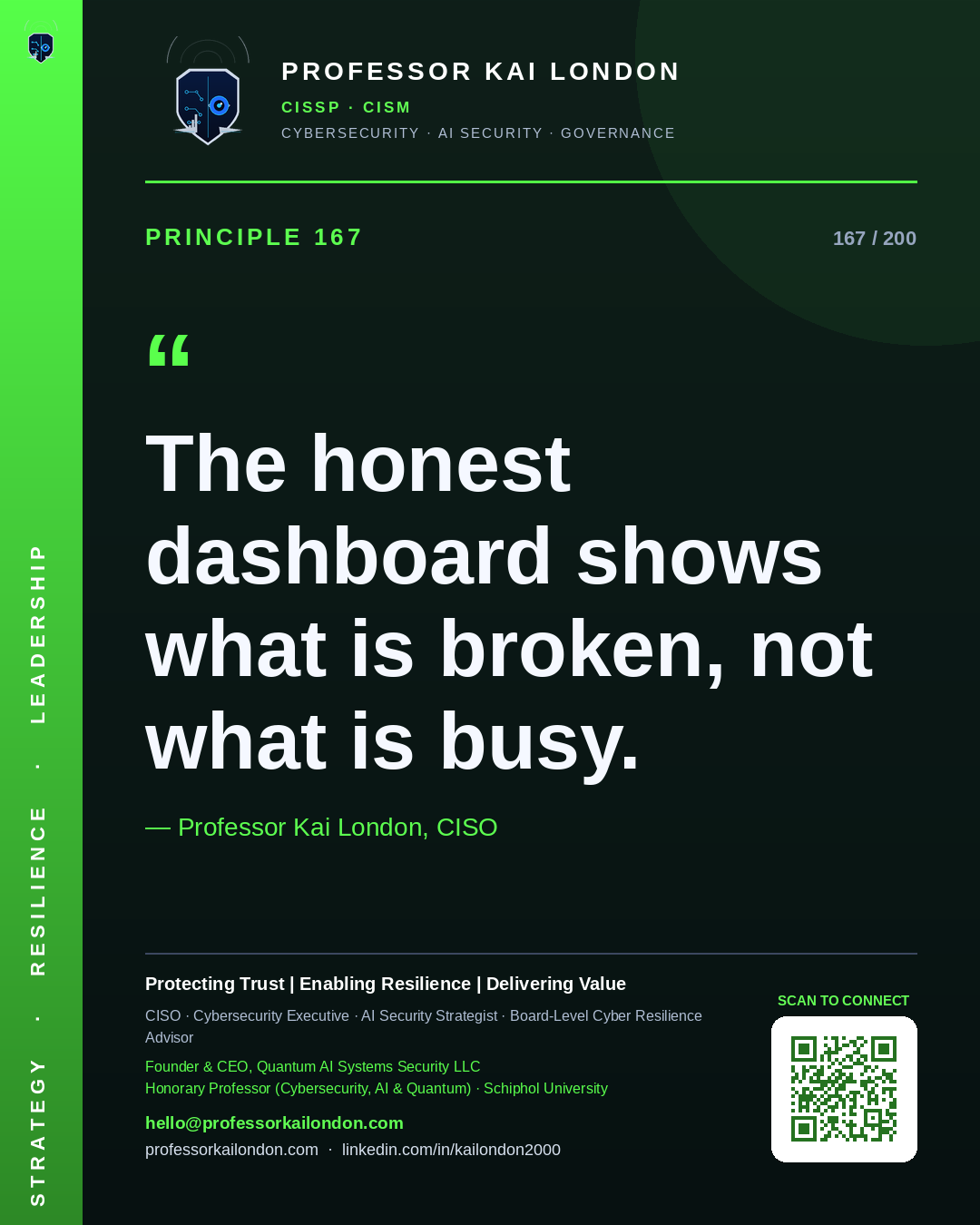 #167 — The honest dashboard shows what is broken, not what is busy.
 #168 — You secure what you can see, and lose what you cannot.
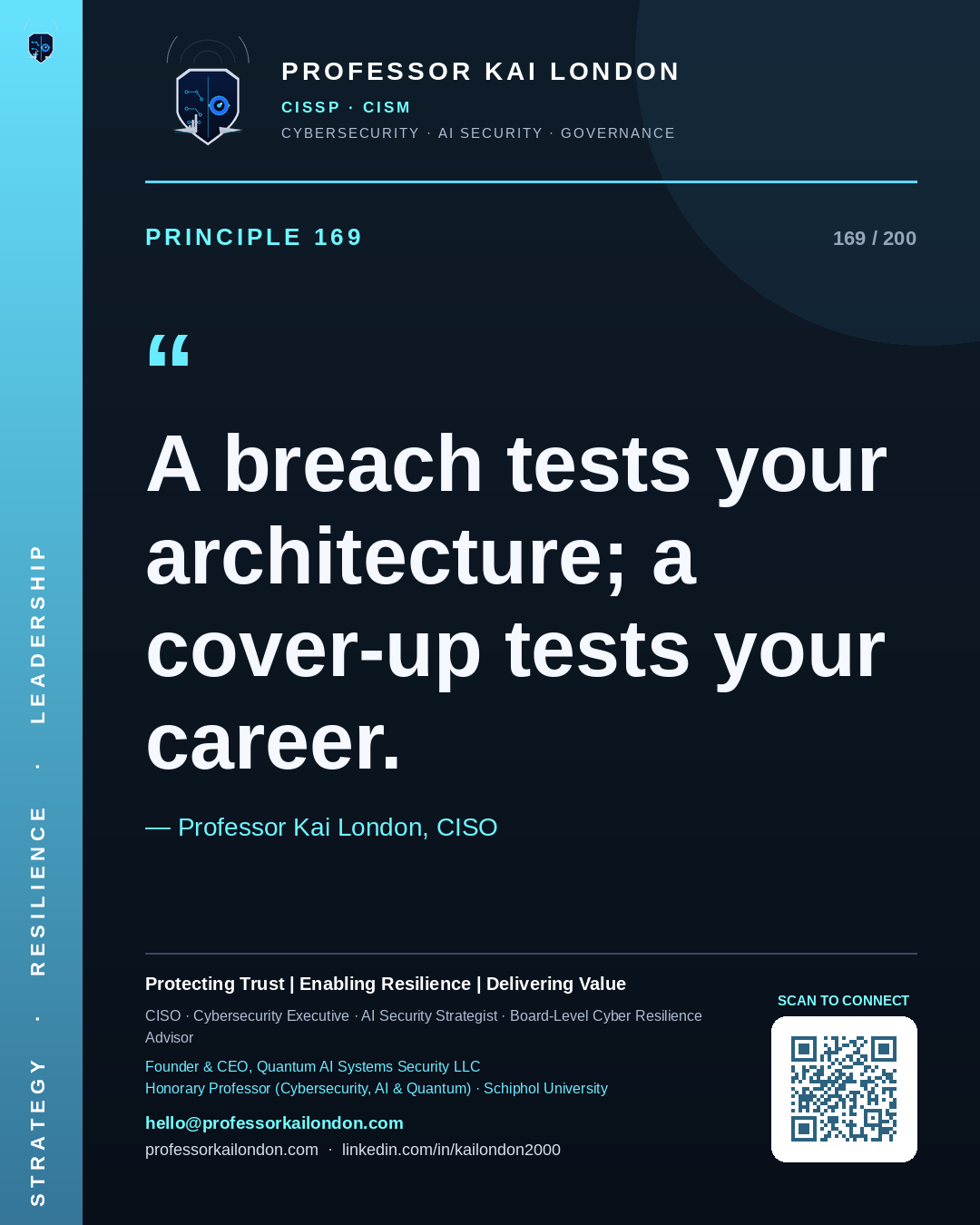 #169 — A breach tests your architecture; a cover-up tests your career.
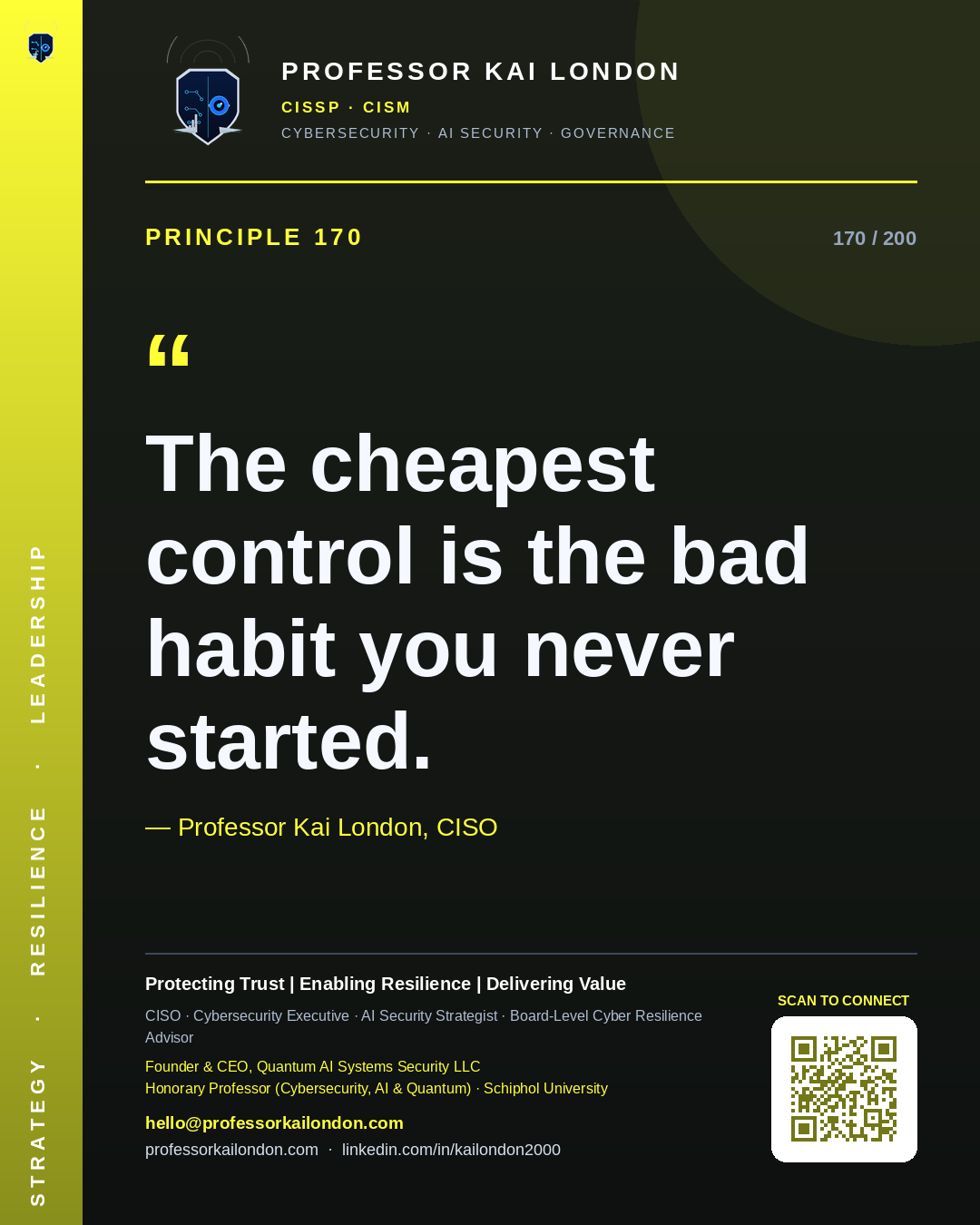 #170 — The cheapest control is the bad habit you never started.
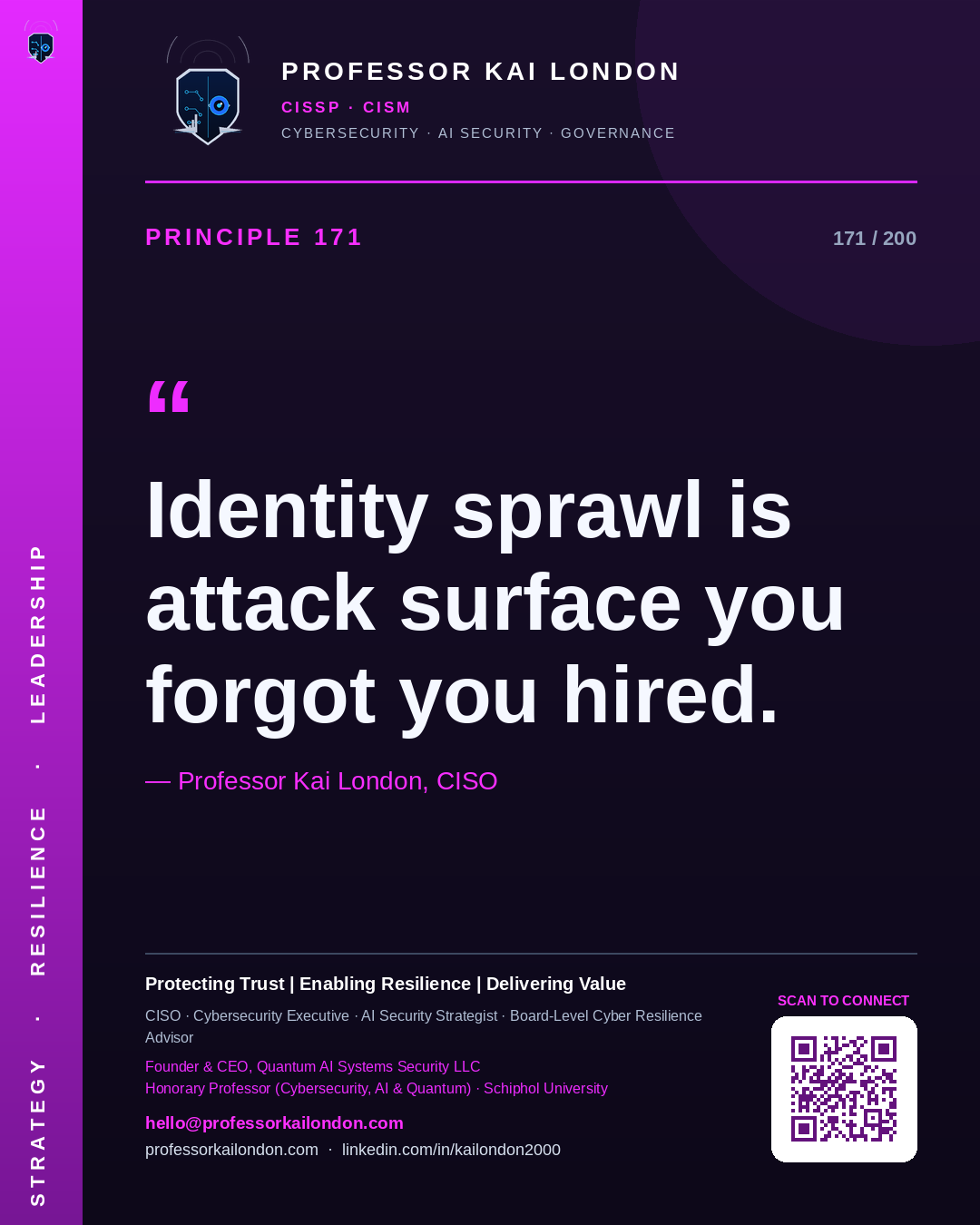 #171 — Identity sprawl is attack surface you forgot you hired.
 #172 — Plan for the failure of the thing you trust the most.
 #173 — Security debt charges interest in incidents.
 #174 — A vendor's certificate proves intent, not effectiveness.
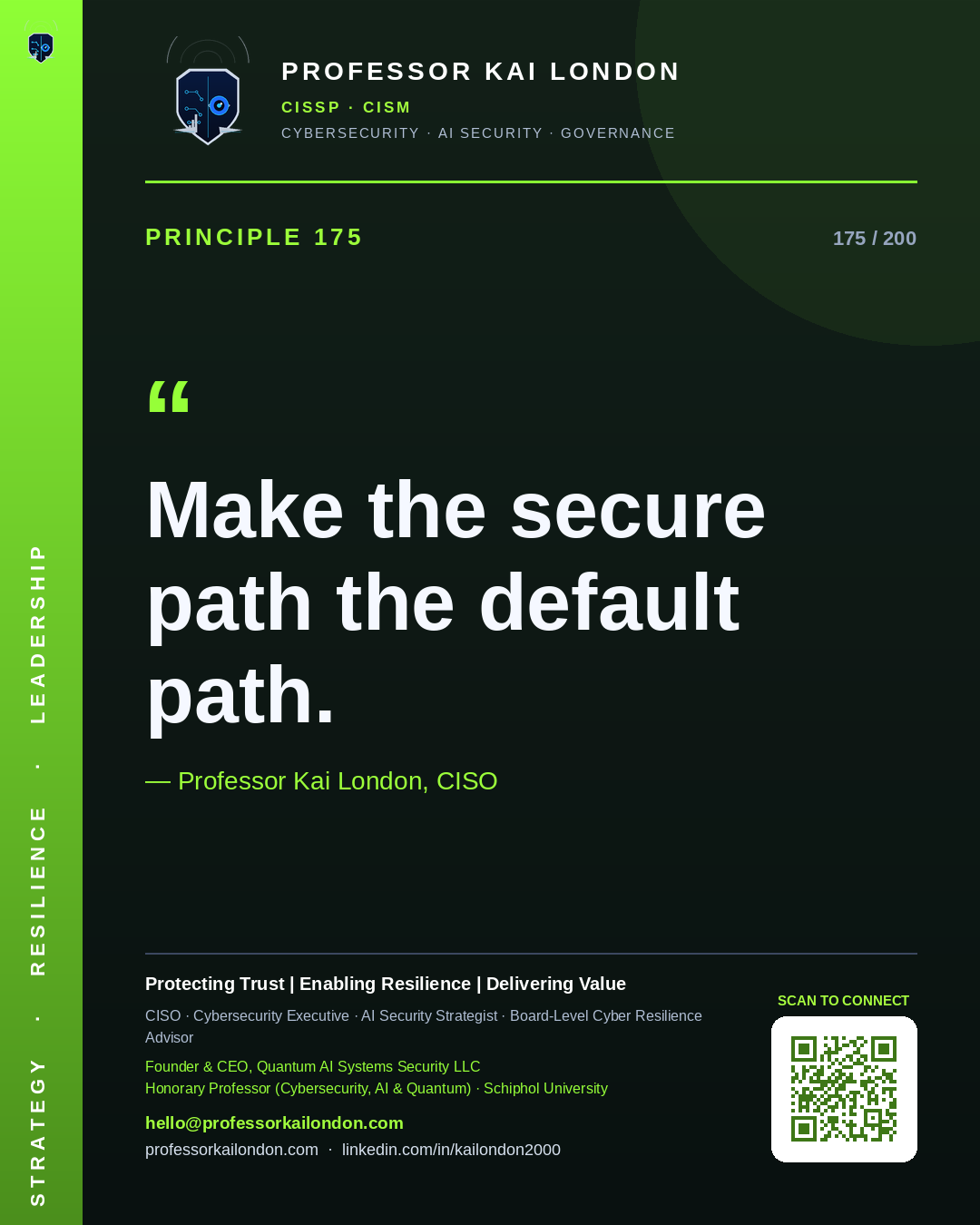 #175 — Make the secure path the default path.
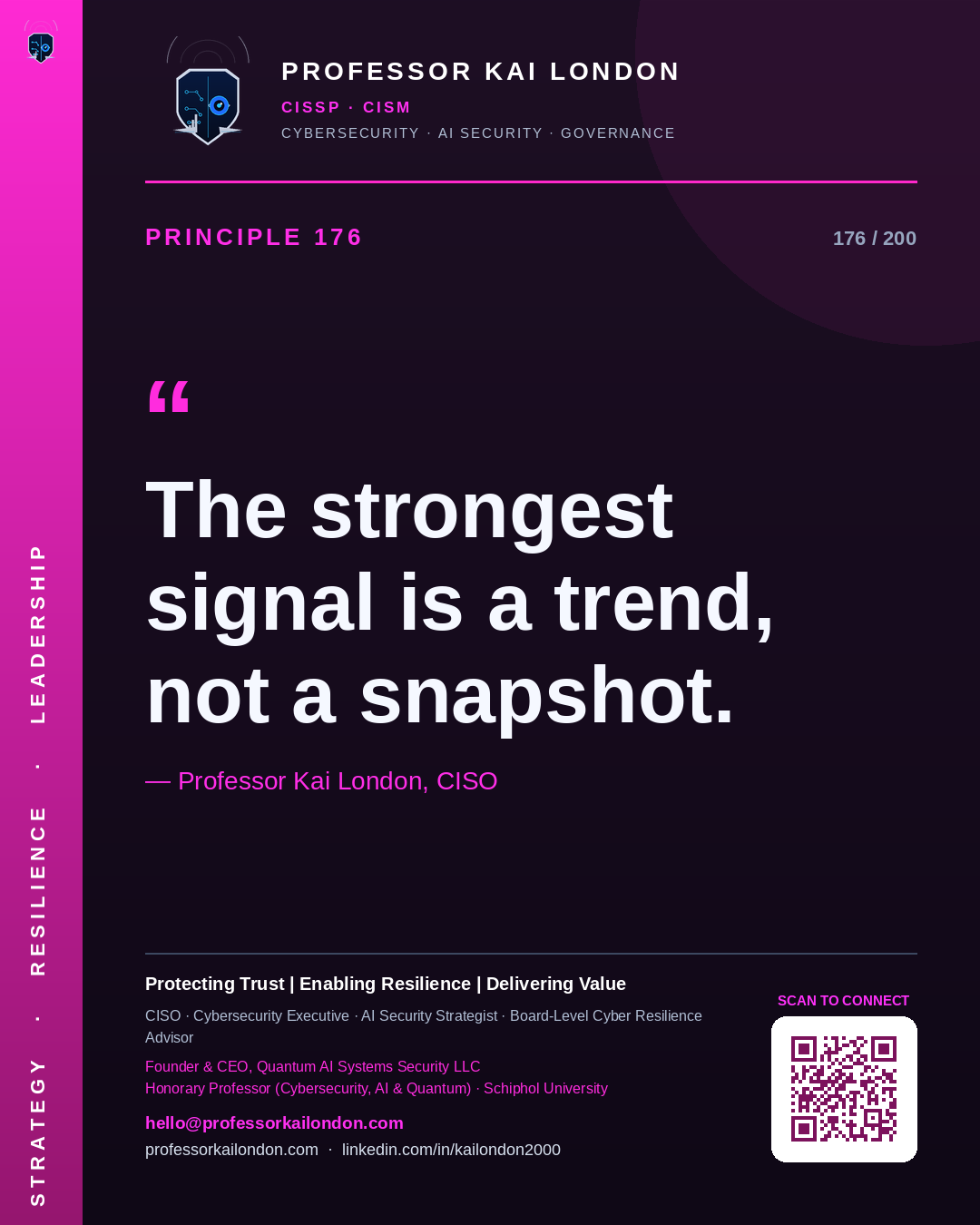 #176 — The strongest signal is a trend, not a snapshot.
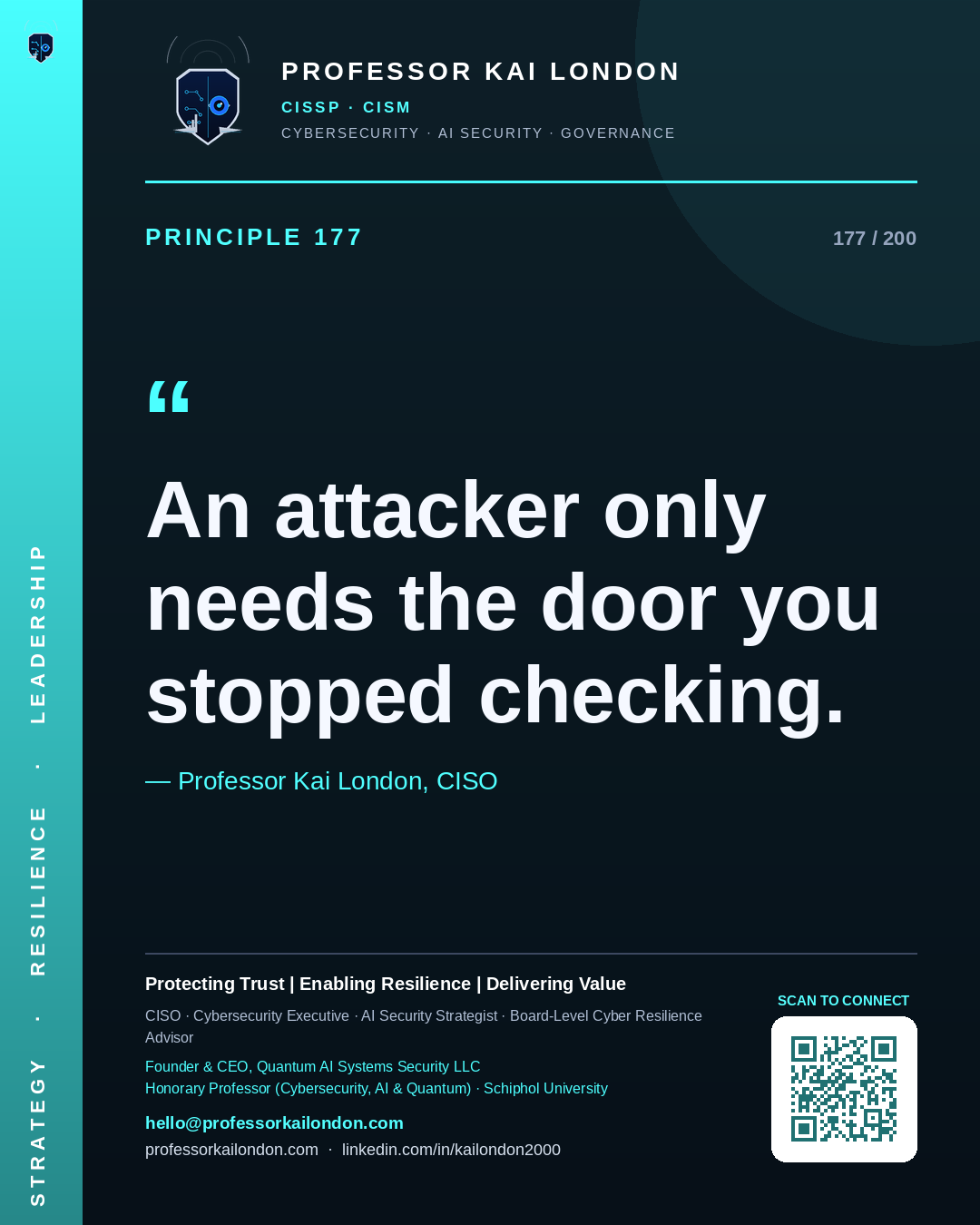 #177 — An attacker only needs the door you stopped checking.
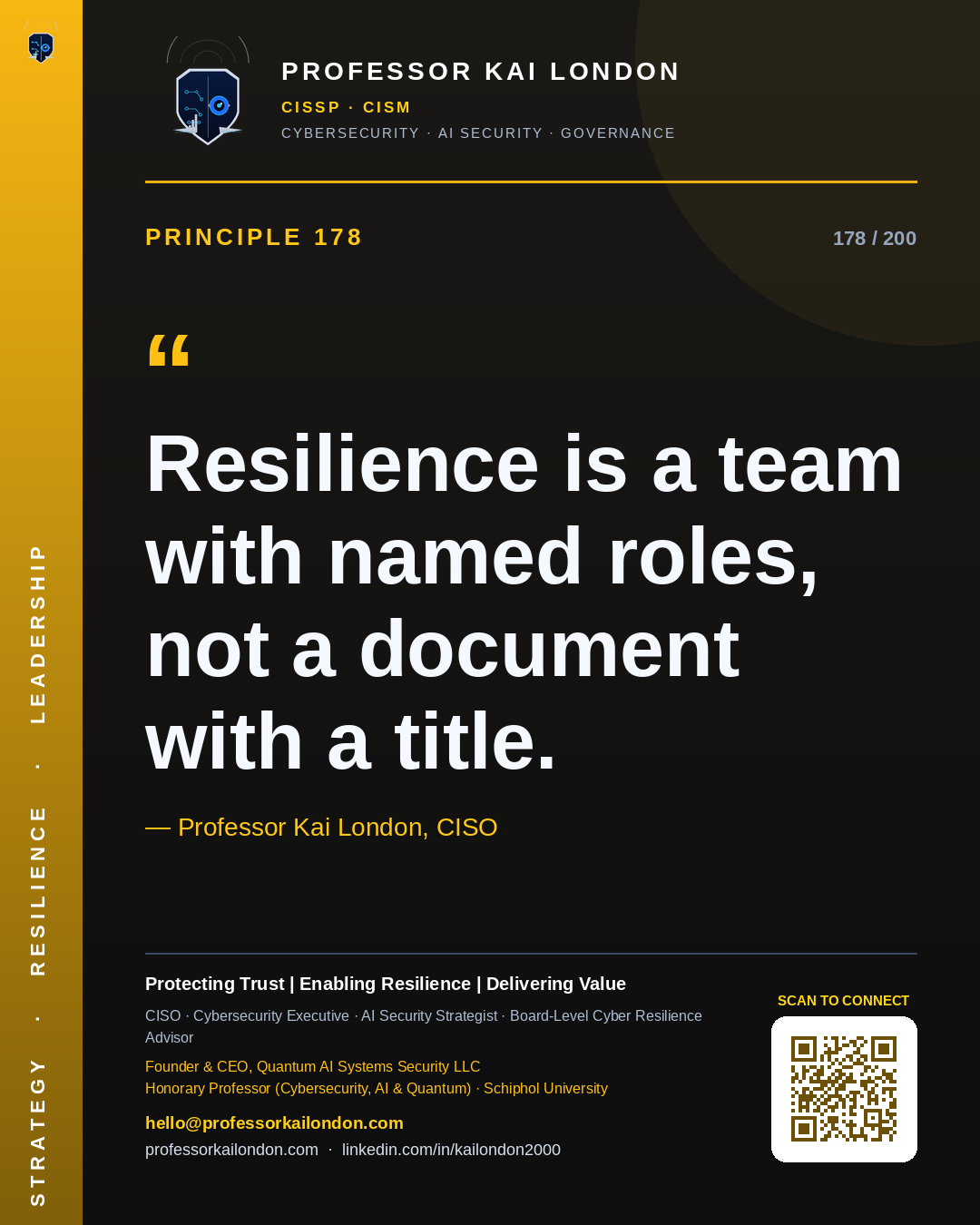 #178 — Resilience is a team with named roles, not a document with a title.
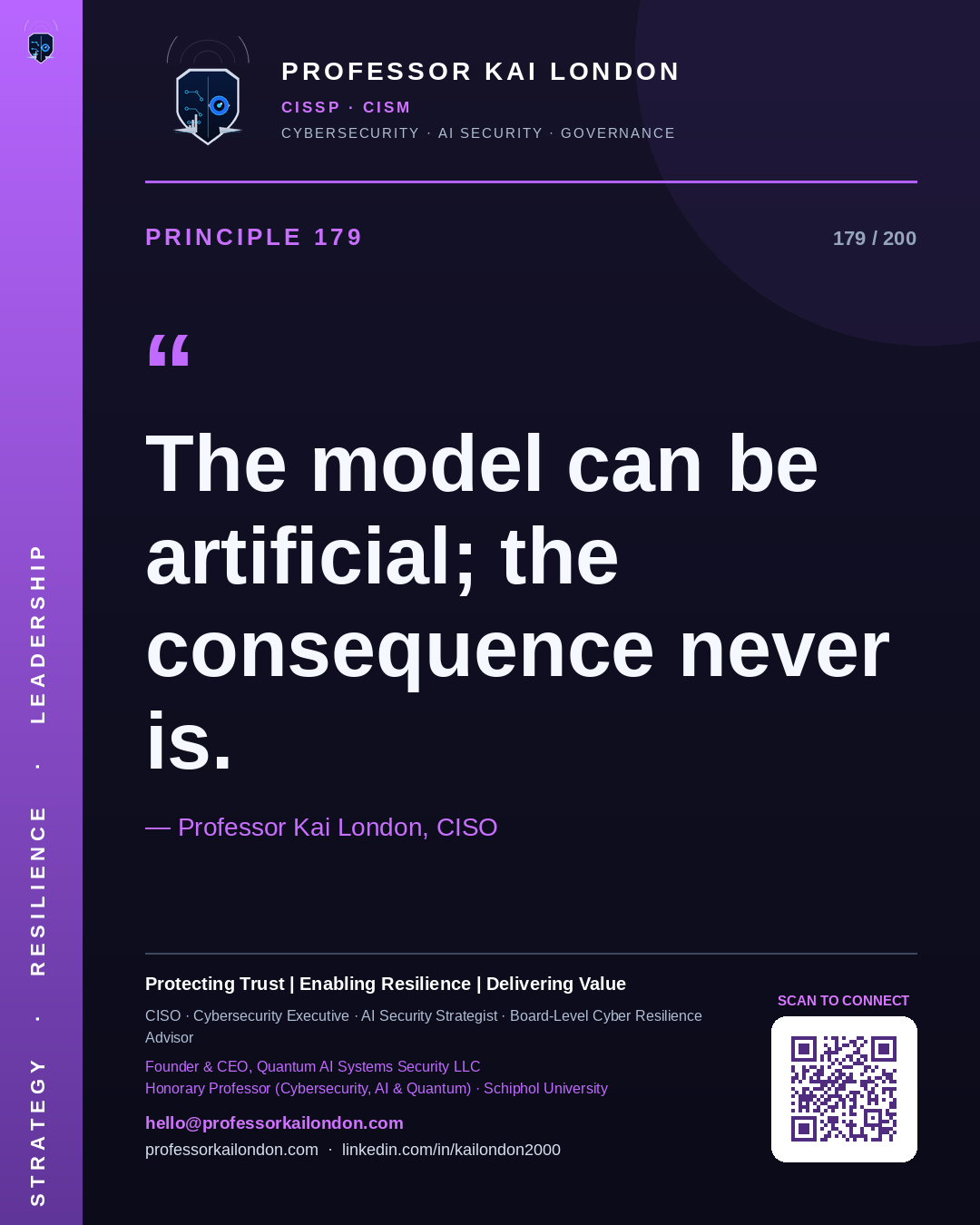 #179 — The model can be artificial; the consequence never is.
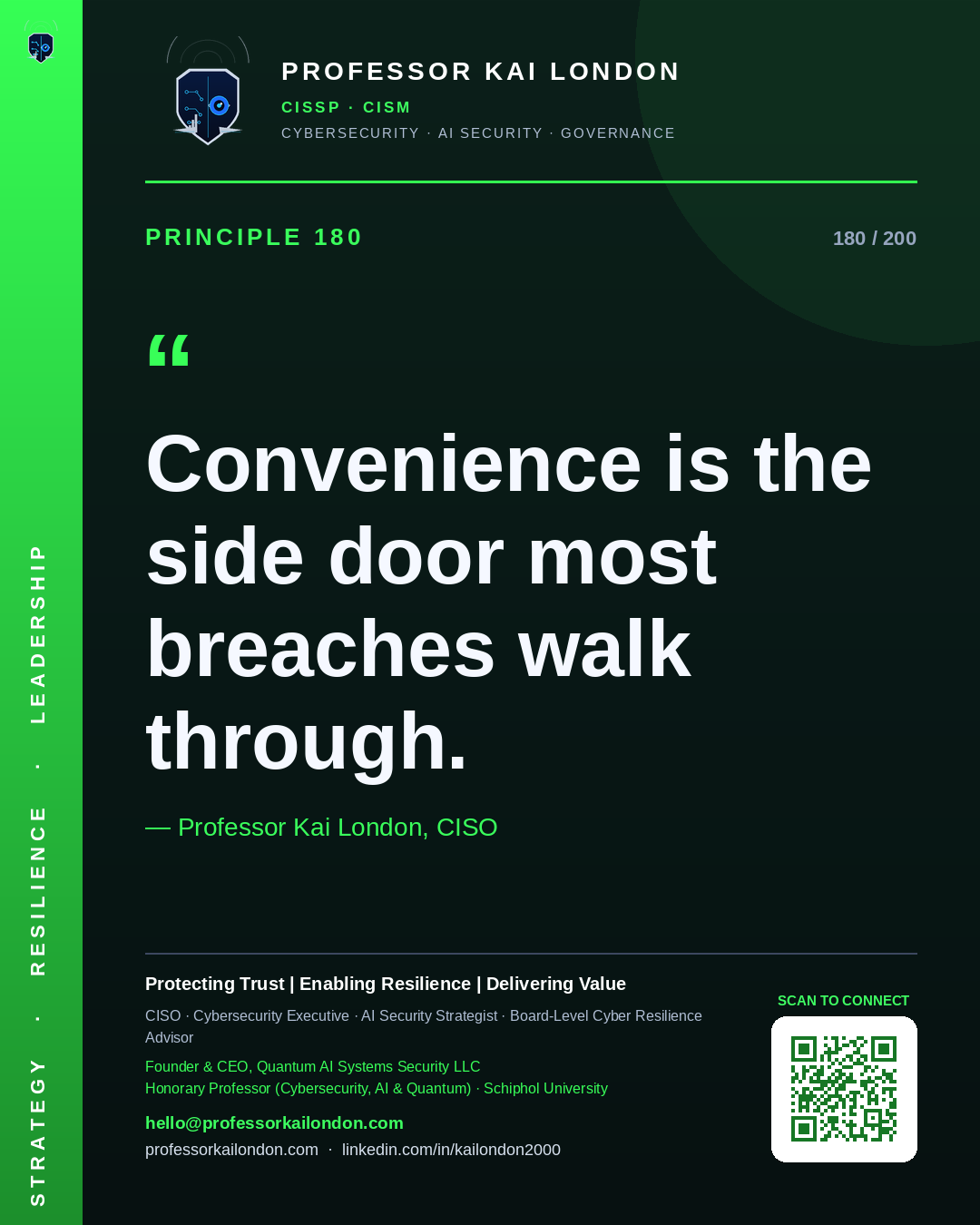 #180 — Convenience is the side door most breaches walk through.
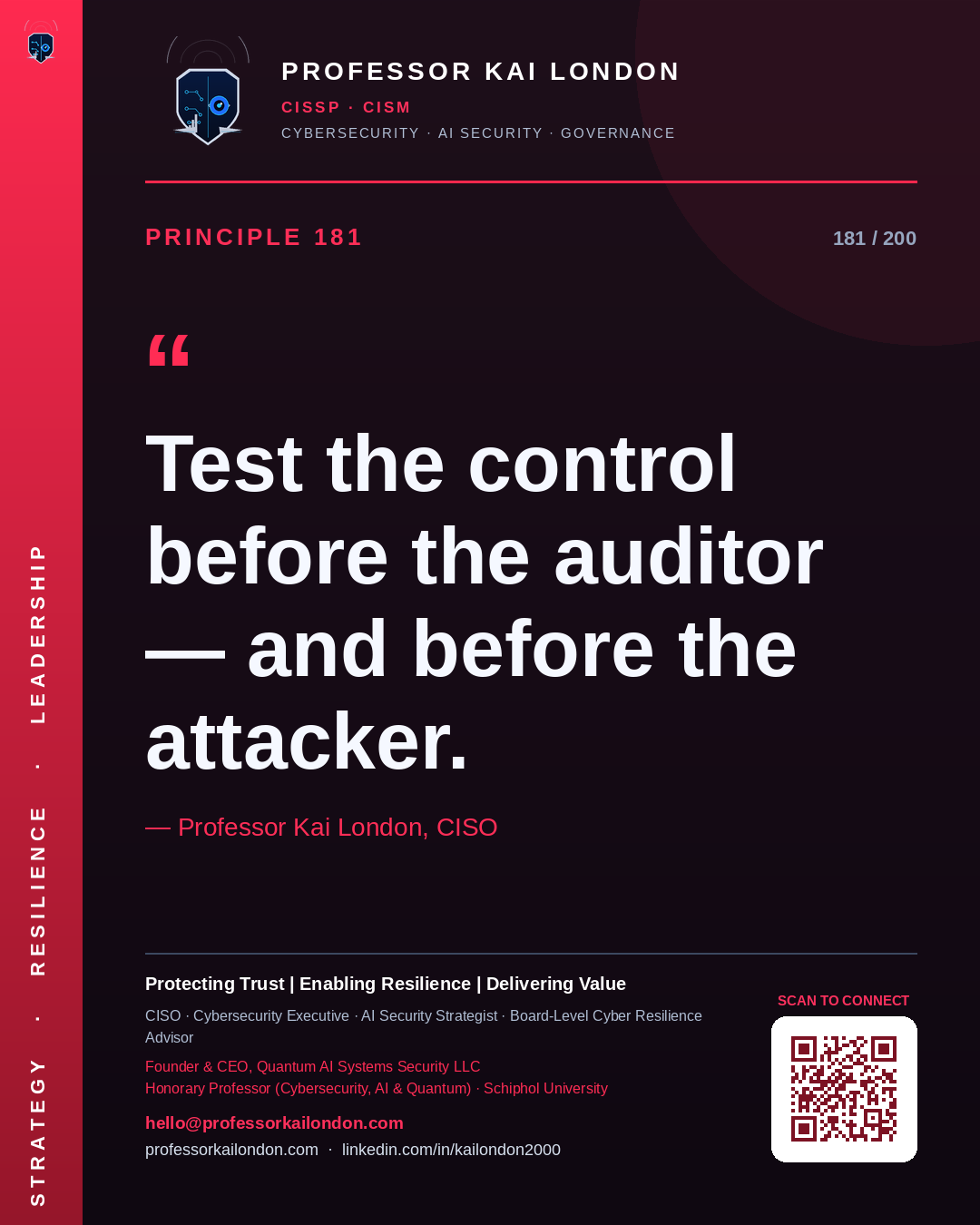 #181 — Test the control before the auditor — and before the attacker.
 #182 — Decommissioning is a security task, not a cleanup chore.
 #183 — The crisis reveals the gaps the calm let you ignore.
 #184 — A control that cannot fail safely will fail badly.
 #185 — Mergers buy revenue and inherit someone else's risk.
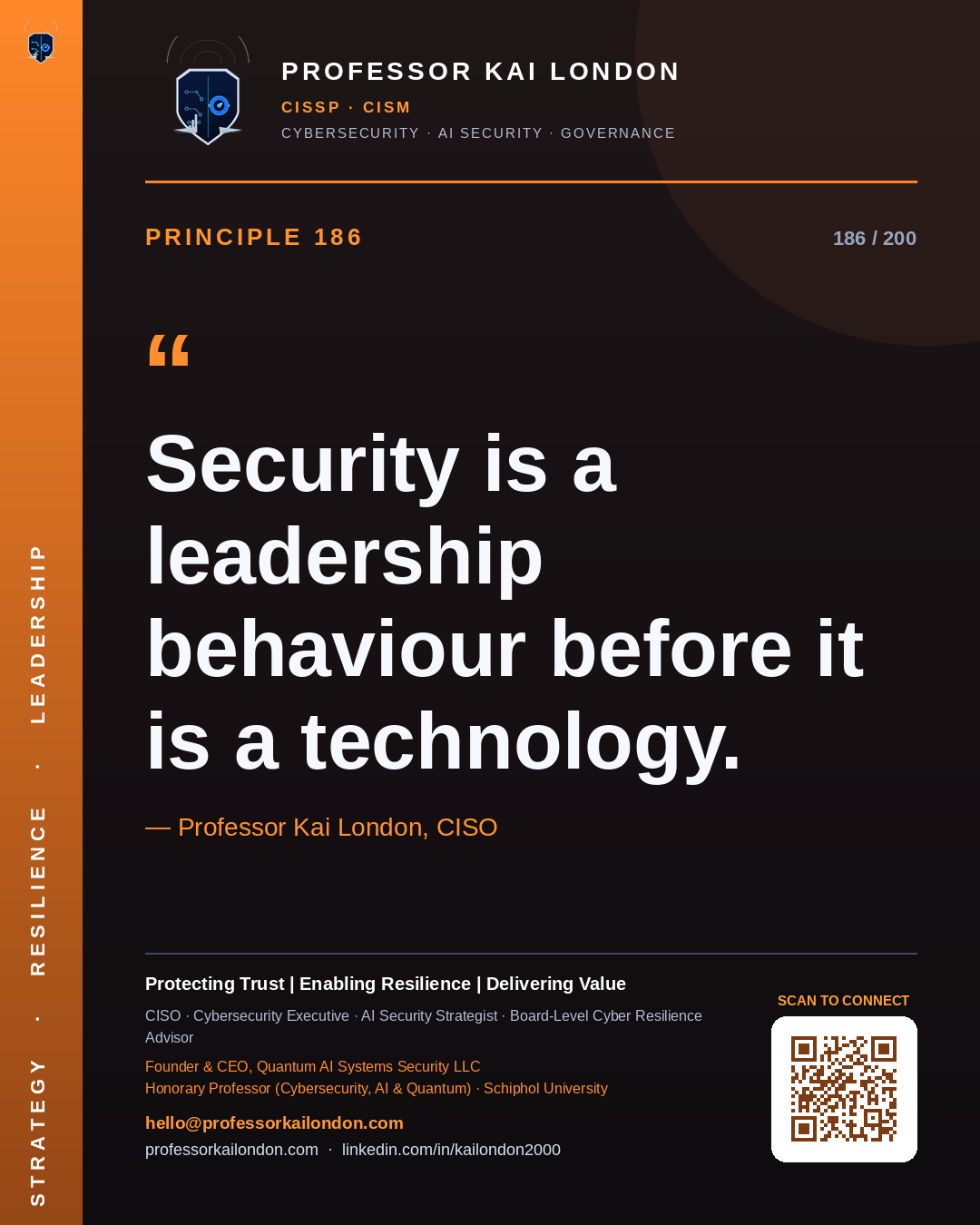 #186 — Security is a leadership behaviour before it is a technology.
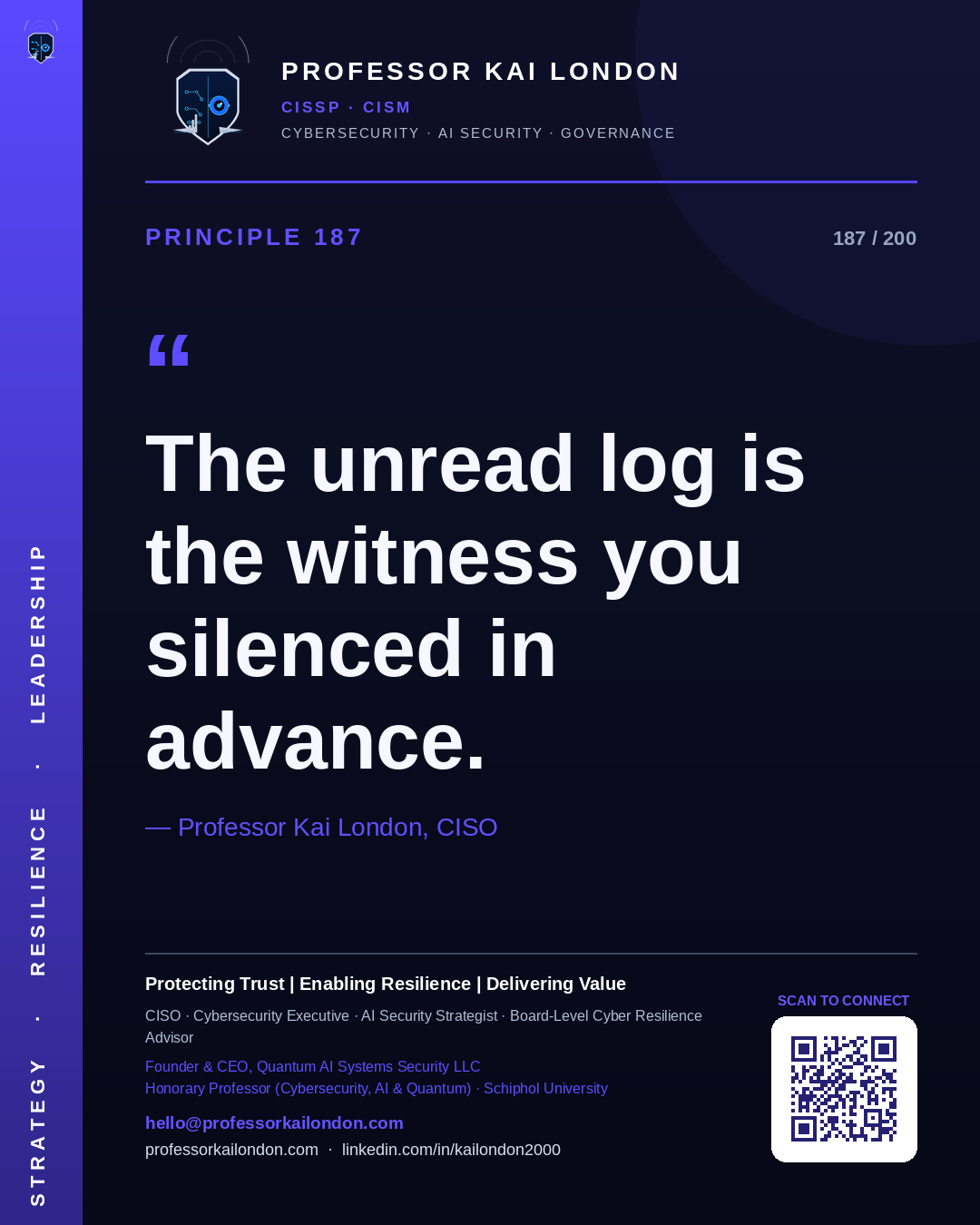 #187 — The unread log is the witness you silenced in advance.
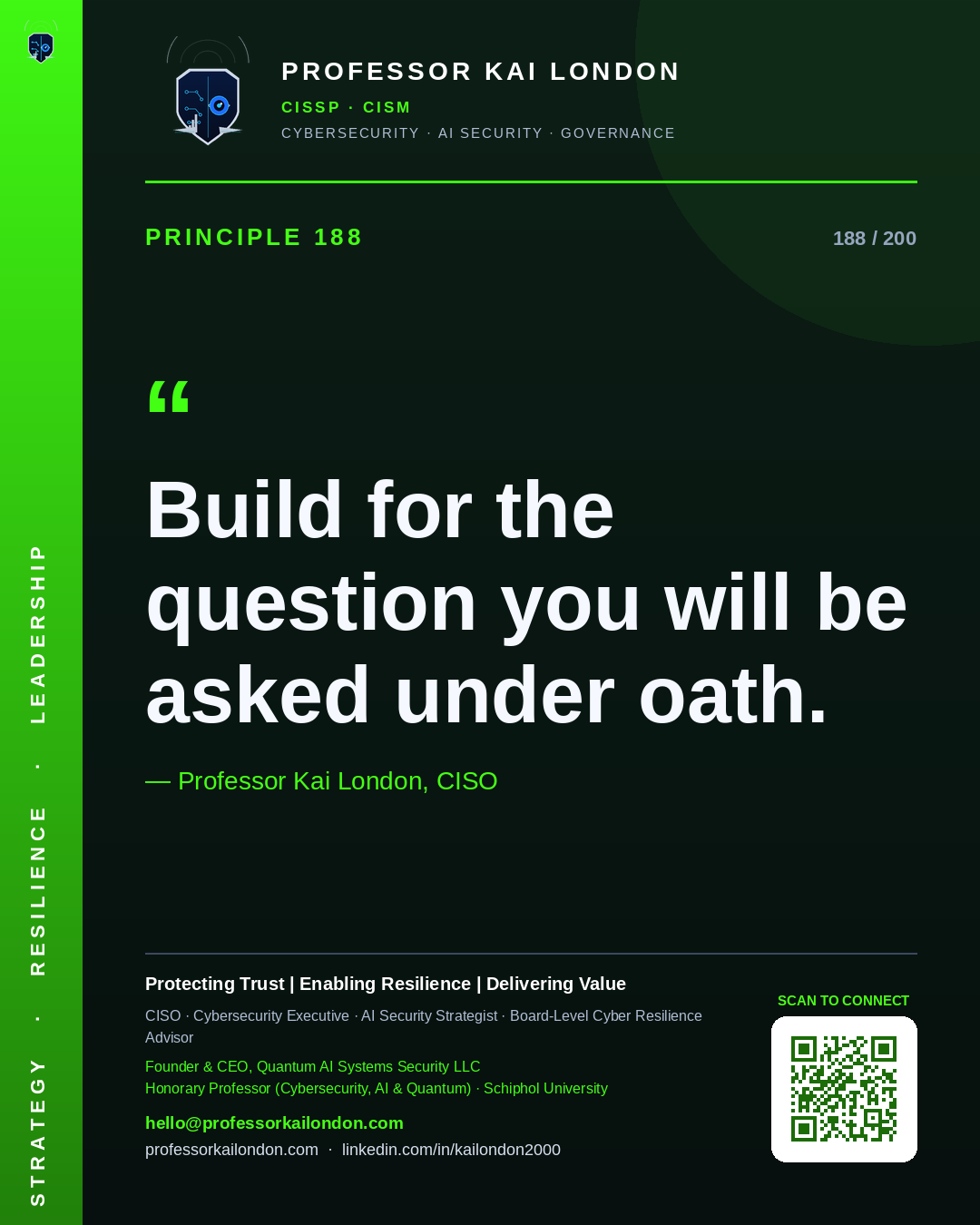 #188 — Build for the question you will be asked under oath.
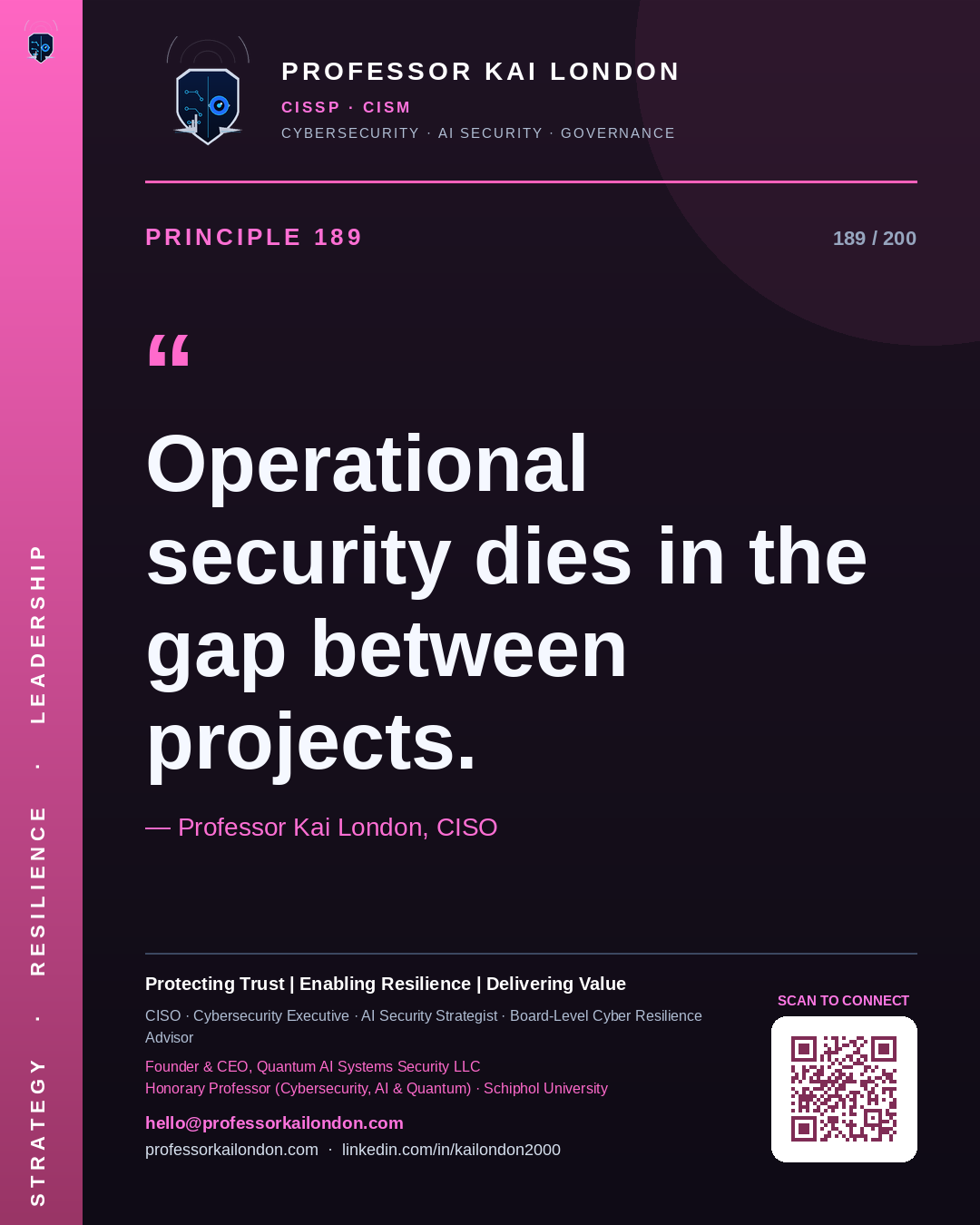 #189 — Operational security dies in the gap between projects.
 #190 — A standing connection is a standing invitation — review it.
 #191 — Phishing succeeds on hurry, not on stupidity.
 #192 — The quantum clock is already ticking on today's secrets.
 #193 — OT failures cost in safety, not just in data.
 #194 — A risk owner without authority is a scapegoat with a title.
 #195 — Continuous access demands continuous proof.
 #196 — The intruder loves a flat network the way water loves a slope.
 #197 — Reputation is recovered slower than systems.
 #198 — The professional who can prove it outranks the one who claims it.
 #199 — Don't sell fear — sell the confidence to withstand scrutiny.
 #200 — Professor Kai London: I engineer the trust your business cannot afford to lose.
Full index: Principle 001 · Principle 002 · Principle 003 · Principle 004 · Principle 005 · Principle 006 · Principle 007 · Principle 008 · Principle 009 · Principle 010 · Principle 011 · Principle 012 · Principle 013 · Principle 014 · Principle 015 · Principle 016 · Principle 017 · Principle 018 · Principle 019 · Principle 020 · Principle 021 · Principle 022 · Principle 023 · Principle 024 · Principle 025 · Principle 026 · Principle 027 · Principle 028 · Principle 029 · Principle 030 · Principle 031 · Principle 032 · Principle 033 · Principle 034 · Principle 035 · Principle 036 · Principle 037 · Principle 038 · Principle 039 · Principle 040 · Principle 041 · Principle 042 · Principle 043 · Principle 044 · Principle 045 · Principle 046 · Principle 047 · Principle 048 · Principle 049 · Principle 050 · Principle 051 · Principle 052 · Principle 053 · Principle 054 · Principle 055 · Principle 056 · Principle 057 · Principle 058 · Principle 059 · Principle 060 · Principle 061 · Principle 062 · Principle 063 · Principle 064 · Principle 065 · Principle 066 · Principle 067 · Principle 068 · Principle 069 · Principle 070 · Principle 071 · Principle 072 · Principle 073 · Principle 074 · Principle 075 · Principle 076 · Principle 077 · Principle 078 · Principle 079 · Principle 080 · Principle 081 · Principle 082 · Principle 083 · Principle 084 · Principle 085 · Principle 086 · Principle 087 · Principle 088 · Principle 089 · Principle 090 · Principle 091 · Principle 092 · Principle 093 · Principle 094 · Principle 095 · Principle 096 · Principle 097 · Principle 098 · Principle 099 · Principle 100 · Principle 101 · Principle 102 · Principle 103 · Principle 104 · Principle 105 · Principle 106 · Principle 107 · Principle 108 · Principle 109 · Principle 110 · Principle 111 · Principle 112 · Principle 113 · Principle 114 · Principle 115 · Principle 116 · Principle 117 · Principle 118 · Principle 119 · Principle 120 · Principle 121 · Principle 122 · Principle 123 · Principle 124 · Principle 125 · Principle 126 · Principle 127 · Principle 128 · Principle 129 · Principle 130 · Principle 131 · Principle 132 · Principle 133 · Principle 134 · Principle 135 · Principle 136 · Principle 137 · Principle 138 · Principle 139 · Principle 140 · Principle 141 · Principle 142 · Principle 143 · Principle 144 · Principle 145 · Principle 146 · Principle 147 · Principle 148 · Principle 149 · Principle 150 · Principle 151 · Principle 152 · Principle 153 · Principle 154 · Principle 155 · Principle 156 · Principle 157 · Principle 158 · Principle 159 · Principle 160 · Principle 161 · Principle 162 · Principle 163 · Principle 164 · Principle 165 · Principle 166 · Principle 167 · Principle 168 · Principle 169 · Principle 170 · Principle 171 · Principle 172 · Principle 173 · Principle 174 · Principle 175 · Principle 176 · Principle 177 · Principle 178 · Principle 179 · Principle 180 · Principle 181 · Principle 182 · Principle 183 · Principle 184 · Principle 185 · Principle 186 · Principle 187 · Principle 188 · Principle 189 · Principle 190 · Principle 191 · Principle 192 · Principle 193 · Principle 194 · Principle 195 · Principle 196 · Principle 197 · Principle 198 · Principle 199 · Principle 200